AI Applications and LLM Platforms
Introduction to Artificial Intelligence
What Is Artificial Intelligence?
Artificial Intelligence, or AI, is a field of computer science focused on creating systems that can perform tasks that typically require human intelligence. Think about how you learn, reason, solve problems, perceive your surroundings, and understand language. AI aims to replicate these capabilities in machines.
At its core, AI is about building smart machines that can think and act like humans.
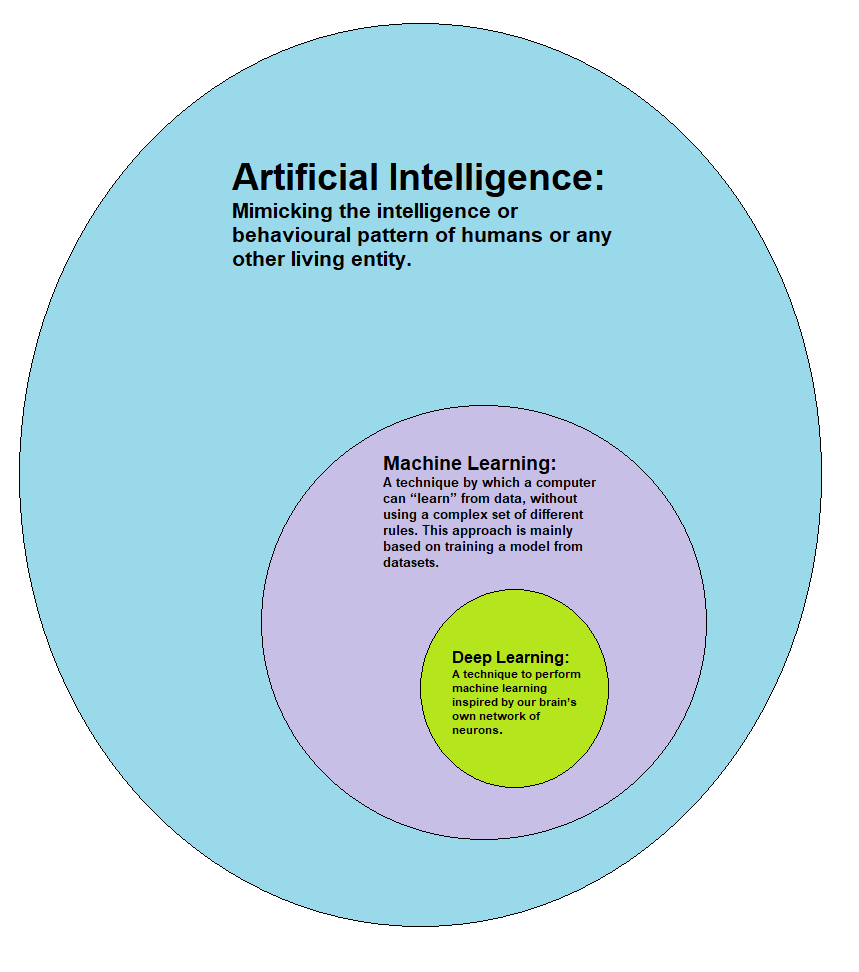
The term AI covers a broad range of technologies. You'll often hear about subfields like Machine Learning and Deep Learning, which are specific ways of achieving artificial intelligence. Machine Learning allows systems to learn from data, while Deep Learning is a more advanced technique that uses complex structures called neural networks to achieve even more sophisticated learning.
A Brief History of AI
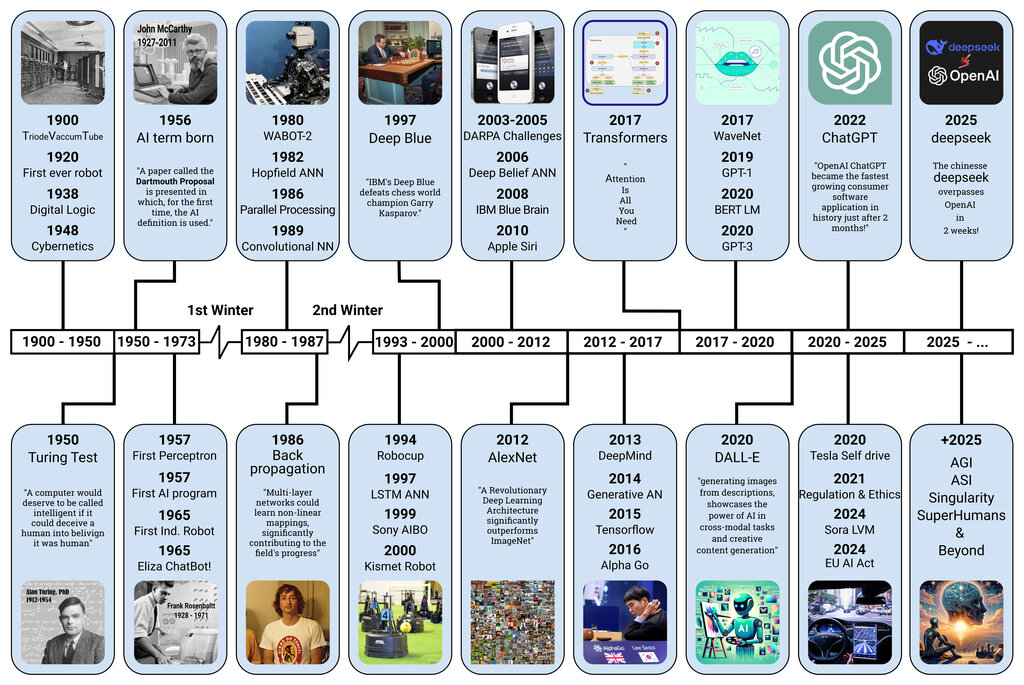
The dream of creating intelligent machines has been around for centuries, but the modern field of AI officially began in the 1950s. A pivotal moment was a workshop at Dartmouth College in 1956, where the term "artificial intelligence" was first coined.
Early AI research was full of optimism. Pioneers believed that a machine as intelligent as a human being was just a few decades away. They developed programs that could solve algebra problems, prove theorems, and speak English. However, progress slowed in the 1970s and 80s due to the immense difficulty of creating true intelligence and the limitations of computer power at the time. This period is often called the "AI winter."
A resurgence began in the late 1990s and early 2000s, driven by faster computers, the availability of massive amounts of data, and new algorithmic breakthroughs. This new wave has led to the powerful AI we see today, from virtual assistants to the large language models (LLMs) that can write text and generate images.
The Building Blocks of AI
Modern AI systems are built on a few key concepts. Understanding them is essential to grasping how AI works.
Machine Learning
noun
A subfield of AI where algorithms are trained on data to find patterns and make predictions without being explicitly programmed for the task.
Instead of writing rules by hand, a machine learning model learns the rules on its own by analyzing examples. For instance, to teach a model to identify cats, you don't describe what a cat is. You just show it thousands of pictures of cats until it learns to recognize them itself.
Machine Learning is about learning from experience.
Another crucial component, especially in advanced AI, is the neural network. Inspired by the structure of the human brain, these networks are made of interconnected nodes, or "neurons," organized in layers. Information passes through these layers, allowing the network to learn complex patterns.
Finally, for AI to communicate with us, it needs to understand human language. This is where Natural Language Processing (NLP) comes in. NLP gives machines the ability to read, understand, and generate human language.
Natural Language Processing
noun
A field of AI that helps computers understand, interpret, and manipulate human language.
These components—machine learning, neural networks, and natural language processing—are the engine behind many of the AI tools we interact with daily.
Now, let's test your understanding of these foundational ideas.
What is the primary goal of the field of Artificial Intelligence (AI)?
The term "artificial intelligence" was first coined at a pivotal workshop in 1956. Where was this workshop held?
With these basics in mind, you're ready to explore the more complex applications and implications of artificial intelligence.