AI Applications and LLM Fundamentals
AI Applications and Limitations
AI in the Real World
Artificial intelligence is no longer just a concept from science fiction; it's a practical tool reshaping industries and our daily lives. From the moment you unlock your phone with your face to the product recommendations you see online, AI is working behind the scenes. Its applications are diverse, touching nearly every sector of the modern economy.
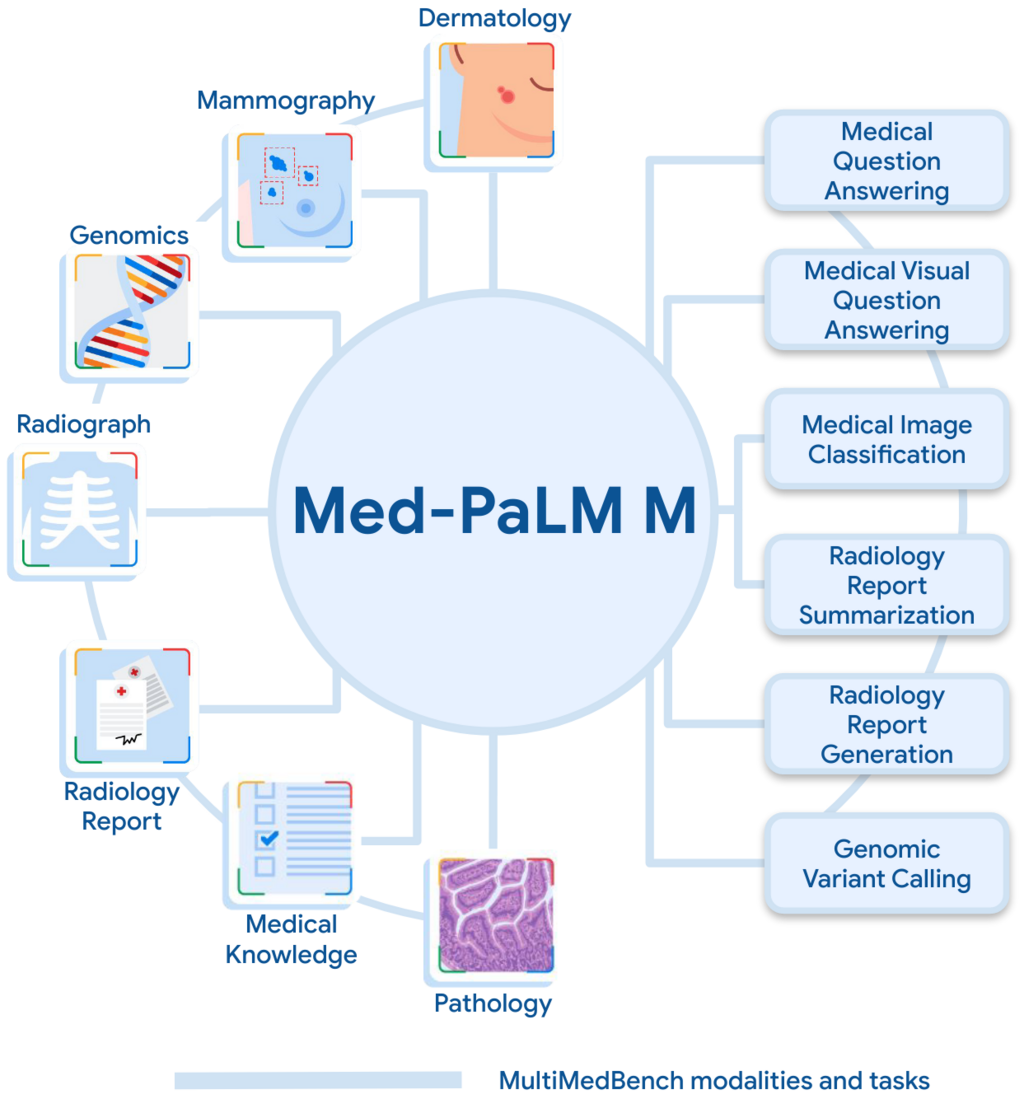
In healthcare, AI is becoming an invaluable assistant to medical professionals. It helps analyze complex medical images like X-rays and MRIs, often spotting patterns that are difficult for the human eye to detect. This can lead to earlier and more accurate diagnoses. AI algorithms also accelerate drug discovery by sifting through massive datasets to identify promising compounds, and they help create personalized treatment plans based on a patient's unique genetic makeup and medical history.
The financial sector relies heavily on AI to manage risk and improve services. Banks use AI to detect fraudulent transactions in real-time, analyzing thousands of data points per second to flag suspicious activity. Algorithmic trading systems make split-second decisions in the stock market, while other models assess credit risk more accurately than traditional methods. AI also powers robo-advisors that offer personalized financial planning to a wider audience.
When you contact a company for customer service, you're often interacting with an AI first. Chatbots and virtual assistants handle common questions, troubleshoot problems, and guide users to the right resources 24/7. This frees up human agents to focus on more complex issues, making support more efficient for everyone. These systems are constantly learning, becoming better at understanding and responding to human language.
The Limits of Today's AI
Despite its impressive capabilities, AI has significant limitations. It's crucial to understand that current AI systems don't think or understand the way humans do. They are powerful pattern-matching machines, and their intelligence is often narrow and brittle.
AI's current applications predominantly rely on narrow AI, or weak AI, which excels in performing specific tasks—such as image recognition, natural language processing, and data analysis.
One major challenge is the lack of common sense. An AI can identify a dog in a photo with near-perfect accuracy, but it has no real-world understanding of what a dog is—that it barks, has fur, or enjoys chasing balls. This gap can lead to absurd or nonsensical errors when the AI encounters a situation outside of its training data.
AI is also completely dependent on the data it's trained on. The quality and quantity of this data dictate the model's performance. If the data is incomplete, outdated, or biased, the AI's output will be too. This is often summarized by the phrase "garbage in, garbage out."
Another issue is the "black box" problem. For many complex models, especially in deep learning, it can be nearly impossible to understand why a specific decision was made. This lack of explainability is a major hurdle in high-stakes fields like medicine and law, where understanding the reasoning behind a conclusion is essential.
Ethical Crossroads
The deployment of AI raises profound ethical questions that society is still grappling with. These aren't just technical problems; they are human ones that require careful consideration.
Use of artificial intelligence in human contexts calls for ethical considerations for the design and development of AI-based systems.
Bias is one of the most significant concerns. If an AI is trained on historical data that reflects societal biases, it will learn and amplify those prejudices. For example, if a hiring algorithm is trained on a company's past hiring decisions, which may have favored certain demographics, the AI will continue to perpetuate that pattern, unfairly filtering out qualified candidates.
Privacy is another major issue. AI systems often require vast amounts of personal data to function effectively. This raises questions about how that data is collected, stored, and used. Without strong regulations and transparent practices, there is a risk of this information being misused for surveillance or manipulation.
Finally, there's the question of accountability. When an autonomous vehicle causes an accident or an AI-driven medical device makes a fatal error, who is responsible? Is it the developer who wrote the code, the company that deployed the system, or the user who operated it? Establishing clear lines of responsibility is a complex legal and ethical challenge that has yet to be fully resolved.
Which of the following is a primary application of AI in the healthcare sector?
An AI system is trained on historical loan application data from a bank. If this historical data shows that the bank approved fewer loans for applicants from a certain neighborhood, the AI may learn to replicate this pattern. This is an example of what ethical concern?
These applications and challenges provide the essential backdrop for understanding the role of more advanced systems like Large Language Models (LLMs), which we will explore next.