AI Application Design Fundamentals
Introduction to AI
What Is AI Anyway?
Artificial intelligence is about making computers smart. The goal is to create systems that can perform tasks that normally require human intelligence, like learning, reasoning, problem-solving, and understanding language.
Think of it this way: instead of programming a computer with a rigid set of instructions for every single possibility, you design it to figure things out on its own. It's a broad field with many different branches, each focusing on a specific kind of 'smart'.
The Flavors of AI
AI isn't one single thing. It's an umbrella term for several specialized subfields. The relationships can be a bit like Russian nesting dolls, where one field is a subset of another.
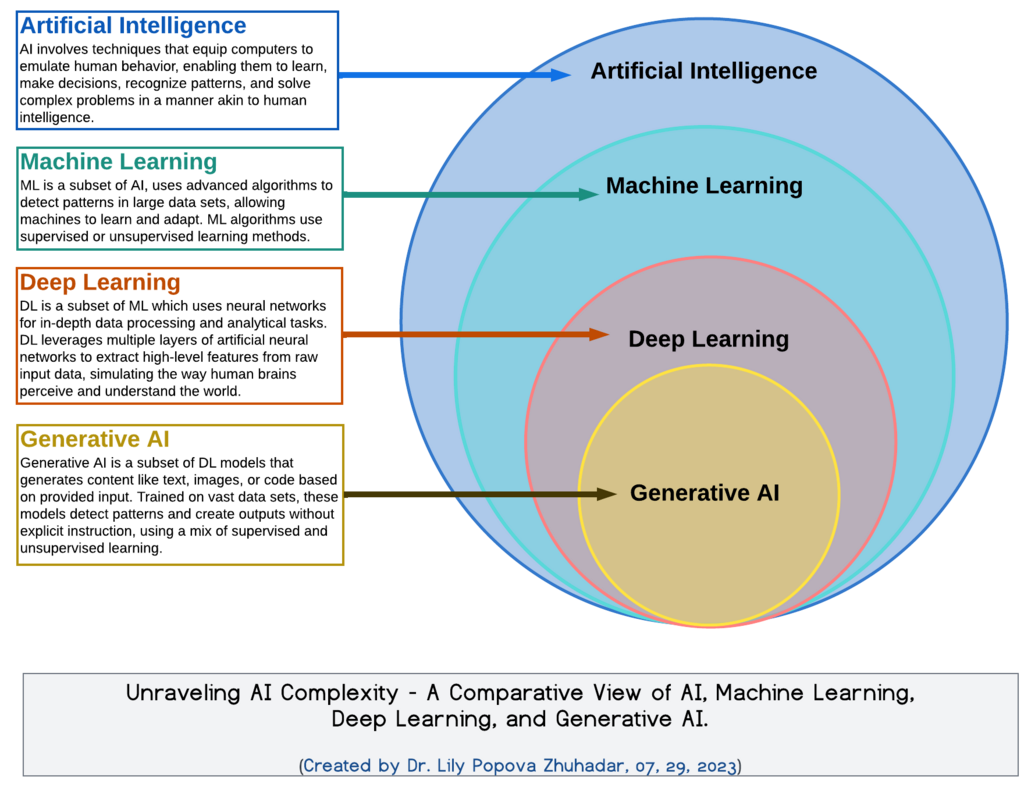
Here are a few of the most important subfields you'll encounter:
-
Machine Learning (ML): This is the most common type of AI today. Instead of being explicitly programmed, a machine learning model is trained on a large amount of data. It learns patterns from the data and then uses those patterns to make predictions or decisions about new, unseen data. Your email's spam filter is a classic example.
-
Natural Language Processing (NLP): This branch of AI focuses on the interaction between computers and human language. NLP is what allows you to talk to your phone's voice assistant, translate text from one language to another, or have a chatbot understand your questions.
-
Computer Vision: This is the science of teaching computers to 'see' and interpret the visual world. Computer vision powers everything from the face unlock feature on your phone to the systems that allow self-driving cars to identify pedestrians and traffic signs.
Three Levels of Intelligence
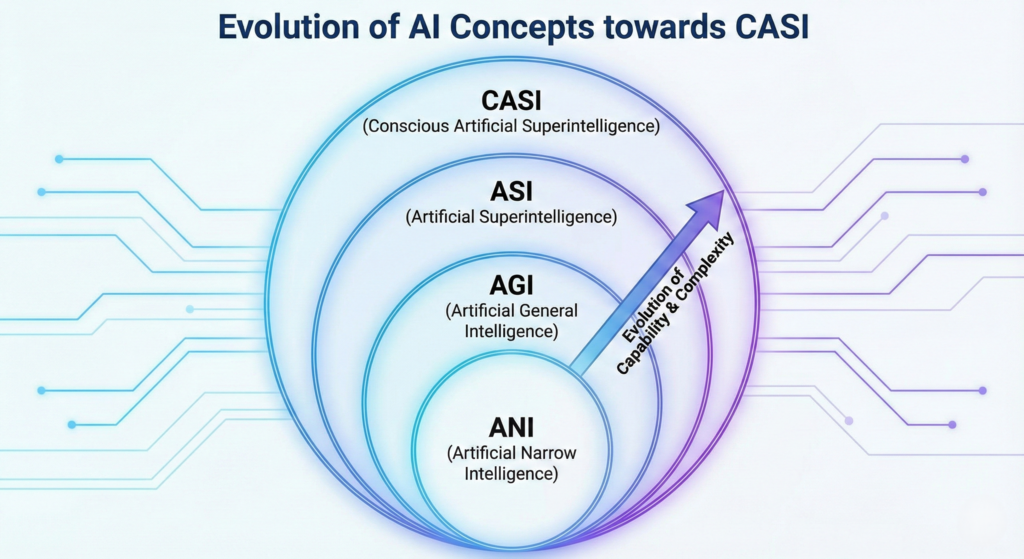
When people talk about AI, they're often talking about different theoretical levels of capability. Understanding these distinctions helps separate the reality of today from the science fiction of tomorrow.
Artificial Narrow Intelligence
noun
Also known as Weak AI, this is AI that is designed and trained for one specific task.
Artificial Narrow Intelligence (ANI) is all around us. Siri can answer your questions, but it can't drive a car. A Tesla can drive a car, but it can't recommend a movie. Every AI application you use today is a form of ANI. It’s highly effective at its one job but lacks any general awareness or ability to transfer its skills to other domains.
All the AI we have in the world today is Narrow AI.
The next level is Artificial General Intelligence (AGI), or Strong AI. This is the type of AI you often see in movies—a machine with the ability to understand, learn, and apply its intelligence to solve any problem, much like a human being. AGI doesn't exist yet, and creating it is a massive scientific challenge.
Beyond that is Artificial Superintelligence (ASI). This is a hypothetical form of AI that would surpass human intelligence across virtually every field, from scientific creativity and general wisdom to social skills. The concept of ASI raises profound questions about the future of humanity and technology.
AI in the Wild
AI is no longer just a concept in a research lab; it's a practical tool that's reshaping industries. Its ability to process vast amounts of data and identify patterns makes it incredibly valuable for solving complex problems.
Here are just a few examples:
-
Healthcare: AI helps doctors diagnose diseases earlier by analyzing medical images like X-rays and MRIs. It can also personalize treatment plans based on a patient's genetic makeup.
-
Finance: Banks use AI to detect fraudulent transactions in real-time and assess credit risk more accurately. Algorithmic trading uses AI to make split-second decisions in the stock market.
-
Entertainment: Streaming services like Netflix and Spotify use machine learning to analyze your viewing and listening habits. Their recommendation engines then suggest new movies, shows, and music you might like.
-
Automotive: Beyond self-driving cars, AI is used in manufacturing to predict when machinery might fail, helping to prevent costly downtime on the assembly line.
Understanding these fundamental concepts—what AI is, its key subfields, and its different levels—is the first step toward seeing how it can be applied to create new solutions and improve existing processes.