AI App Design System
Understanding Design Systems
Building with a Blueprint
Imagine trying to build a complex LEGO castle with a thousand other people. If everyone uses slightly different shades of gray bricks, different window styles, and their own unique way of building towers, the final castle will be a chaotic mess. It might technically stand up, but it won't look unified or well-planned.
A design system is the master blueprint and official box of LEGO bricks for building digital products. It’s a single source of truth for a design team. It contains a collection of reusable components and clear standards that guide how everything from buttons to entire pages should look and behave. The main goal is to create a cohesive user experience across all of a company's products, whether it's a website, a mobile app, or internal software.
A design system isn't just a collection of assets. It's a living set of rules and components that grows and adapts with the product.
By providing a shared language and ready-made parts, design systems allow teams to stop reinventing the wheel for every new feature. Instead of arguing over the exact shade of blue for a link, they can focus on solving bigger, more complex user problems. This dramatically speeds up both design and development.
The Core Components
Design systems are built from a few key ingredients. While they can get complex, they all start with the same foundational pieces: design tokens, components, and guidelines.
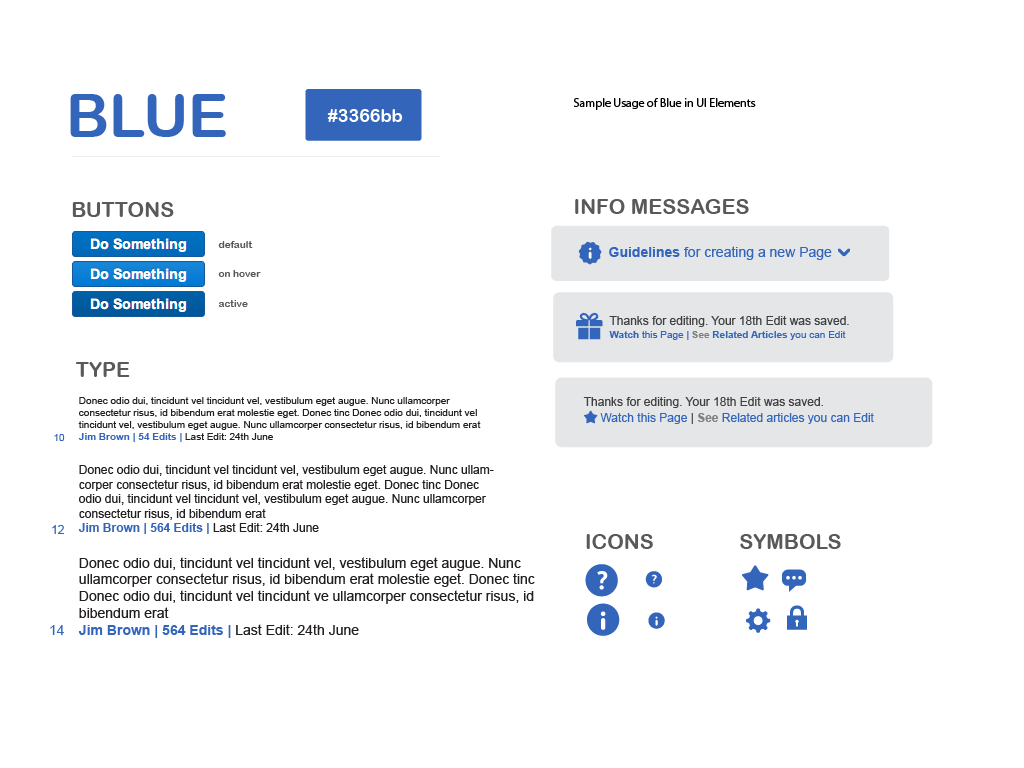
First, you have design tokens. These are the smallest, most fundamental pieces of your design language. They aren't the design itself, but the values that define it. Think of them as variables that store visual information like colors, fonts, spacing units, or animation speeds. Instead of hard-coding a hex value like #3366bb everywhere, a designer uses a token like $color-brand-primary.
Design tokens help store and manage design variables such as spacing scale, color palette, breakpoints, and typography scale.
This might seem small, but it's powerful. If the company ever decides to update its brand color, a developer only needs to change the value of that one token. The new color will then automatically apply everywhere the token was used. This ensures consistency and makes rebranding efforts incredibly efficient.
Next up are reusable components. These are the functional building blocks of the user interface, assembled from the design tokens and other basic elements. They are the buttons, form fields, navigation bars, and cards you see in an application. Each component is a self-contained package of design and code that has been tested for usability and accessibility.
Finally, there are guidelines. This is the instruction manual that explains how and why to use the tokens and components. It provides rules on typography, accessibility standards, voice and tone, and layout principles. Guidelines ensure that even when building something new, the final result feels like it belongs to the same product family.
Why Bother?
Implementing a design system takes upfront effort, but the long-term benefits are huge. The most obvious advantage is consistency. A user moving from a company's website to its mobile app will find a familiar, predictable interface, which builds trust and makes the product easier to use.
| Benefit | Description |
|---|---|
| Efficiency | Designers and developers can build and ship new features faster by using pre-made components. |
| Consistency | All products share the same visual language and user experience, strengthening the brand. |
| Scalability | As a company grows, a design system makes it easier to maintain quality across multiple teams and products. |
| Collaboration | Provides a shared language, breaking down silos between design, development, and product teams. |
Many of the world's most successful tech companies rely on robust design systems. Google's Material Design is one of the most well-known, providing a comprehensive framework for building apps on Android and the web. Atlassian's Design System is another great example, focusing on clear, practical components for its suite of productivity tools. These systems are public, serving as both a resource for their internal teams and an inspiration for the wider design community.
To review the key ideas from this section, try your hand at this quick quiz.
What is the primary goal of a design system?
In a design system, what are 'design tokens'?
Ultimately, a design system is an investment in quality and speed. It allows teams to create better products faster, while ensuring the user experience is coherent and predictable.