AI and Your Personal Information
Introduction to AI and Personal Data
What Is Artificial Intelligence?
Artificial intelligence, or AI, is about creating computers and systems that can perform tasks that typically require human intelligence. This includes things like learning from experience, solving problems, understanding language, and making decisions.
Artificial intelligence (AI) is a broad field of computer science and engineering that focuses on developing computers capable of performing activities that normally require human intelligence, such as learning, problem-solving, decision-making, and natural language processing.
Think of it as teaching a machine to think. Instead of just following a strict set of pre-programmed instructions, an AI system can analyze information, recognize patterns, and adapt its behavior. This field has several layers, each a subset of the one before it.
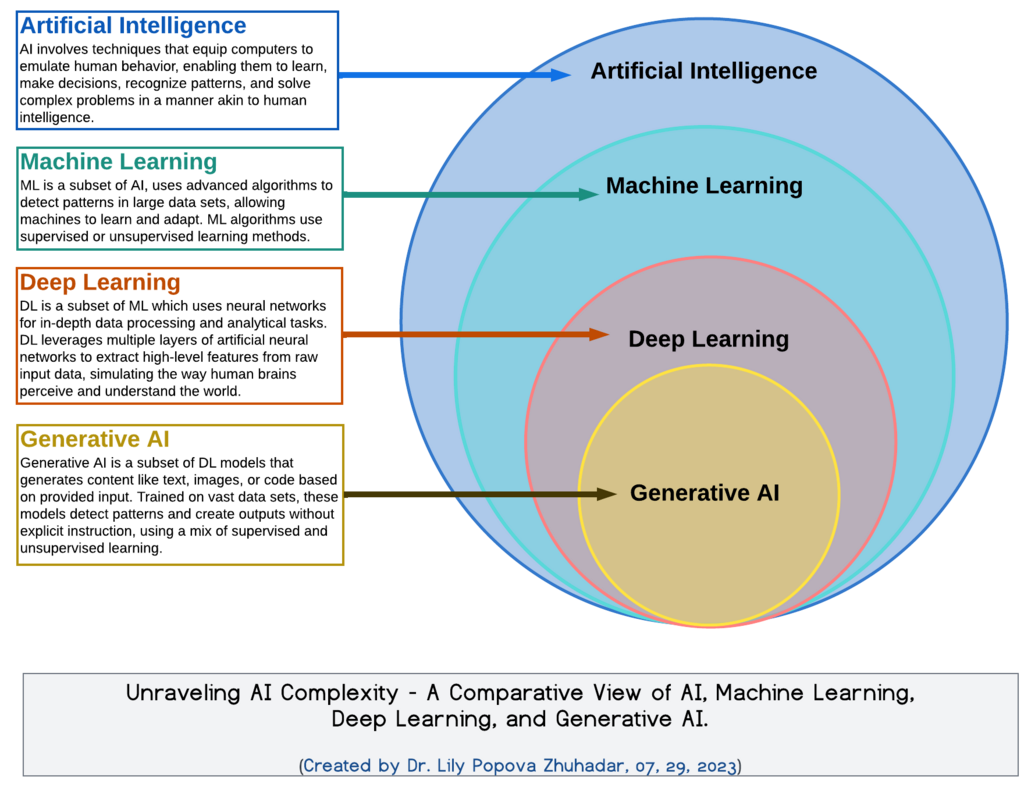
At the highest level, you have Artificial Intelligence, the overall concept of intelligent machines. Within that is Machine Learning (ML), where systems learn from data without being explicitly programmed. A spam filter learns to identify junk mail by analyzing thousands of examples. A level deeper is Deep Learning, which uses complex structures called neural networks to find intricate patterns in huge datasets, powering things like facial recognition.
Finally, a popular subset you've likely heard of is Generative AI. This type of AI doesn't just analyze data, it creates new content, like text, images, or music. Chatbots like ChatGPT are a prime example.
AI in Your Everyday Life
AI isn't just a futuristic concept; it's already a part of our daily routines. When your music app creates a personalized playlist, that's AI analyzing your listening habits. When a navigation app reroutes you around traffic, that's AI processing real-time location data to find the best path.
Other common examples include:
- Recommendation Engines: Suggesting movies on Netflix or products on Amazon.
- Voice Assistants: Siri and Alexa understanding and responding to your commands.
- Spam Filters: Automatically sorting unwanted emails from your inbox.
- Social Media Feeds: Curating the content you see based on your past interactions.

All of these applications have one thing in common: they are powered by data. To make smart recommendations or predict traffic, AI systems need vast amounts of information to learn from. Much of this information is what we call personal data.
The Fuel for AI: Personal Data
So what exactly is personal data? In simple terms, it's any information that can be linked to a specific, identifiable person. It’s not just about your name or address; it's a broad category of information that, alone or combined with other details, can point back to you.
Personal Data
noun
Information that relates to an identified or identifiable individual.
Let's break down the kinds of personal data AI often uses. Some are obvious, while others are more subtle.
| Category | Examples |
|---|---|
| Direct Identifiers | Name, Social Security number, email address, phone number. |
| Location Data | GPS coordinates from your phone, check-ins at locations. |
| Biometric Data | Fingerprints, facial scans, voice patterns. |
| Behavioral Data | Browsing history, purchase records, app usage, music playlists. |
| User-Generated Content | Photos you post, comments you write, emails you send. |
| Inferred Data | AI predictions about your interests, personality traits, or income level. |
When you ask a voice assistant for the weather, it uses your location data. When a shopping site recommends a product, it’s using your behavioral data (past purchases and browsing history). Even data that seems anonymous can sometimes be combined with other pieces of information to identify you.
Understanding what AI is and what personal data it uses is the first step in navigating our increasingly digital world. These two concepts are deeply intertwined, shaping the technology we interact with every day.