AI and Robotics in 2035
Introduction to AI and Robotics
Defining AI and Robotics
Artificial intelligence and robotics are often mentioned in the same breath, but they aren't the same thing. Think of AI as the brain and robotics as the body. One can exist without the other, but they're incredibly powerful when they work together.
Artificial Intelligence
noun
A field of computer science dedicated to creating systems that can perform tasks that typically require human intelligence. This includes things like learning, reasoning, problem-solving, and understanding language.
AI doesn't need a physical form. The recommendation engine that suggests movies for you on a streaming service is a form of AI. So is the software that translates a webpage from one language to another. It's all about processing information and making decisions.
Robotics, on the other hand, is focused on the physical world.
Robotics
noun
The branch of technology that deals with the design, construction, operation, and application of robots. A robot is a machine—especially one programmable by a computer—capable of carrying out a complex series of actions automatically.
A simple factory arm that welds car parts is a robot, but it might not use AI. It could just be following a pre-programmed set of movements. But when you give that robot a camera and an AI brain, it can see the car parts, adapt to variations, and make decisions on its own. That's when the two fields truly merge.
A Quick Look Back
The dream of intelligent machines is ancient, but the scientific pursuit is much more recent. The term "artificial intelligence" was first coined in 1956 at a conference at Dartmouth College. This event brought together the founding fathers of AI and laid the groundwork for the future of the field.
Early research was full of excitement. Pioneers believed that a machine with human-like intelligence was just a few decades away. But progress was slower than expected, leading to periods of reduced funding and interest known as "AI winters."
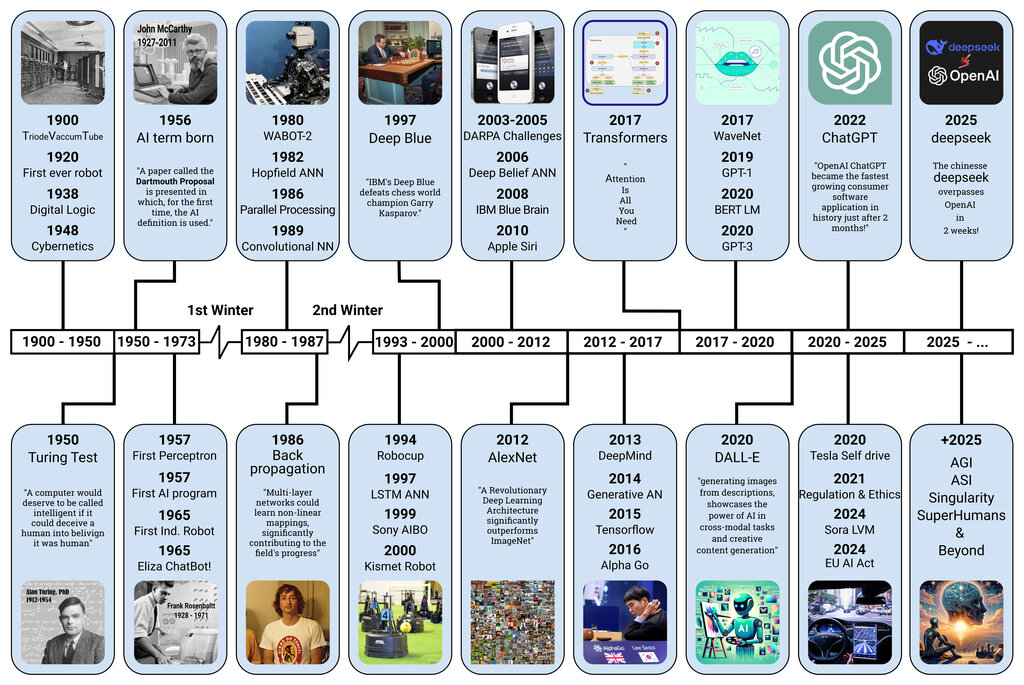
Robotics has its own rich history. The idea of automatons goes back centuries, but the first modern industrial robot, the Unimate, was installed in a General Motors factory in 1961. It performed the dangerous task of lifting and stacking hot pieces of metal, signaling a new era in manufacturing.
While early AI focused on logic and games like chess, early robotics focused on automating repetitive, physical tasks.
AI and Robots at Work Today
Today, AI and robotics are out of the lab and integrated into our daily lives and industries. You interact with AI constantly, whether you're using a navigation app that calculates the fastest route, a voice assistant that answers your questions, or a spam filter that cleans your inbox.
In the world of robotics, the applications are just as diverse.
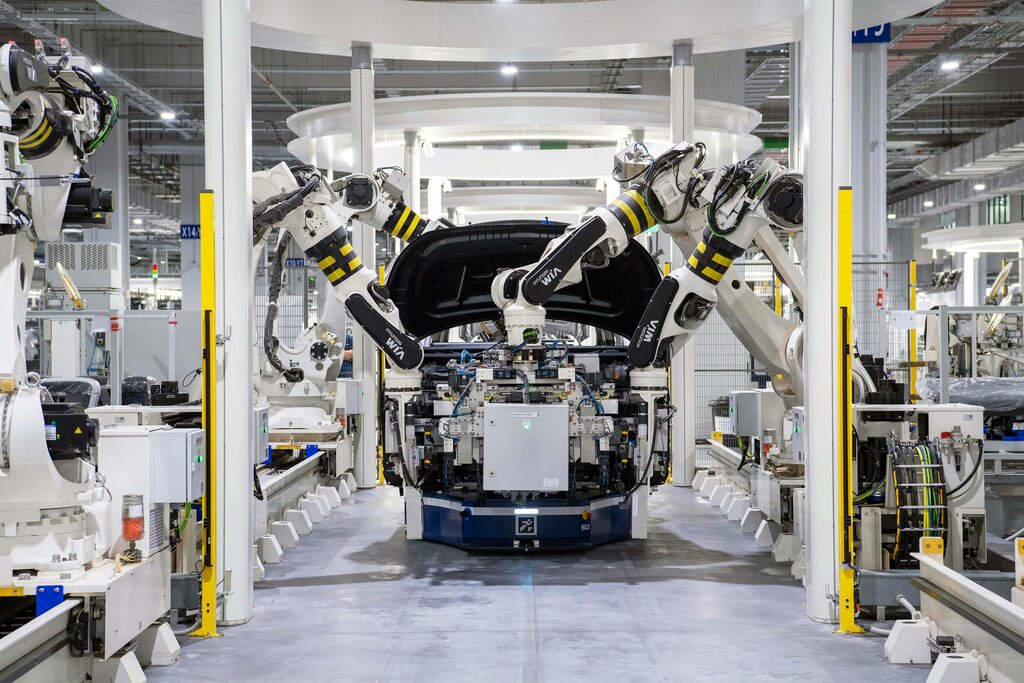
From warehouses where robots sort and fetch packages to operating rooms where robotic arms assist surgeons with incredible precision, these machines are transforming industries. The synergy of AI and robotics is particularly powerful. AI gives robots the ability to perceive their environment and make intelligent choices, opening up new possibilities.
| Industry | AI Applications | Robotics Applications |
|---|---|---|
| Healthcare | Analyzing medical images, predicting diseases | Surgical assistance, patient mobility |
| Transportation | Self-driving car software, traffic prediction | Autonomous drones, warehouse logistics |
| Entertainment | Recommendation algorithms, special effects | Animatronics, theme park rides |
| Finance | Fraud detection, algorithmic trading | Automated tellers, cash sorting machines |
It's time to check your understanding of these foundational concepts.
Which statement best describes the primary difference between artificial intelligence (AI) and robotics?
A streaming service suggesting a new movie based on your viewing history is a practical application of AI.
Understanding these basic definitions and histories is the first step. It provides the context needed to explore where these powerful technologies are headed next.