AI and Robotics Essentials
Introduction to Artificial Intelligence
What Is Artificial Intelligence?
Artificial intelligence, or AI, is about creating systems that can think and learn. Think of it like teaching a computer to perform tasks that usually require human intelligence, such as understanding language, recognizing patterns, or making decisions. At its core, AI involves a system's ability to correctly interpret data, learn from it, and then use those lessons to achieve specific goals.
The goal isn't to perfectly replicate a human brain. It's to build machines that can solve problems in an intelligent way.
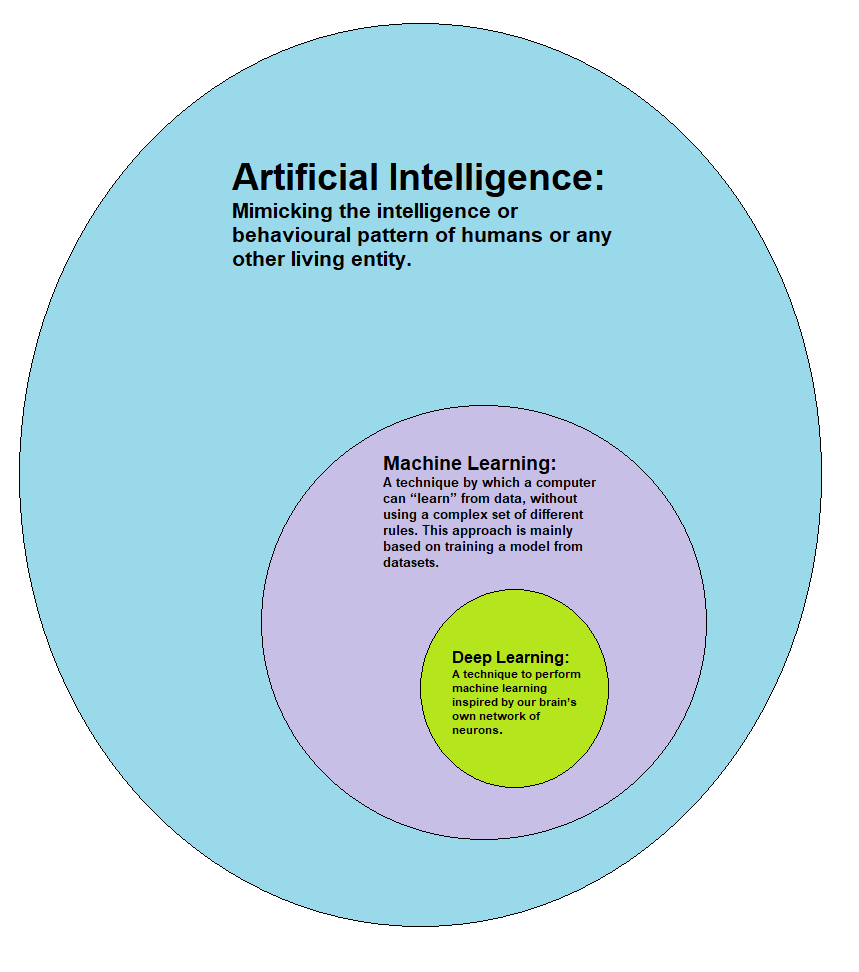
Modern AI is typically broken down into a few key areas. The broadest field is Artificial Intelligence itself. A major part of that is Machine Learning, which focuses on creating systems that get better at a task by learning from data, without being explicitly programmed for every scenario. A subset of machine learning is Deep Learning, which uses complex structures called neural networks to handle more intricate patterns, like recognizing an image or understanding speech.
A Brief History
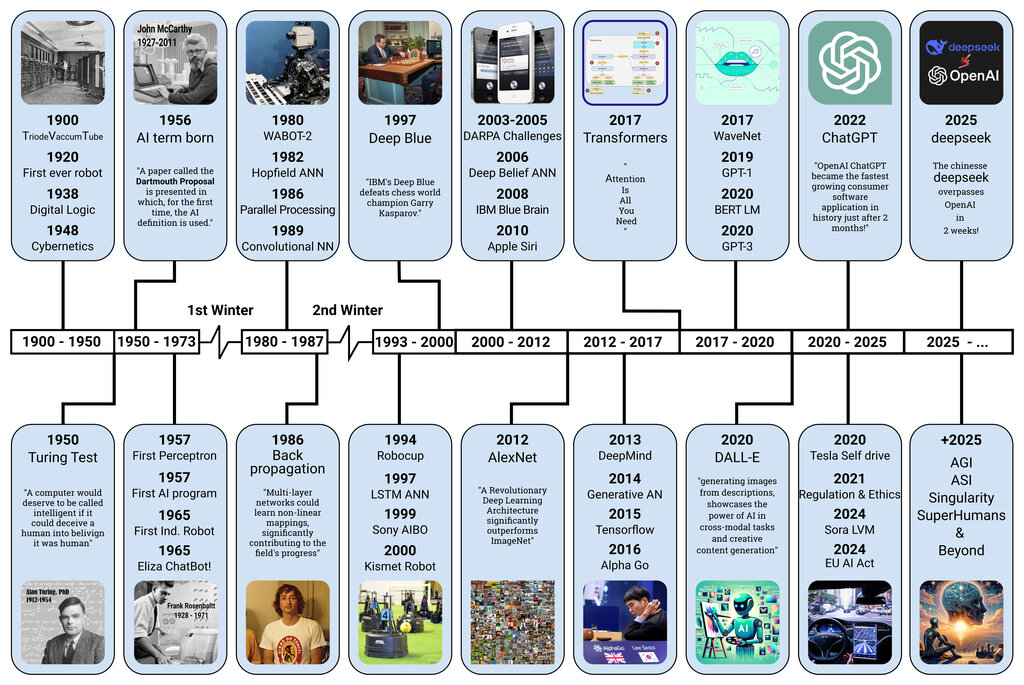
The dream of intelligent machines is ancient, but the formal field of AI research began in the 1950s. The term "artificial intelligence" was coined at a workshop at Dartmouth College in 1956. Early AI research focused on what's now called Symbolic AI or "Good Old-Fashioned AI."
In Symbolic AI, programmers tried to create intelligence by writing down a long list of explicit rules for the computer to follow. For example, to play chess, they would program rules like, "a bishop moves diagonally."
This approach worked for well-defined, logical problems but struggled with the messiness of the real world, like understanding a photo or a conversation. The breakthrough came with machine learning, which flipped the script. Instead of giving the computer rules, we give it lots of data (like thousands of cat pictures) and let it figure out the patterns on its own. This data-driven approach powers most of the AI we use today.
Narrow vs. General AI
When people talk about AI, they are often referring to one of two very different concepts.
Artificial Narrow Intelligence
noun
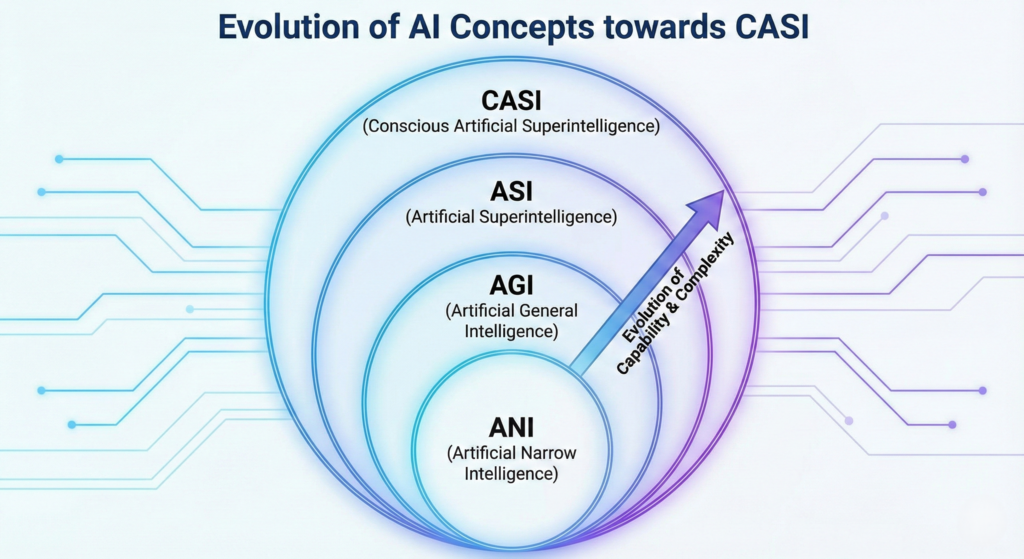
Also known as Weak AI, this is a type of AI designed and trained to perform a specific task. All the AI we have today is narrow AI.
Your navigation app, a voice assistant like Siri or Alexa, and the recommendation engine on a streaming service are all examples of Narrow AI. They are incredibly powerful at their one job, but you can't ask your GPS to write a poem, and your streaming service can't diagnose a medical condition.
Artificial General Intelligence
noun
Also known as Strong AI, this is a theoretical form of AI where a machine would have an intellect comparable to a human's. It could understand, learn, and apply its intelligence to solve any problem.
AGI is the kind of AI you see in movies—a machine with consciousness, self-awareness, and the ability to perform any intellectual task a human can. Building AGI is a monumental challenge and remains a long-term goal for many researchers.
AI in the Real World
AI is no longer just a futuristic concept; it's a part of our daily lives. Its applications span nearly every industry.
| Industry | Application |
|---|---|
| Healthcare | Analyzing medical images like X-rays and MRIs to detect diseases earlier. |
| Finance | Identifying fraudulent credit card transactions in real-time. |
| Transportation | Powering self-driving cars and optimizing traffic flow in cities. |
| Entertainment | Recommending movies, music, and products based on your past behavior. |
| Agriculture | Using drones and sensors to monitor crop health and optimize water usage. |
| Customer Service | Powering chatbots that can answer common questions 24/7. |
Which statement best describes the relationship between Artificial Intelligence (AI), Machine Learning (ML), and Deep Learning (DL)?
The early approach to AI, which involved programming explicit rules for well-defined, logical problems, is known as:
This is just the beginning of what AI can do. By understanding these fundamental concepts, you have a solid foundation for exploring the more advanced and exciting aspects of this transformative technology.