AI and Power BI for Commercial Managers
Introduction to AI in Food Manufacturing
AI in the Food Factory
Artificial intelligence is changing how we make food, but not in the way you might see in science fiction. Instead of robot chefs, think of smart systems that make food production more efficient, consistent, and safe. AI in food manufacturing is all about using data to make better decisions at every step of the process, from sourcing ingredients to packaging the final product.
Imagine a factory where every machine, sensor, and camera feeds information into a central system. This AI can analyze that data in real-time to spot patterns and predict outcomes that a human operator might miss. It's a powerful tool for turning massive amounts of information into actionable insights.
Similarly, in manufacturing, AI enables predictive maintenance to reduce equipment downtime, enhances quality control through computer-vision inspection, and optimizes production workflows using real-time operational data.
Smarter, Faster, Safer
One of the biggest impacts of AI is on operational efficiency. In a busy food plant, a machine breakdown can halt production and cost thousands. AI-powered predictive maintenance can prevent this. By analyzing data like temperature, vibration, and output, the system can predict when a part is likely to fail and schedule maintenance before it breaks. It’s like a super-smart check engine light that tells you exactly what’s wrong and when to fix it.
AI also plays a huge role in optimizing supply chains. It can analyze market trends, weather patterns, and transportation logistics to forecast demand more accurately. This helps manufacturers order the right amount of raw materials, reducing waste and ensuring products are available when customers want them.
When it comes to quality and safety, AI provides a level of precision that is difficult to achieve manually. Computer vision systems, which are essentially AI-powered cameras, can inspect products on a fast-moving assembly line. They can spot tiny defects, check for correct labeling, and ensure every package is sealed properly. This tireless, 24/7 inspection guarantees a consistent, high-quality product for the consumer.
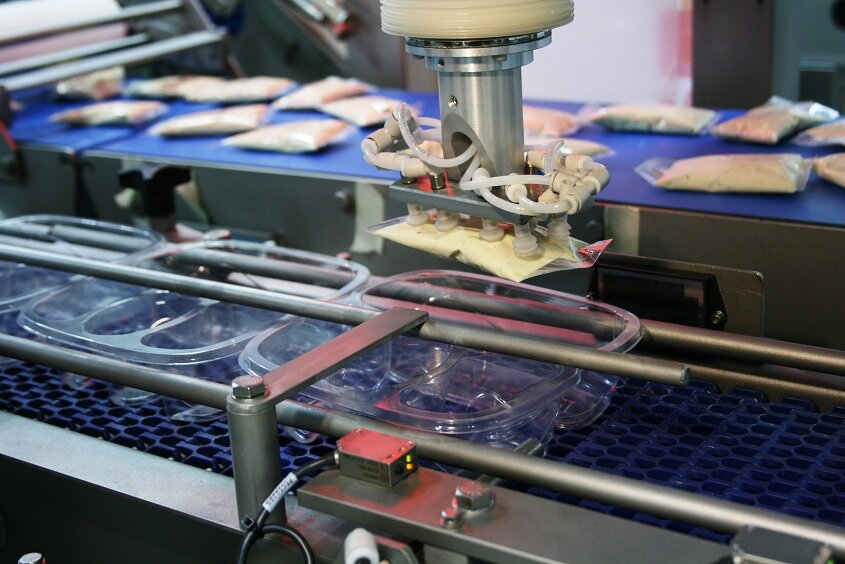
This technology can also detect contaminants that are invisible to the human eye, sort produce by ripeness and size, and monitor cooking processes to ensure food is prepared safely and to exact specifications.
AI in Action
The applications of AI are diverse and tailored to the specific needs of different food sectors. What works for a bakery might be different from what a dairy processor needs. However, the core goals of improving efficiency, quality, and safety remain the same.
| Food Sector | AI Application | Key Benefit |
|---|---|---|
| Baked Goods | Optimizing oven temperatures and baking times | Consistent product quality and energy savings |
| Dairy | Monitoring milk composition and temperature | Early spoilage detection and reduced waste |
| Fresh Produce | Sorting fruits and vegetables by ripeness and quality | Higher yield of premium products and less food loss |
| Meat & Poultry | Analyzing images to check for cut consistency and fat content | Improved product grading and safety compliance |
| Beverages | Forecasting demand based on sales data and seasonality | Optimized production schedules and inventory levels |
Beyond improving existing processes, AI is also driving innovation. Food scientists use AI to analyze consumer preferences and market data to develop new recipes and products. It can help create healthier options by optimizing nutritional content or even assist in the development of new plant-based alternatives by predicting how different ingredients will interact.
As these technologies become more accessible, they offer a powerful way for food manufacturers to meet the challenges of a growing global population while reducing their environmental impact.
Let's check your understanding of these core concepts.
What is the primary role of AI in food manufacturing as described in the text?
A factory wants to prevent costly equipment shutdowns. Which AI application would be most suitable for this goal?
By integrating AI, the food industry is becoming more data-driven, paving the way for a more efficient and sustainable future.