AI and Payton for Coding
Introduction to Artificial Intelligence
What Is Artificial Intelligence?
Artificial intelligence, or AI, is about creating systems that can think, learn, and adapt. At its core, AI is a field of computer science dedicated to building machines capable of performing tasks that typically require human intelligence. This includes things like recognizing speech, making decisions, and translating languages.
Think of it this way: AI gives a computer the ability to interpret data, learn from it, and use those learnings to achieve specific goals.
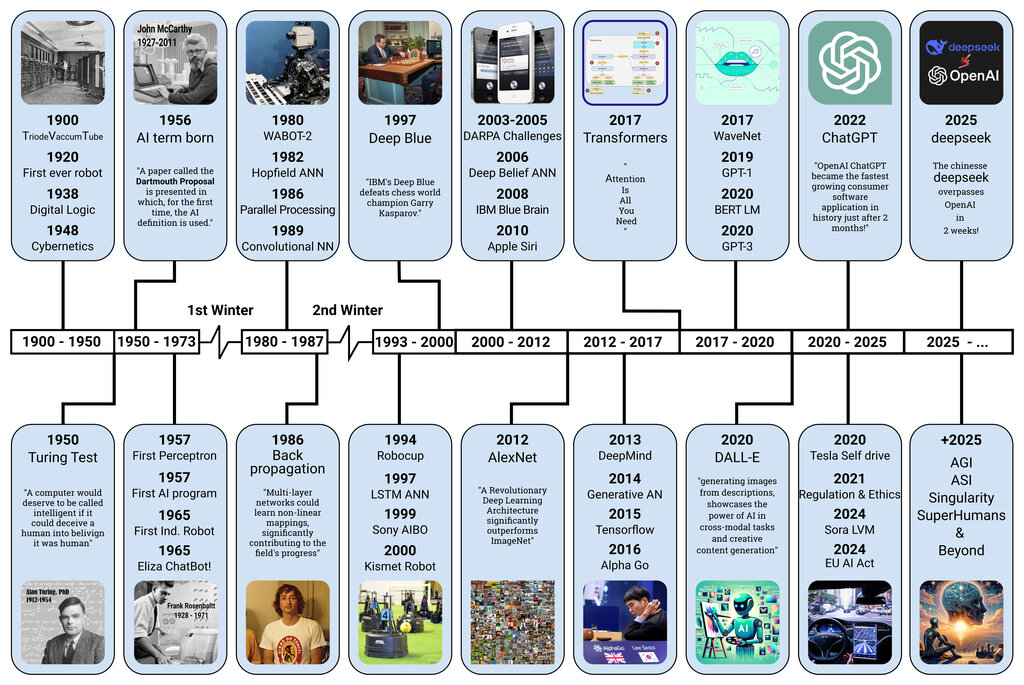
The idea isn't new. The term “artificial intelligence” was first used at a conference in 1956. Early AI research focused on problem-solving and symbolic methods. Scientists believed that if they could write complex enough rules, they could create a thinking machine. Over the decades, with the explosion of data and computing power, the field has shifted toward models that can learn on their own.
AI and Traditional Programs
So how is an AI different from a regular computer program? The key difference lies in how they solve problems. A traditional program follows explicit, hand-written instructions. A developer writes code that tells the computer exactly what to do for every possible scenario.
AI works differently. Instead of being given a strict set of rules, an AI model is given a large amount of data. It then learns the patterns and relationships within that data. Think of it like a weather forecasting app. A traditional program would rely on a set of fixed rules: if the temperature is below freezing and there's moisture, then predict snow. An AI model, however, would analyze decades of historical weather data and learn the complex, subtle patterns that lead to snow, allowing for more accurate predictions.
The Three Types of AI
AI is often categorized into three types based on its capabilities. What we have today is almost entirely the first type.
Narrow AI
noun
Also known as Weak AI, it is designed and trained for a specific task. It operates within a limited context and cannot perform beyond its field.
Nearly all the AI we interact with daily is Narrow AI. The AI that recommends movies, translates languages, or plays chess is specialized. It can be incredibly powerful at its one job, but it can't take its “knowledge” and apply it to something else. The AI that masters chess can't offer you financial advice.
The next two types are still theoretical.
General AI
noun
Also known as Strong AI, this is a type of intelligence that can understand, learn, and apply its knowledge to solve any problem, much like a human being.
Artificial General Intelligence (AGI) is the stuff of science fiction—for now. An AGI would possess the ability to reason, plan, and think abstractly, making it indistinguishable from human intelligence in its flexibility. We are not yet close to achieving AGI.
Superintelligence
noun
An intellect that is much smarter than the best human brains in practically every field, including scientific creativity, general wisdom, and social skills.
Artificial Superintelligence (ASI) is a step beyond AGI. It would not just mimic human intelligence but would surpass it in every way. This is a hypothetical future stage of AI development that fuels both excitement and significant debate among technologists and philosophers.
AI in the Real World
Even in its narrow form, AI is already transforming industries. It’s not just about chatbots or smart speakers. AI is a powerful tool with practical applications everywhere.
| Industry | AI Application |
|---|---|
| Healthcare | Analyzing medical images to detect diseases earlier. |
| Finance | Detecting fraudulent transactions in real-time. |
| Retail | Personalizing shopping recommendations for customers. |
| Transportation | Powering navigation apps and developing self-driving cars. |
| Entertainment | Recommending content on streaming services like Netflix. |
| Manufacturing | Optimizing supply chains and predicting maintenance needs. |
These applications show how AI can process vast amounts of data to find patterns and make predictions far more efficiently than humans ever could. Understanding these fundamentals—what AI is, how it differs from traditional code, and what it can do—is the first step to seeing how it can be applied in new and creative ways.
What is the key difference between how an AI model and a traditional computer program solve problems?
A self-driving car navigates traffic, a digital assistant translates your speech, and a system plays chess at a grandmaster level. What do these examples of AI have in common?