AI and Machine Learning Explained Through Soccer
Introduction to AI and Machine Learning
What Is Artificial Intelligence?
Artificial Intelligence, or AI, is a broad field of computer science focused on creating machines that can perform tasks that typically require human intelligence. Think of it as the grand goal of making computers think, reason, and learn.
The aim of AI is to simulate or even replicate human intelligence in machines. This includes everything from understanding language to recognizing objects in a photo and making complex decisions.
Artificial Intelligence
noun
The theory and development of computer systems able to perform tasks normally requiring human intelligence, such as visual perception, speech recognition, decision-making, and translation between languages.
Early AI systems were often based on a set of hand-crafted rules. For example, to build a chess-playing program, developers would explicitly code rules like, "If the opponent's king is in check, try to move your own piece to block the attack." This is a form of AI, but it relies entirely on human programmers defining every possible move and strategy.
Meet Machine Learning
Machine Learning (ML) is a specific approach to achieving AI. Instead of writing explicit rules, machine learning gives computers the ability to learn for themselves. The core idea is to provide a system with a large amount of data and let it find patterns and make predictions on its own.
Machine Learning
noun
A subset of artificial intelligence where algorithms are trained to find patterns in data, and then use those patterns to make predictions or decisions without being explicitly programmed for the task.
Think about teaching a child to recognize a cat. You don't give them a long list of rules like "it has pointy ears, whiskers, and a long tail." Instead, you show them many pictures of cats. Eventually, the child learns the underlying pattern of what a cat looks like. Machine learning works in a similar way. An algorithm is "trained" on thousands of cat photos until it can accurately identify a cat in a new, unseen photo.
AI vs. Machine Learning
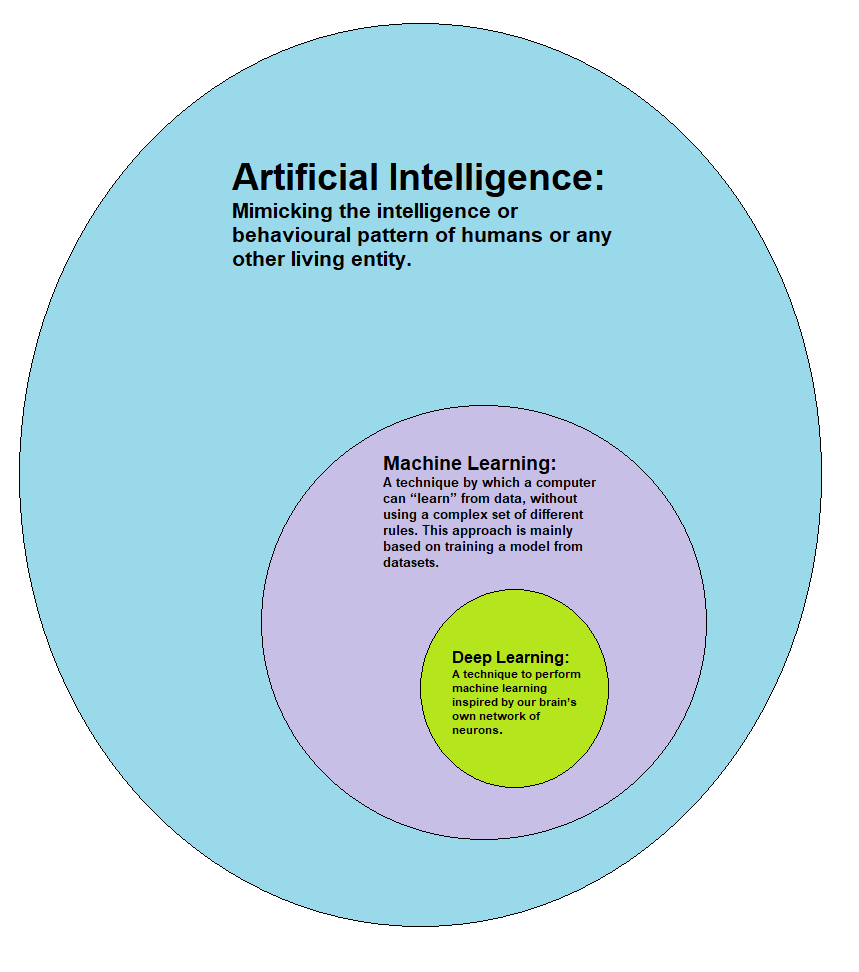
The terms AI and ML are often used interchangeably, but they aren't the same thing. Artificial Intelligence is the all-encompassing concept of intelligent machines. Machine Learning is one of the most popular and successful ways to build those intelligent machines.
So, all machine learning is a form of AI, but not all AI involves machine learning. The early rule-based chess programs were AI, but they didn't use machine learning because they didn't learn from experience; they just executed the rules they were given.
| Feature | Artificial Intelligence (AI) | Machine Learning (ML) |
|---|---|---|
| Scope | A broad concept of creating intelligent machines. | A specific subset of AI focused on learning from data. |
| Goal | To simulate human intelligence to solve problems. | To learn from data to make accurate predictions. |
| Approach | Can be rule-based, logic-based, or learning-based. | Primarily data-driven and statistical. |
| Example | A GPS navigation system that calculates the best route. | A movie recommendation engine that suggests films you might like. |
AI and ML in the Real World
You interact with AI and machine learning every day, often without realizing it. These technologies are not just science fiction; they are practical tools that power many modern services.
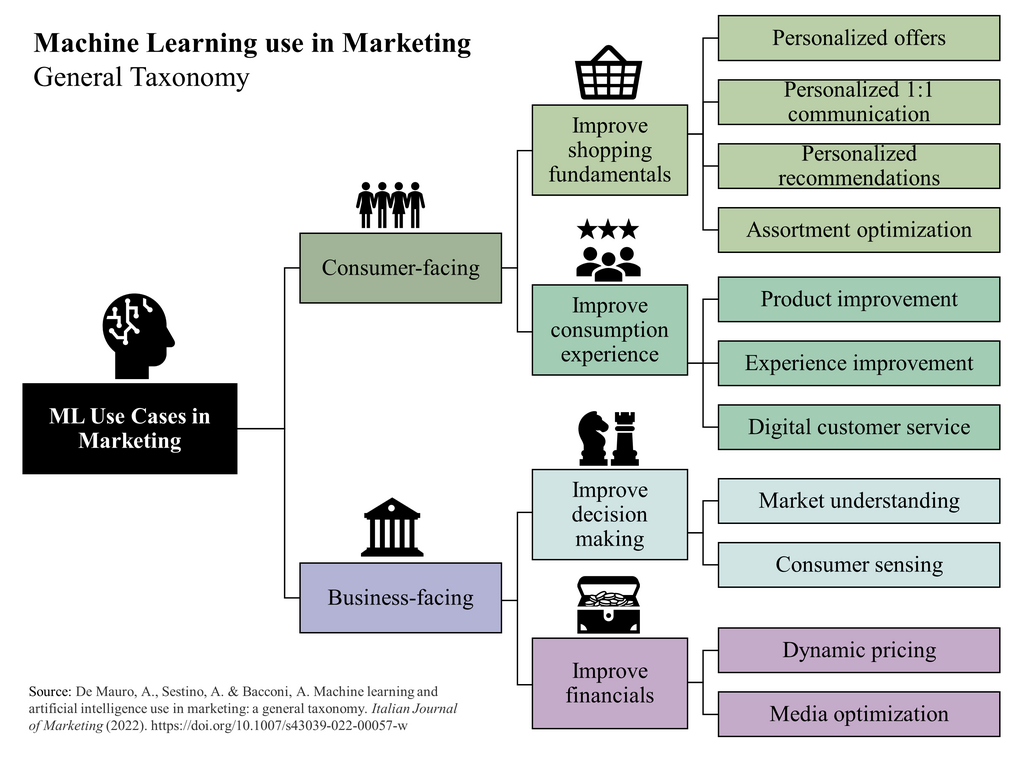
Here are a few common examples:
- Recommendation Engines: When Netflix suggests a movie or Amazon recommends a product, they are using machine learning. The algorithms analyze your past behavior (what you've watched, liked, or bought) and compare it to the behavior of millions of other users to predict what you might enjoy next.
- Virtual Assistants: Assistants like Siri and Alexa use AI to understand your spoken commands (a field called Natural Language Processing) and perform tasks. They use machine learning to improve their understanding of your accent and speech patterns over time.
- Spam Filters: Your email service automatically sorts junk mail into a spam folder. It does this using ML algorithms that have been trained on vast numbers of emails to recognize the characteristics of spam, such as suspicious links or certain keywords.
- Ride-Sharing Apps: Apps like Uber and Lyft use AI to predict demand, determine pricing, and find the most efficient routes for drivers. Machine learning helps the system learn from traffic patterns and ride history to improve its estimates.
Now it's time to check what you've learned.
What is the primary goal of Artificial Intelligence (AI)?
Which statement best describes the relationship between Artificial Intelligence (AI) and Machine Learning (ML)?