AI and GenAI for Sustainable Finance and Fintech
Introduction to AI
What Is Artificial Intelligence?
Artificial intelligence is the science of making computers do things that require intelligence when done by humans. This means creating systems that can learn from experience, reason through problems, and adapt to new situations. The goal isn't just to make a machine follow instructions, but to enable it to think and solve problems on its own.
At its core, AI is about recognizing patterns, making predictions, and deciding on the best course of action. Whether it's recommending a movie, translating a sentence, or identifying a stop sign, an AI system is processing information and making a judgment call, much like a person would.
Artificial Intelligence
noun
A branch of computer science dealing with the simulation of intelligent behavior in computers.
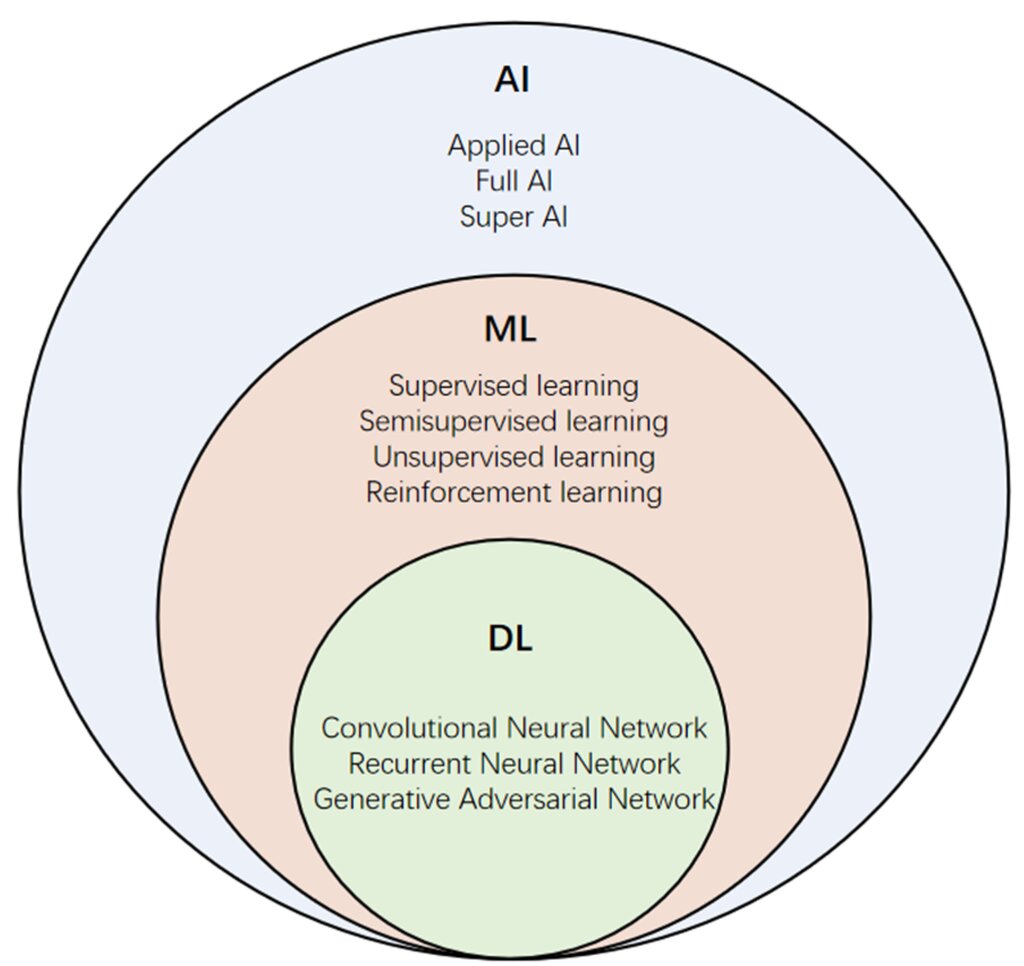
AI isn't a single technology. It's a broad field with many specialized areas. Some of the most well-known subfields include Machine Learning and Deep Learning, which are methods for teaching computers to learn from data.
A Brief History
The dream of creating intelligent machines has been around for centuries, but the formal field of AI research began in the summer of 1956 at a workshop at Dartmouth College. There, a group of scientists coined the term "artificial intelligence" and laid out the basic vision for the field.
The early years were filled with excitement and bold predictions. Researchers developed programs that could solve algebra problems and prove theorems in logic. However, the initial hype soon ran into reality. The limited computing power and data of the time made it difficult to tackle more complex, real-world problems. This led to periods of reduced funding and interest known as "AI winters."
Despite these setbacks, progress continued. In 1997, a major milestone was reached when IBM's Deep Blue chess computer defeated the world champion, Garry Kasparov. This event showed that AI could master a complex, strategic task that was once thought to be the exclusive domain of human intellect.
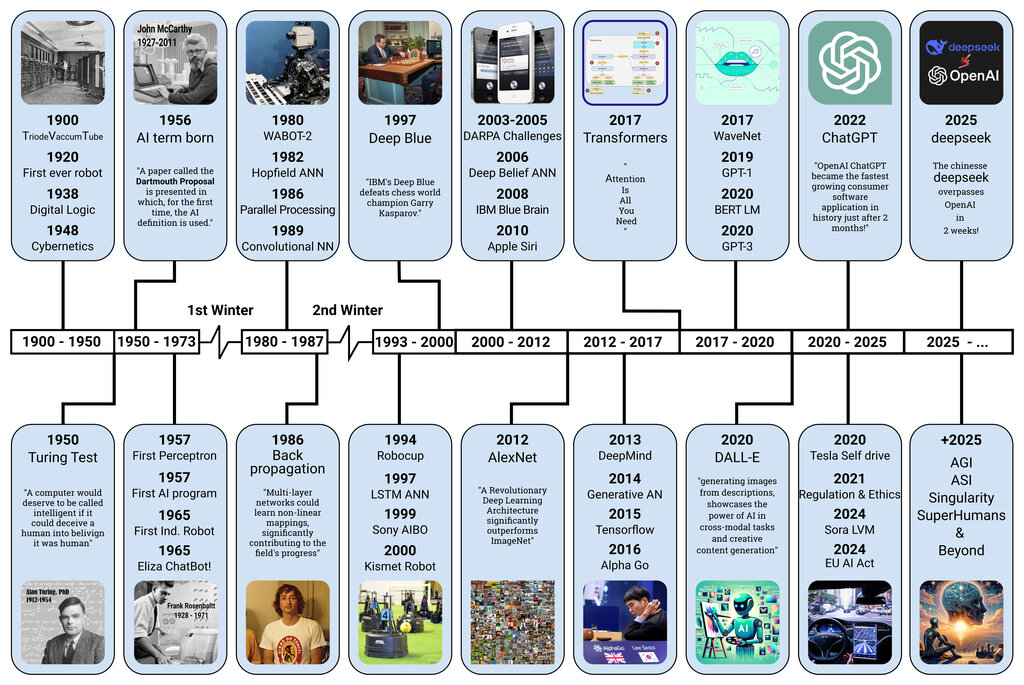
The last two decades have seen an explosion in AI development, fueled by the availability of massive datasets (often called "big data") and a dramatic increase in computing power. This combination has allowed AI to move from research labs into our daily lives.
The Building Blocks of AI
Every AI system, regardless of its purpose, is built on three fundamental pillars: data, algorithms, and computing power.
Data is the fuel. AI systems learn by analyzing vast amounts of information. For an AI to learn to identify cats, it needs to see thousands of pictures of cats. The more data it has, the better it becomes at its task.
Algorithms are the instructions. These are the specific procedures and mathematical models that tell the computer how to learn from the data. An algorithm might instruct the system to look for certain features, like pointy ears and whiskers, to identify a cat.
Computing Power is the engine. Processing huge datasets with complex algorithms requires powerful hardware. Advances in computer chips, particularly graphics processing units (GPUs), have provided the raw power needed to train today's sophisticated AI models.
Branches of AI
Artificial intelligence is a vast field with many specialized branches. Each focuses on a different aspect of intelligence. Here are a few of the most prominent areas.
Machine Learning (ML) is a subfield of AI where systems learn directly from data to find patterns and make decisions without being explicitly programmed for the task. It's the most common form of AI in use today.
Natural Language Processing (NLP) gives computers the ability to understand, interpret, and generate human language. This is the technology behind virtual assistants like Siri and Alexa, as well as language translation services.
Computer Vision aims to replicate the human visual system, allowing machines to "see" and interpret visual information from the world. This is crucial for applications like self-driving cars, which need to identify pedestrians, traffic lights, and other vehicles, and for facial recognition technology.
| Subfield | Primary Goal | Common Application |
|---|---|---|
| Machine Learning | Learn patterns from data | Email spam filtering |
| Natural Language Processing | Understand & generate language | Automated language translation |
| Computer Vision | Interpret visual information | Object recognition in photos |
These subfields often overlap and work together. For example, an advanced robotics system might use computer vision to navigate its environment, machine learning to adapt its movements, and natural language processing to understand voice commands.
Now that you're familiar with the basics, let's test your knowledge.
What is the primary goal of artificial intelligence?
The term "artificial intelligence" was coined at a 1956 workshop held at which institution?
Understanding these foundational concepts is the first step in appreciating the power and potential of artificial intelligence.