AI and Design
Introduction to Artificial Intelligence
What Is Artificial Intelligence?
Artificial intelligence, or AI, is the simulation of human intelligence in machines. It's the broad science of making computers do things that typically require human smarts, like learning, reasoning, and problem-solving.
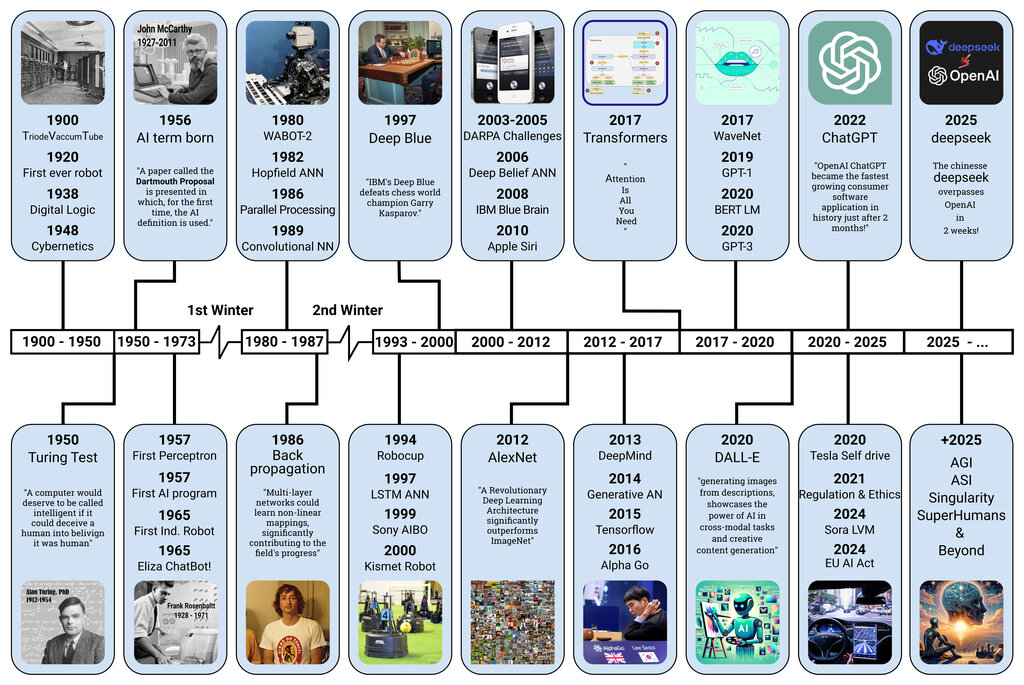
The idea isn't new. Philosophers have long dreamed of creating artificial beings. But the modern field of AI officially began in the 1950s. Early researchers were optimistic, believing they could create human-level intelligence in just a few decades. The reality was much harder.
Progress came in waves. Early AI relied on handcrafted rules. Later, systems began learning from data. Today, we're in an era of powerful AI that can write text, create images, and even drive cars. It's built on decades of research, fueled by massive amounts of data and powerful computers.
The AI Family Tree
The term "AI" is often used as a catch-all, but it's really a large field with several important sub-fields. Think of it like a set of nesting dolls, where each doll fits inside a larger one.
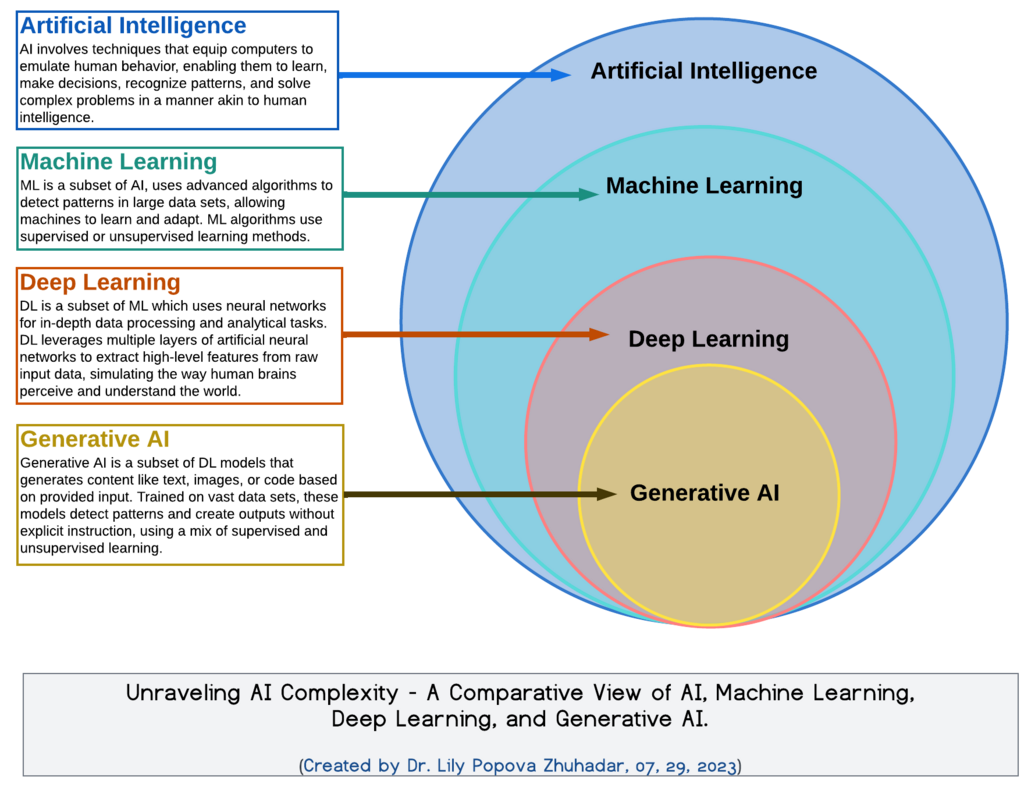
At the outermost layer, we have Artificial Intelligence itself. This is the entire field dedicated to creating intelligent machines.
Inside AI, there’s Machine Learning (ML). Instead of being programmed with explicit rules for every task, ML systems learn patterns directly from data. You show a machine thousands of cat photos, and it learns to recognize a cat on its own. It's like learning through experience.
A specialized type of machine learning is Deep Learning (DL). This approach uses structures called neural networks, which are inspired by the human brain. These networks have many layers, allowing them to learn incredibly complex patterns from huge datasets. Deep learning is the technology behind many recent AI breakthroughs, like image recognition and natural language processing.
Finally, Neural Networks are the core components of deep learning. They are networks of interconnected nodes, or "neurons," that process information much like our brains do. Each connection has a weight that gets adjusted as the network learns, making it better at its specific task.
Building Trustworthy AI
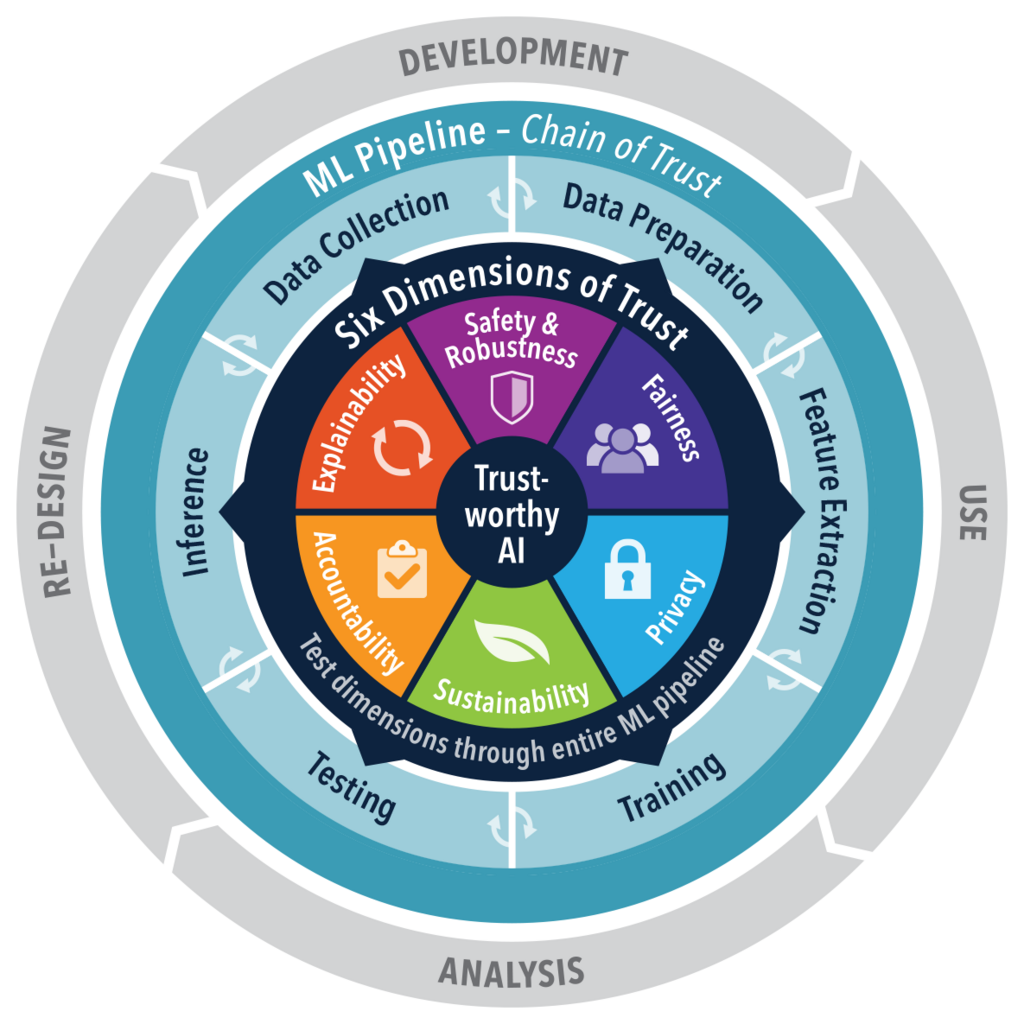
As AI becomes more powerful and integrated into our lives, making sure it's developed and used responsibly is critical. This isn't just a technical challenge; it's a human one. Trustworthy AI is built on a foundation of ethical principles and requires constant human oversight.
Use of artificial intelligence in human contexts calls for ethical considerations for the design and development of AI-based systems.
Several key principles guide the creation of responsible AI:
- Transparency: We should be able to understand how an AI system makes its decisions. If an AI denies someone a loan, the bank needs to know why. This is often called "explainability."
- Fairness: AI systems learn from data, and if that data reflects societal biases, the AI will learn those biases too. For example, if a hiring tool is trained on historical data where men were hired more often for a certain role, it might unfairly favor male candidates. Ensuring fairness means actively working to identify and correct these biases.
- Accountability: When an AI system makes a mistake, who is responsible? Is it the developer, the user, or the company that deployed it? Clear lines of accountability are essential for building trust.
Ultimately, AI is a tool created by people, for people. Human oversight is crucial at every stage, from designing the system and collecting the data to monitoring its performance and impact on the world.
Now that you have a grasp of the fundamentals, let's test your knowledge.
Which statement best describes the relationship between Artificial Intelligence (AI), Machine Learning (ML), and Deep Learning (DL)?
Unlike early, rule-based AI systems, Machine Learning models primarily learn patterns directly from ________.
Understanding these core concepts is the first step. It provides the foundation you need to explore how AI is changing fields like design, engineering, and beyond.