AI and Cybersecurity
Introduction to AI Security
What Is AI Security?
Artificial intelligence (AI) security is the practice of protecting AI systems from threats. It’s not just about guarding computers and networks; it’s about securing the core components that make AI work: the models, the data they're trained on, and the infrastructure they run on.
Think of a self-driving car. Its security involves protecting the software that makes decisions (the model), the map and sensor data it uses to navigate (the data), and the car's internal computers (the infrastructure). A failure in any of these areas could have serious consequences. The goal of AI security is to prevent unauthorized access, data breaches, and malicious manipulation, ensuring the AI behaves as intended and can be trusted.
Unique AI Challenges
While AI security builds on traditional cybersecurity principles, it faces unique challenges because AI systems learn and make decisions in ways that aren't always predictable. Traditional software follows explicit instructions, but AI models learn patterns from data. This learning process creates new vulnerabilities.
One major risk is adversarial attacks. This is when a malicious actor makes small, often imperceptible changes to an AI's input to trick it into making a mistake. For example, a tiny, carefully crafted digital alteration to an image of a cat could cause an AI to confidently classify it as a car.
Another threat is data poisoning. Since AI models learn from data, an attacker can intentionally feed the model bad data during its training phase. This can create a hidden backdoor or teach the model to make specific errors. Imagine teaching a child that all apples are blue; they would consistently misidentify them later on.
Finally, there's the risk of model theft. An organization's AI model is a valuable asset. Attackers may try to steal the model to replicate it or use a technique called model inversion to extract the sensitive private data it was trained on, such as personal medical records or financial information.
The New Threat Landscape
The rise of more advanced AI systems introduces even more complex security concerns.
Generative AI, like the models that create text, images, and code, can be exploited to produce harmful content at a massive scale. This includes generating realistic fake news articles, phishing emails, or even malicious software. They are also vulnerable to prompt injection, where an attacker embeds hidden instructions in a prompt to make the model ignore its original purpose and follow the attacker's commands instead.
Agentic AI systems take this a step further. These are AIs designed to be autonomous, capable of setting their own goals and using tools (like browsing the web or accessing other software) to achieve them. While powerful, their autonomy creates significant risk. A hijacked agentic AI could be instructed to find and exploit security vulnerabilities in a network or carry out complex fraudulent schemes, all without direct human oversight.
Securing Agentic Artificial Intelligence (AI) systems requires addressing the complex cyber risks introduced by autonomous, decision-making, and adaptive behaviors.
Because these systems can act independently and interact with other digital tools, they dramatically expand the potential
attack surface
noun
The total number of points or vectors through which an unauthorized user can try to enter a system and extract data or cause harm.
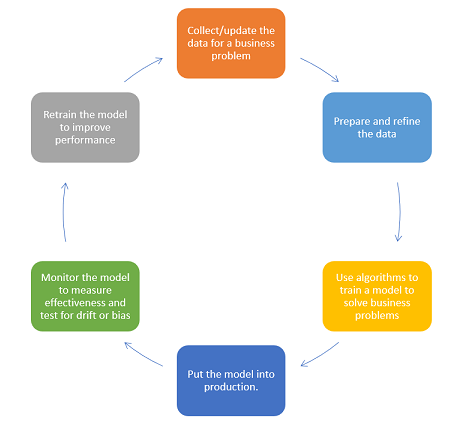
Securing them means not only protecting the AI model itself but also controlling the tools it can access and monitoring its actions for any signs of malicious behavior. The entire lifecycle of the AI, from data collection to deployment and monitoring, must be secured.
What are the three core components that AI security aims to protect?
An attacker slightly alters a stop sign with a few small stickers, causing a self-driving car's AI to misinterpret it as a speed limit sign. What type of attack does this represent?
As AI becomes more integrated into our lives, a strong focus on security is not just an option—it's a necessity for building systems that are safe, reliable, and trustworthy.