AI: An Introduction
Introduction to AI
What Is Artificial Intelligence?
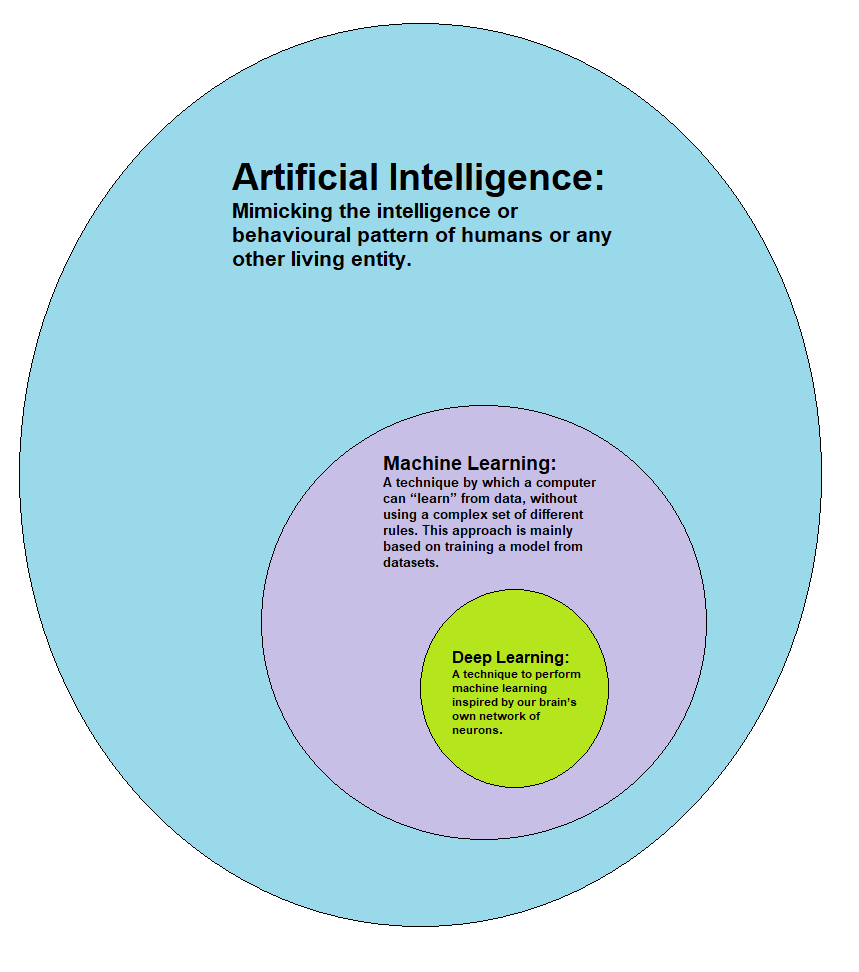
Artificial intelligence is about creating systems that can think, learn, and solve problems like a human. It's a broad field in computer science focused on building smart machines capable of performing tasks that typically require human intelligence.
Artificial Intelligence
noun
The theory and development of computer systems able to perform tasks that normally require human intelligence, such as visual perception, speech recognition, decision-making, and translation between languages.
The main goal isn't just to make a machine calculate faster. It's to enable it to reason, perceive its environment, and understand language. Think about how you learn from experience, recognize a friend's face in a crowd, or hold a conversation. AI aims to replicate these abilities in machines.
Two Types of AI
Not all AI is created equal. The field is generally split into two main categories: narrow AI and general AI. The distinction is crucial for understanding what AI can do today and what it might do tomorrow.
Artificial Narrow Intelligence (ANI), or "Weak AI," is designed for a specific task. This is the AI we interact with every day. Your phone's voice assistant, a spam filter for your email, or the system that recommends movies are all examples of narrow AI. They are incredibly good at their one job but can't operate outside of it. A chess-playing AI can't start recommending music.
Artificial General Intelligence (AGI), or "Strong AI," is the more futuristic concept. This is the type of AI you often see in science fiction. AGI would possess the ability to understand, learn, and apply its intelligence to solve any problem, much like a human being. It could switch from translating languages to composing music to developing scientific theories without being reprogrammed. We are not there yet; AGI remains a theoretical goal.
| Feature | Narrow AI (ANI) | General AI (AGI) |
|---|---|---|
| Scope | Performs a single, specific task | Can handle any intellectual task a human can |
| Learning | Learns from data relevant to its task | Learns and adapts across various domains |
| Current State | Widely used and common today | Theoretical and under research |
| Example | Facial recognition software | A single AI that can write poetry and drive a car |
More Than Just Code
Artificial intelligence isn't a standalone subject; it's a melting pot of different disciplines. While computer science provides the programming foundation, AI draws heavily on other fields to build its models of intelligence.
- Mathematics provides the logic and algorithms for reasoning and learning.
- Psychology offers insights into how humans think, learn, and perceive the world, which helps in designing AI systems.
- Neuroscience inspires AI architectures, like neural networks, which are loosely based on the structure of the human brain.
- Linguistics is essential for Natural Language Processing (NLP), the part of AI that helps machines understand and respond to human language.
This interdisciplinary nature is what makes AI so powerful. It combines the rigor of mathematics with insights from the study of the human mind to create something new.
AI in Your Daily Life
AI is no longer a distant concept. It's a practical tool that has a significant impact on our lives and shapes modern industries.
In healthcare, AI helps doctors diagnose diseases earlier and more accurately by analyzing medical images like X-rays and MRIs. It also speeds up the process of discovering new drugs.
In finance, AI systems work behind the scenes to detect fraudulent transactions in real time, protecting your bank accounts. They also power algorithmic trading on stock markets.
In entertainment, AI curates the content you see. Recommendation engines on streaming services learn your preferences to suggest movies and songs you might like.
In transportation, GPS apps use AI to analyze traffic patterns and find the fastest route, saving you time on your commute. It's also the core technology behind the development of self-driving cars.
From navigating city streets to choosing what to watch, AI is an integrated part of the modern world, making processes more efficient and personalized.
What is the primary goal of artificial intelligence?
Artificial General Intelligence (AGI), or 'Strong AI', is a theoretical concept that has already been fully achieved.