AI Agents in Distribution Management
AI in Distribution Management
Smarter Distribution with AI
Distribution Management Systems (DMS) are the brains behind getting products from a warehouse to a customer's doorstep. Traditionally, this involved a lot of guesswork and manual planning. Today, Artificial Intelligence (AI) is transforming these systems, making them more predictive, efficient, and responsive.
Instead of relying solely on past sales data, AI-powered DMS can analyze vast datasets in real time. This includes everything from weather patterns and social media trends to competitor pricing and local events. The result is a distribution network that doesn't just react to change, it anticipates it.
AI can help solve these issues by predicting demand, optimizing delivery routes, and even automating warehousing operations.
Key AI Applications
AI isn't a single tool but a collection of technologies that enhance different parts of the distribution process. These AI agents, or specialized programs, work together to streamline operations from start to finish.
| Application | How AI Helps |
|---|---|
| Demand Forecasting | Analyzes complex variables (market trends, weather, etc.) to predict what customers will want, and when. |
| Inventory Management | Automates reordering, optimizes stock levels to prevent overstocking, and identifies slow-moving products. |
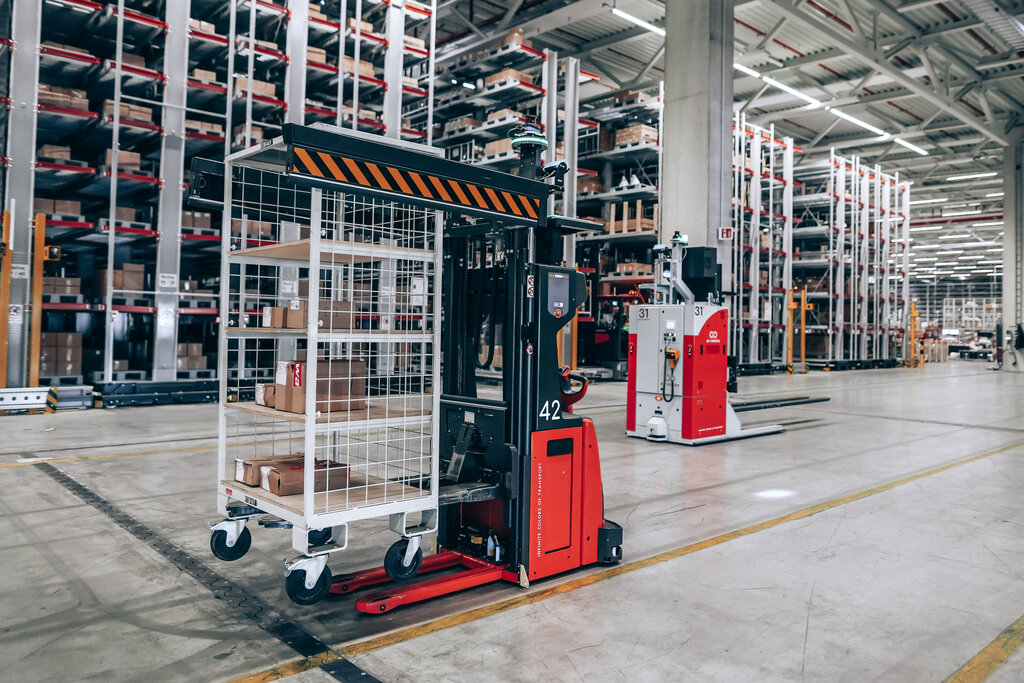
| Warehouse Automation | Powers robots for picking, packing, and sorting, which speeds up order fulfillment and reduces errors. |
| Route Optimization | Calculates the most efficient delivery routes by factoring in traffic, fuel costs, and delivery windows in real time. |
Consider demand forecasting. An older system might look at last December's sales to plan for this year. An AI model, however, will also factor in current economic indicators, shipping delays, and even online chatter about a particular product. This leads to far more accurate predictions, ensuring the right products are in the right place at the right time.
Benefits and Future Trends
Integrating AI into distribution management yields clear benefits. Costs go down due to optimized routes and reduced waste from overstocking. Efficiency goes up as automated systems fulfill orders faster than humanly possible. Most importantly, customer satisfaction improves with fewer stockouts and faster, more reliable deliveries.
The trend is moving toward even more integrated systems. AI agents are becoming more autonomous, capable of making complex decisions without human intervention. We're also seeing a greater fusion of AI with the Internet of Things (IoT). Sensors on delivery trucks, in warehouses, and even on products themselves can feed real-time data to the AI, allowing it to adapt to changing conditions instantly.
This leads to predictive maintenance, where AI can forecast when a delivery vehicle needs service before it breaks down, preventing costly delays.
As AI technology continues to evolve, its role in managing complex supply chains will only grow, making distribution faster, cheaper, and more reliable.