AI Agents for Venture Capital Workflow
Introduction to AI Agents
Meet the AI Agent
Think of an AI agent as a digital employee. It's a program designed to work on its own to achieve a specific goal. Unlike a simple tool that waits for commands, an agent can perceive its surroundings, make decisions, and take action without constant human supervision.
An AI agent is a software program designed to understand its environment, process information, and take actions to achieve specific goals.
This ability to operate independently is what makes agents so powerful. They're not just executing a script; they are interacting with an environment, which could be anything from a database or a website to the physical world via sensors. All agents, no matter how simple or complex, operate on a fundamental cycle.
Perceive, Decide, Act
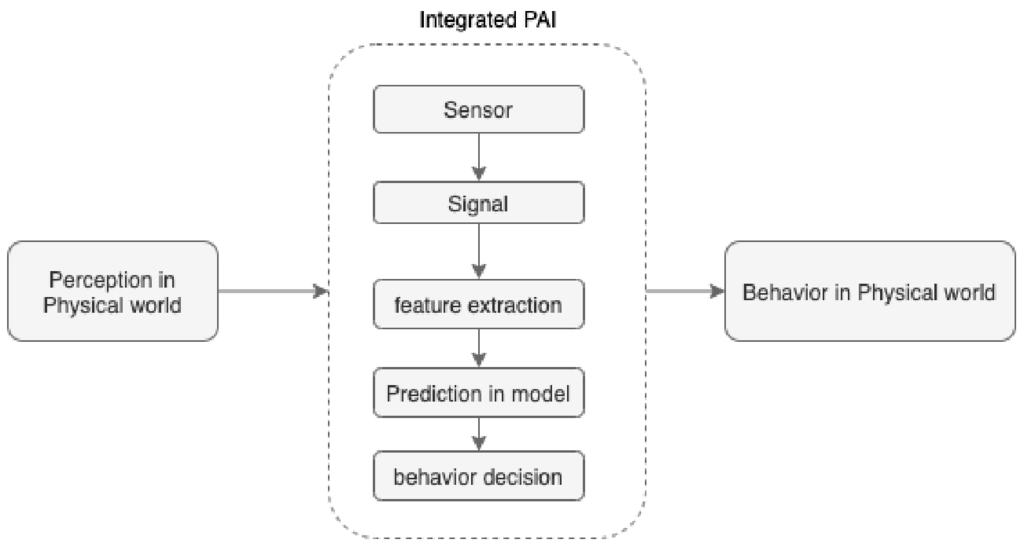
Every AI agent follows a three-step process: it perceives, it decides, and it acts. This is often called the perception-action cycle.
-
Perception: First, the agent gathers information about its environment. For a chatbot, this might be the text you type. For a self-driving car, it's a flood of data from cameras, GPS, and other sensors. This is the agent's way of "seeing" the world.
-
Decision-Making: Next, the agent processes this information to decide what to do. It uses its internal logic or model to choose the best action to help it achieve its goal. This is the "thinking" part of the cycle.
-
Action: Finally, the agent executes the chosen action. The chatbot types a response. The self-driving car adjusts its speed or turns the steering wheel. This action changes the state of the environment, and the cycle begins again.
This loop is the heartbeat of every AI agent, from the one recommending movies on your streaming service to the sophisticated systems managing stock trades.
Different Kinds of Agents
Not all agents think alike. Their decision-making processes can range from incredibly simple to deeply complex. We can generally group them into three main categories.
Reactive Agents are the simplest. They operate on a basic "if this, then that" logic. They perceive something and react immediately without considering the past or future. A thermostat is a perfect non-AI example: if the temperature drops below a set point, it turns on the heat. It doesn't remember what the temperature was an hour ago or predict what it will be later.
While simple, reactive agents are fast and reliable for straightforward tasks.
Deliberative Agents are more thoughtful. They maintain an internal "model" or map of their world and use it to think ahead. They consider how their actions will affect the future and can make plans to achieve a specific goal. A GPS navigation app is a good analogy. It has a map of the world (its model), knows your destination (its goal), and plans the best route based on current traffic and road closures.
These agents are smarter and more flexible than reactive ones, but all that thinking can make them slower to respond.
Hybrid Agents combine the best of both worlds. They have the ability to plan and think ahead like deliberative agents, but they can also react instantly to sudden changes, just like reactive agents. Think of a human driver. You have a route planned to get to work, but if a car suddenly brakes in front of you, you don't stop to reconsider your entire route—you react instantly and hit the brakes. Hybrid systems layer these abilities, allowing for both intelligent planning and quick reflexes.
| Agent Type | Key Characteristic | Simple Analogy |
|---|---|---|
| Reactive | Acts on current input only | Automatic door sensor |
| Deliberative | Plans using an internal model | GPS planning a route |
| Hybrid | Combines planning and reflexes | Human driver in traffic |
Agents in the Wild
AI agents are already working in countless industries, often behind the scenes. Their ability to automate complex tasks and make intelligent decisions is transforming how businesses operate.
In customer service, sophisticated chatbots act as agents that don't just answer questions but also access databases to check order statuses, modify reservations, and guide users through troubleshooting steps.
In e-commerce, agents power the recommendation engines that analyze your browsing history and past purchases to suggest products you might like. They are personal shoppers working to achieve the goal of a successful sale.
In healthcare, agents can analyze medical scans like X-rays or MRIs to identify anomalies, helping doctors diagnose conditions faster and more accurately.
And in supply chain management, agents optimize logistics by planning shipping routes, managing warehouse inventory, and even predicting potential delays based on weather patterns or traffic data.
Let's test your understanding of these core concepts.
What is the correct order of the fundamental three-step process that all AI agents follow?
What is the primary characteristic that distinguishes an AI agent from a simple scripted tool?
As AI continues to evolve, these autonomous agents will become even more integrated into our daily lives, taking on increasingly complex tasks and shaping the future of technology.