AI Agents for ReactJS Development
Introduction to AI Agents
What Is an AI Agent?
You've likely interacted with AI, perhaps through a chatbot or a recommendation engine. But an AI agent is a step beyond a simple tool. It's a system that can perceive its environment, make decisions, and take actions to achieve a specific goal. Think of it less like a calculator that just responds to input, and more like a personal assistant that understands what you want and figures out how to get it done.
An AI agent is an autonomous software entity capable of understanding goals, reasoning through multiple steps, interacting with tools or environments, and adjusting its actions based on outcomes.
The key word here is autonomous. While a simple script follows a rigid set of instructions, an agent has a degree of independence. It observes, orients itself, decides on a course of action, and then acts. This cycle allows it to operate in dynamic environments without a human guiding every single step.
Types of Agents
Not all agents are created equal. They exist on a spectrum of complexity, from simple automatons to sophisticated systems that can learn and strategize. We can group them into a few broad categories.
Rule-Based Agent
noun
An agent that makes decisions based on a predefined set of if-then rules crafted by a human programmer.
These are the most straightforward agents. They don't learn or adapt on their own; their behavior is entirely determined by the rules they are given. They are predictable and reliable for tasks in stable, well-understood environments.
Next, we have agents powered by machine learning.
Machine Learning (ML) agents use models that are trained on vast amounts of data to recognize patterns and make decisions. Instead of explicit rules, they learn their own logic.
A spam filter in your email is a perfect example. No one wrote a rule for every possible type of spam. Instead, the model was trained on millions of emails, learning the characteristics that distinguish junk from legitimate messages. This allows it to adapt and catch new types of spam it has never seen before.
Finally, we have autonomous agents.
Autonomous agents represent the cutting edge. These systems can operate independently for extended periods, setting their own sub-goals to achieve a broader objective. They often combine machine learning with complex reasoning and planning capabilities. A self-driving car navigating city traffic is an autonomous agent, as is a robotic vacuum cleaner mapping and cleaning a room.
| Agent Type | Decision-Making | Adaptability | Example |
|---|---|---|---|
| Rule-Based | Predefined if-then rules | Low | Thermostat |
| Machine Learning | Data-driven patterns | Medium | Spam Filter |
| Autonomous | Goal-oriented planning | High | Self-Driving Car |
Agents in Software Development
Beyond fancy robots, AI agents are becoming powerful assistants for software developers. Their ability to process information and execute tasks makes them ideal for automating parts of the development lifecycle. This isn't about replacing developers, but about augmenting their abilities and handling tedious work.
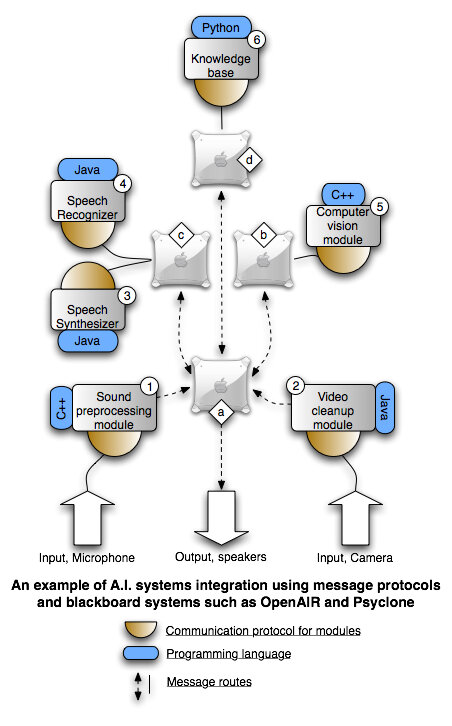
For example, an agent could monitor a complex software application for errors. When it detects an issue, it could automatically gather diagnostic data, search for known solutions in documentation, and even suggest a code fix. Another agent might help with project management by analyzing progress on tasks and flagging potential delays before they become serious problems.
Agents can also assist in writing and testing code. They can generate boilerplate code from a simple description, write unit tests to ensure quality, and even help debug by analyzing code and suggesting corrections. By taking over these repetitive and time-consuming tasks, agents free up developers to focus on creative problem-solving and building great software.
Let's check your understanding of these core concepts.
What is the primary function of an AI agent?
What key characteristic distinguishes an AI agent from a simple, non-adaptive script?
Understanding these basic agent types is the first step. As we move forward, you'll see how these concepts are applied to build intelligent, helpful tools for the web.