AI Agents for Business Analysis
Introduction to AI Agents
What Are AI Agents?
At its core, an AI agent is a program that can sense its surroundings, make decisions, and take actions to achieve a specific goal. Think of it as an autonomous helper. It's not just a simple tool that follows a rigid set of instructions; it actively perceives its environment and adapts its behavior.
An AI agent is an autonomous software entity capable of understanding goals, reasoning through multiple steps, interacting with tools or environments, and adjusting its actions based on outcomes.
This basic formula—perceive, decide, act—is the foundation for all AI agents. A self-driving car perceives the road with cameras and sensors, decides when to brake or accelerate, and then acts by controlling the car's systems. A spam filter perceives the content of an email, decides if it's junk, and acts by moving it to your spam folder. Both are examples of AI agents at work.
agent
noun
In AI, an entity that perceives its environment through sensors and acts upon that environment through actuators to achieve a goal.
Agents are defined by their autonomy and goal-oriented nature. They operate without direct human intervention, working towards objectives we've set for them. But not all agents are created equal. They range from very simple to incredibly complex, each suited for different kinds of tasks.
A Family of Agents
AI agents can be categorized based on how they make decisions. Understanding these types helps clarify what they can do and how they do it.
Simple Reflex Agents are the most basic type. They follow a simple "if-then" rule. If the car in front of you brakes, then you brake. They react to their current perception and ignore past history. A smart thermostat that turns on the heat when the temperature drops is a perfect example.
Goal-Based Agents are a step up. They don't just react; they think about the future. These agents have a specific goal to achieve. A GPS navigation system is a goal-based agent. Its goal is to get you to your destination, and it makes decisions about which turns to take to achieve that goal.
Utility-Based Agents are more sophisticated. When there are multiple ways to reach a goal, they choose the one that is best or most efficient. They try to maximize their "utility," which is a measure of success or happiness. A flight booking agent that finds not just a flight, but the cheapest and fastest one, is acting as a utility-based agent.
Learning Agents can improve their performance over time. They learn from their experiences. A chess-playing AI is a learning agent. After each game, it analyzes what went right and wrong, becoming a better player for the next match.
Hierarchical Agents tackle complex problems by breaking them down into smaller, manageable sub-tasks. Imagine an agent tasked with planning a vacation. It might create sub-agents to handle booking flights, reserving hotels, and planning daily activities. Each sub-agent has its own goal, which contributes to the main objective.
Collaborative Agents, also known as multi-agent systems, are teams of agents that work together. A group of warehouse robots that coordinate to retrieve and pack items for an order is a collaborative system. They communicate with each other to avoid collisions and work efficiently.
Agents in Business
For businesses, AI agents are powerful tools for turning data into insight and action. They can automate complex processes that once required significant human effort.
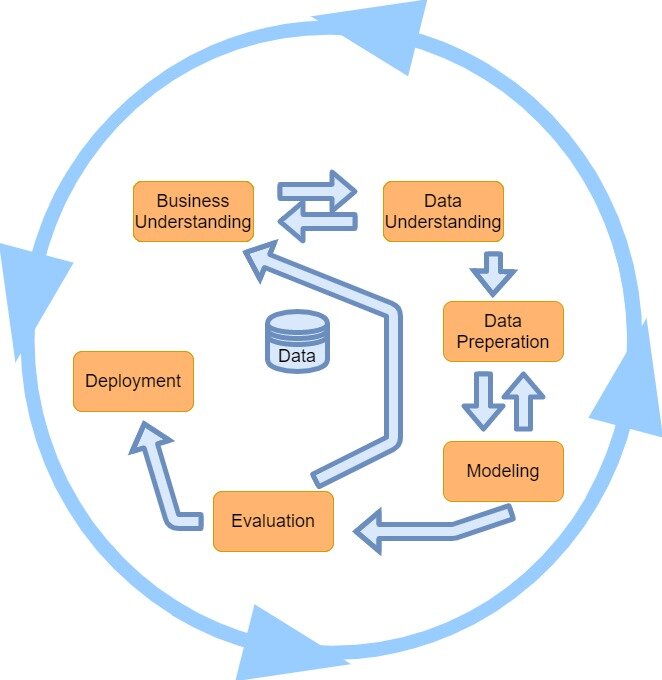
In business analysis, agents excel at:
-
Data Gathering: An agent can be programmed to automatically scrape websites, access databases, and pull information from various sources to collect relevant data for a project.
-
Pattern Recognition: Learning agents can sift through massive datasets to find trends, correlations, and anomalies that a human analyst might miss. This is crucial for understanding customer behavior or identifying market shifts.
-
Predictive Modeling: By analyzing historical data, agents can build models to forecast future outcomes. This could involve predicting sales for the next quarter, identifying customers likely to churn, or forecasting inventory needs.
By automating these tasks, AI agents free up human analysts to focus on higher-level strategy, creativity, and decision-making—things that still require a human touch.
The different agent types handle these tasks in their own ways. A simple reflex agent might flag a transaction for fraud based on a single suspicious variable. A utility-based agent could optimize a company's supply chain for both cost and speed. A team of collaborative agents might manage an entire e-commerce platform, from inventory to customer service chatbots.
What are the three fundamental steps in the operation cycle of any AI agent?
An AI that finds the cheapest and fastest flight for a trip is an example of which type of agent?
Understanding these different types of agents is the first step toward seeing how they can be applied to solve real-world business problems.