AI Agents Explained
Introduction to AI Agents
What Is an AI Agent?
Think about a smart thermostat. It senses the room's temperature, decides if it's too hot or cold based on your setting, and then acts by turning the heat or AC on or off. In a nutshell, that's an AI agent: a system that perceives its environment and takes actions to achieve a goal.
An AI agent is a program or system that can perceive its environment, process information, and take actions to achieve a specific goal.
This simple loop of perceiving, thinking, and acting is the foundation of artificial intelligence. An agent could be a physical robot, a software program, or even a character in a video game. What they all have in common is this ability to operate independently to get something done. The environment is the world the agent exists in, whether it’s a real-world kitchen for a cleaning robot or a financial market for a trading bot.
The Building Blocks of an Agent
To interact with its world, an agent needs two key types of hardware or software components: sensors and effectors.
Sensor
noun
A device or software component that detects events or changes in its environment and sends the information to the agent.
Sensors are the agent’s senses. For a robot, this might be a camera for vision or a microphone for hearing. For a spam filter, the sensor is the part of the code that reads incoming emails. They gather the raw data the agent needs to understand what’s happening.
Effector
noun
A device or software component that allows an agent to act upon its environment.
Effectors are the agent’s hands, legs, or voice. They are how the agent produces an output or change. For a robot vacuum, the wheels and suction motor are effectors. For a chatbot, the effector is the code that displays a message on the screen.
Between the sensors and effectors lies the agent's brain: its decision-making process. This is where the AI comes in. It takes the input from the sensors, processes it, and decides which action the effectors should take to best achieve its goals.
Agents in Action
The concept of an agent is central to AI because it provides a framework for creating systems that can solve problems autonomously. Instead of writing code for every possible situation, developers can design an agent that can adapt and respond on its own.
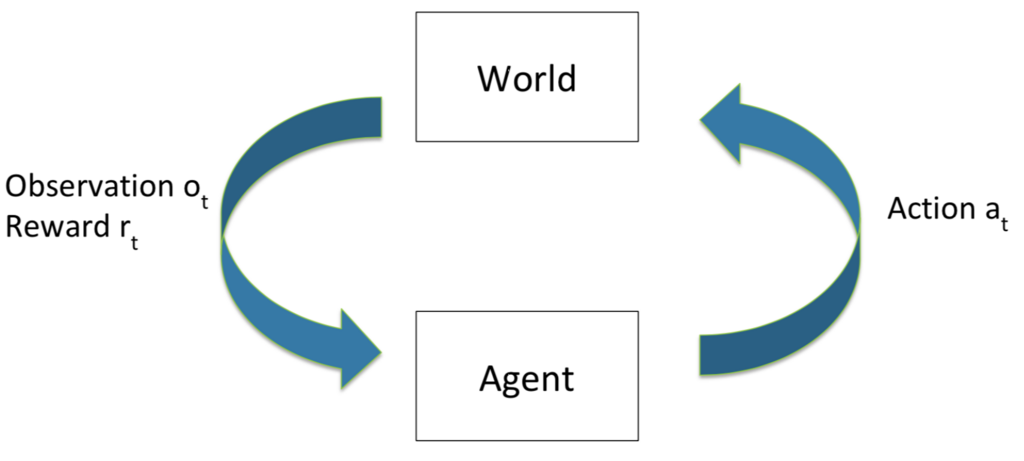
This has applications everywhere. In healthcare, an AI agent might monitor a patient's vital signs (sensors) and adjust their medication dosage through a connected device (effector). In e-commerce, an agent could track your browsing history (sensor) and recommend products (effector). They are the fundamental actors that make artificial intelligence a practical and powerful technology.
Which of the following best describes an AI agent?
A robot vacuum cleaner navigates a room, cleaning the floor. Its wheels and suction motor are examples of its __________.
This framework of perception and action is the starting point for understanding more complex AI systems.