AI Agents Explained
Introduction to AI Agents
What Are AI Agents?
Think of an AI agent as an autonomous entity that gets things done. It's a system that can observe its surroundings, make a decision, and then take an action to achieve a goal. This might sound like a sci-fi robot, and sometimes it is. But more often, an AI agent is a piece of software working behind the scenes, like a chatbot navigating a customer service request or a program bidding on online ads.
The key idea is autonomy. An agent operates on its own, without a human directing its every move. It's given a goal, and it figures out the steps to reach it.
An AI agent is a program or system that can perceive its environment, process information, and take actions to achieve a specific goal.
This concept of a self-directed entity is central to the entire field of artificial intelligence. It moves us from computers that simply calculate to systems that can interact with the world in a meaningful way.
How Agents Work
Every AI agent, whether it's a physical robot or a line of code, operates on a fundamental loop: perceive, think, act. This cycle is made possible by a few core components.
Sensor
noun
A component that detects changes or inputs from the environment.
First, an agent needs sensors to perceive its environment. For a robot vacuum, sensors might include cameras to see obstacles and infrared beams to detect stairs. For a software agent that buys stocks, the sensors are data feeds providing market prices and news headlines. Sensors are the agent's connection to the outside world.
Actuator
noun
A component that an agent uses to perform actions in its environment.
Next, an agent uses actuators to take action. The robot vacuum's wheels and brushes are its actuators, allowing it to move and clean. The stock-trading bot's actuators are the commands it sends to a brokerage to buy or sell shares. Actuators are what allow the agent to make a change in its environment.
Between sensing and acting is the most important part: the decision-making process. This is the agent's "brain." It takes the perceptual information from the sensors and decides what action to perform with its actuators to best achieve its goals. The sophistication of this decision-making is what makes an AI agent seem intelligent.
A Brief History
The idea of creating autonomous agents has been a driving force in computer science since the very beginning of the field. In the 1950s, pioneers of AI were already thinking about creating programs that could reason about the world and act on their own. Early concepts imagined systems that could accept goals in plain language and then formulate a plan to achieve them.
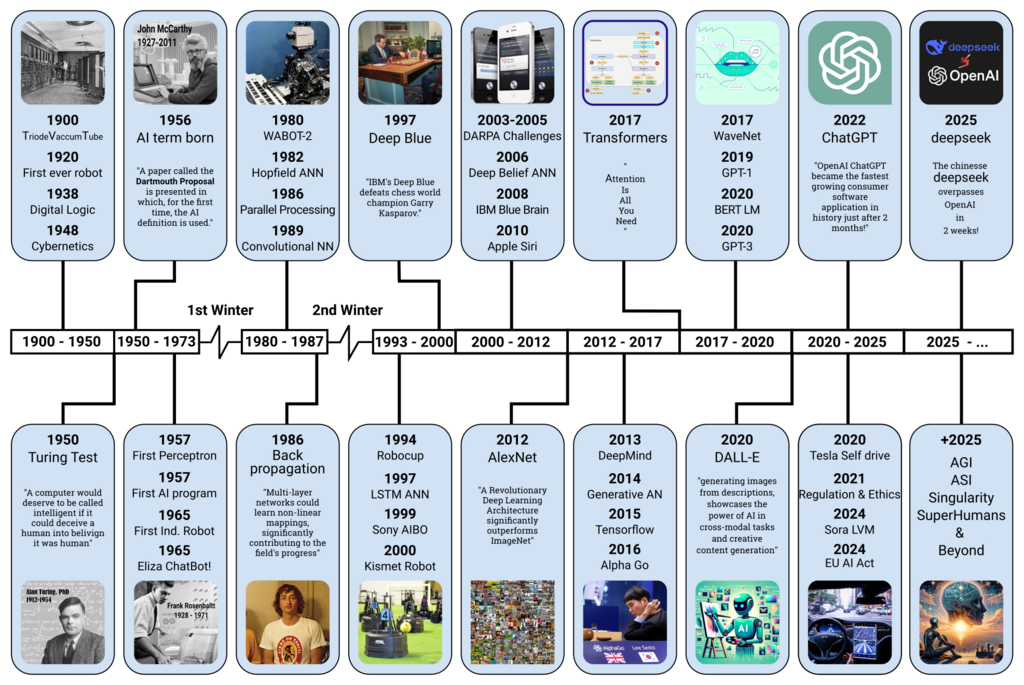
While these early visions were far ahead of the technology at the time, they laid the conceptual groundwork. Over the decades, as computing power grew and AI research advanced, the abstract idea of an agent became a practical framework for building intelligent systems. From simple rule-based bots to today's complex learning systems, the core concept of a goal-driven, autonomous entity has remained a constant.
So, why is this so important? The agent is the fundamental unit of action in AI. It's the framework that lets us build systems that do more than just process data. Agents allow AI to participate in the world, making them one of the most powerful and significant concepts in all of computer science.
What is the primary function of an AI agent?
For a software agent designed to trade stocks, which of the following would be considered its sensors?
That's a quick look at what AI agents are and the basic parts that make them work. The core idea is simple, but it's the foundation for some of the most advanced technology we have today.