AI Agents Explained
Introduction to AI Agents
What Is an AI Agent?
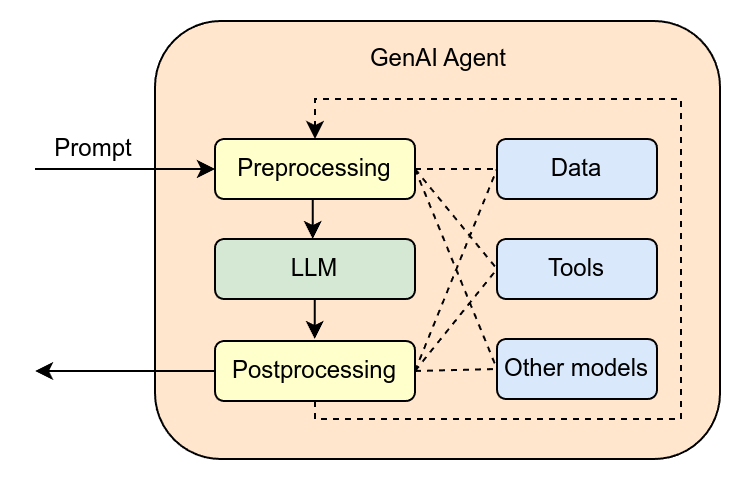
An AI agent is a system that can observe its surroundings, make decisions, and take actions to achieve a specific goal. Think of it like a smart assistant, but not just for your phone. It could be a robot in a warehouse, a character in a video game, or a program managing a power grid.
An AI agent is a software program designed to understand its environment, process information, and take actions to achieve specific goals.
The core idea is simple. The agent perceives its environment through sensors or data inputs. It then processes this information to decide on the best course of action. Finally, it acts on that decision using tools or outputs. This cycle of perceiving, thinking, and acting allows the agent to work towards its objective autonomously.
Core Characteristics
Several key traits define an AI agent and distinguish it from a simple computer program. Understanding these characteristics helps clarify what makes agents so powerful.
Autonomy: Agents can operate independently without direct human control. They are given a goal and can figure out the steps to reach it on their own.
Perception: An agent must be able to sense its environment. For a self-driving car, this means using cameras and lidar to "see" the road. For a stock-trading bot, it means reading market data feeds.
Goal-Oriented: Agents are designed with a purpose. A thermostat's goal is to maintain a specific temperature. A recommendation engine's goal is to suggest products you're likely to buy. Every action an agent takes is a step toward its objective.
| Characteristic | Description |
|---|---|
| Autonomy | Operates without constant human intervention. |
| Perception | Senses and interprets its environment through data. |
| Goal-Oriented | Works to achieve a specific, predefined objective. |
| Action | Can take actions that affect its environment. |
Why Agents Matter
The concept of an AI agent is more than just an academic definition. It’s a framework for building systems that can handle complex, dynamic tasks in the real world. From automating routine business processes to exploring distant planets, agents are at the forefront of what AI can accomplish.
Consider a customer service chatbot on a website. Its goal is to resolve your issue. It perceives your questions (input), searches its knowledge base to formulate an answer (decision), and presents that answer to you (action). Each interaction is another turn of the perceive-decide-act loop.
This same model applies to countless other applications. E-commerce sites use agents to personalize your shopping experience. Banks use them to detect fraudulent transactions. In each case, an autonomous system is sensing its environment and acting to achieve a goal, making processes more efficient and effective.
Now that you understand the basics of AI agents, let's test your knowledge.
What is the primary function of an AI agent?
A self-driving car uses cameras and lidar to detect other vehicles and pedestrians. This capability is an example of which key trait of an AI agent?
With this foundation, you're ready to explore the different types of agents and how they are designed to tackle even more complex challenges.