AI Agents Explained
Introduction to AI Agents
What Is an AI Agent?
Think about how you navigate the world. You sense things around you, think about what you want to do, and then act. You might see rain (sense), decide you don't want to get wet (goal), and grab an umbrella (act). An AI agent is a program that does something similar in a digital or physical environment.
agent
noun
Anything that can perceive its environment through sensors and act upon that environment through actuators.
A thermostat is a very simple agent. Its sensor perceives the room temperature. If it's too cold, its actuator turns on the heat. An AI agent is just a more sophisticated version of this. It's a system that perceives, thinks, and acts to achieve a goal.
What makes AI agents different from regular software is a set of key traits. These characteristics allow them to operate with a level of intelligence and independence that traditional programs lack.
The core idea is moving from a program that just follows instructions to one that actively pursues a goal on its own.
Key Characteristics
Autonomy: An agent can operate without direct human intervention. It has control over its own actions and internal state. A spam filter that automatically moves junk mail to a separate folder is acting autonomously.
Adaptability: Agents can react to changes in their environment. If a robot vacuum cleaner encounters a new obstacle like a dropped toy, it adapts its path instead of getting stuck.
Goal-Orientation: Agents are designed to achieve specific objectives. For a delivery drone, the goal is to get a package from the warehouse to a customer's doorstep safely and efficiently.
Learning Capability: The most advanced agents can improve their performance over time. A chess-playing AI learns from every game it plays, becoming a stronger opponent by recognizing patterns and successful strategies.
Types of AI Agents
Not all agents are created equal. They range from simple reactive machines to complex learning systems. We can classify them based on how they decide what action to take.
| Agent Type | How It Works | Example |
|---|---|---|
| Simple Reflex | Acts only on the current situation (a condition-action rule). Ignores past history. | A thermostat turning on the heat when the temperature drops below 68°F. |
| Model-Based Reflex | Keeps an internal model of the world. It uses this model and the current situation to act. | A self-driving car that knows a wet road (model) means it should brake earlier. |
| Goal-Based | Considers the future. It chooses actions that will help it achieve its goals. | A GPS navigation system finding the best route to your destination. |
| Utility-Based | Aims for the best outcome when there are multiple ways to achieve a goal. It chooses the action that maximizes "utility" or happiness. | A flight booking agent that finds not just any flight, but the one with the best balance of price, duration, and layovers. |
| Learning | Can improve its own performance. It has a learning element that analyzes past actions and outcomes to make better decisions in the future. | A product recommendation engine that learns your preferences based on what you view and buy. |
Each type builds on the capabilities of the one before it. A model-based agent is more capable than a simple reflex agent because it has a sense of how the world works. A goal-based agent is more flexible because it can reason about what it wants to achieve, rather than just reacting.
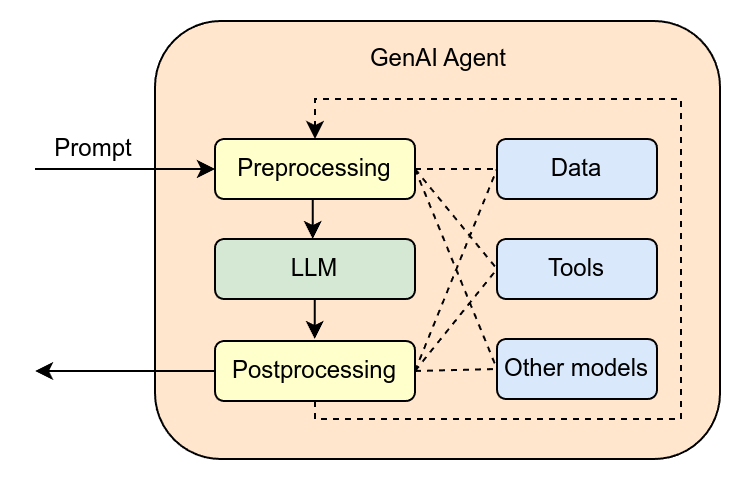
Understanding these different agent types is key to seeing how AI is applied to solve different kinds of problems. A simple problem might only need a simple reflex agent, while a complex, changing environment might require a sophisticated learning agent.
Ready to check your understanding?
What are the three fundamental steps an AI agent performs to interact with its environment?
A robot vacuum cleaner encounters a newly placed chair and successfully navigates around it instead of getting stuck. This action primarily demonstrates which AI trait?
AI agents are the building blocks of intelligent systems, giving them the ability to perceive, reason, and act in the world around them.