AI Agents Explained
Introduction to AI Agents
What Is an AI Agent?
At its core, an Artificial Intelligence (AI) agent is something that acts. Think of it as an autonomous entity that can observe its surroundings and make decisions to achieve a specific goal. It's not just a passive program; it's an active participant in an environment.
An agent perceives its environment and acts upon that environment.
This environment could be physical, like a self-driving car navigating a busy street, or digital, like a chatbot responding to questions on a website. The key idea is that the agent has a goal, whether it's getting you to your destination safely or providing a helpful answer.
How Agents Work
Every AI agent operates on a fundamental loop: it perceives, it thinks, and it acts. This cycle allows it to interact with its environment dynamically.
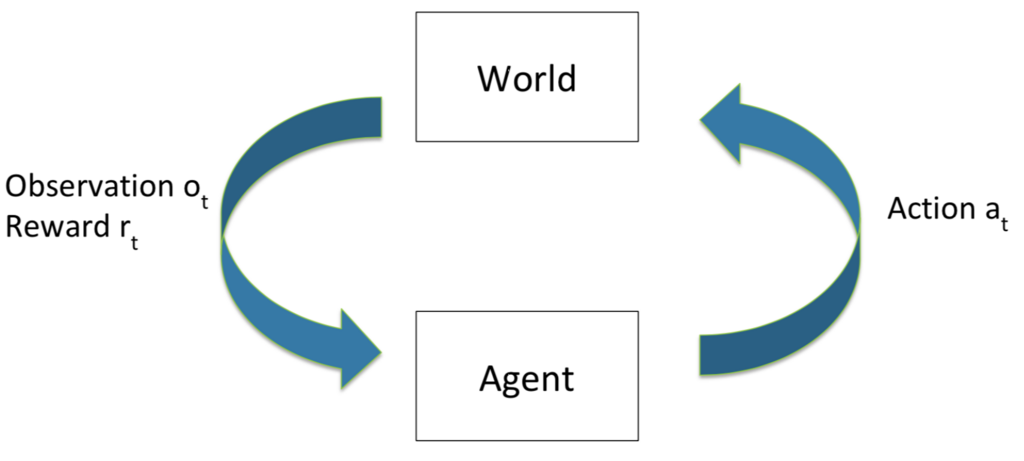
To do this, an agent needs a few key components:
-
Sensors: These are the tools an agent uses to perceive its environment. Just like humans use eyes and ears, an AI agent uses its sensors to gather data. For a self-driving car, sensors might include cameras, GPS, and LiDAR.
-
Actuators: These are what an agent uses to act on its environment. If sensors are for input, actuators are for output. A car's actuators are its steering wheel, accelerator, and brakes. For a chatbot, the actuator is the mechanism that displays text on your screen.
-
Agent Function: This is the brain of the operation. It's the internal logic or program that maps what the agent perceives (the percepts from its sensors) to the actions it should take (using its actuators). In short, it's the decision-making part.
| Component | Purpose | Simple Example (Thermostat) |
|---|---|---|
| Sensors | Gather information from the environment | Thermometer (measures temperature) |
| Actuators | Perform actions in the environment | Switch (turns furnace/AC on or off) |
| Agent Function | Decides which action to take | If temp < set point, turn on heat. |
Agents in the Wild
You interact with AI agents every day. A smart thermostat is a simple agent. Its goal is to maintain a target temperature. It uses a sensor (a thermometer) to perceive the room's temperature. Its actuators are the switches that control the furnace and air conditioner. Its agent function is a simple rule: if the temperature is too low, turn on the heat; if it's too high, turn on the A/C.
An autonomous vehicle is a much more complex agent. Its goal is to navigate from point A to point B safely and efficiently. It uses a vast array of sensors like cameras, radar, and GPS to perceive everything from road lines and traffic lights to other cars and pedestrians. Its actuators include the steering, acceleration, and braking systems.
The agent function for a self-driving car is incredibly complex, constantly calculating the best action based on a massive stream of incoming data from its sensors.
From simple devices to sophisticated robots, the agent is the fundamental concept that allows AI to move from just processing data to actively doing things in the world.
What is the primary purpose of an AI agent?
A smart thermostat uses a thermometer to measure the room's temperature. In the context of an AI agent, what is the thermometer?