AI Agents Explained
Introduction to AI Agents
What Is an AI Agent?
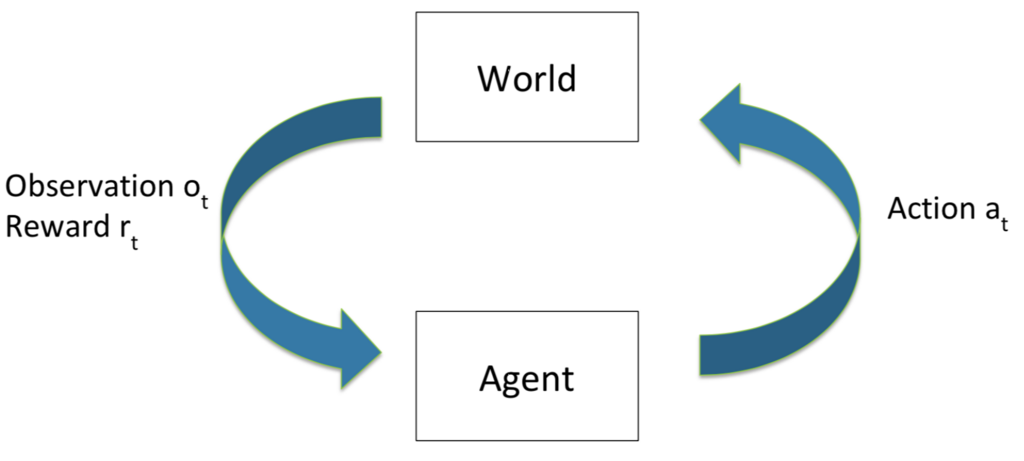
At its core, an AI agent is a system that can observe its surroundings and take actions to achieve a specific goal. It’s like a digital employee you hire for a particular job. You give it a task, and it figures out the best way to get it done, interacting with its environment along the way.
An AI agent is a program or system that can perceive its environment, process information, and take actions to achieve a specific goal.
Think about a simple thermostat. It perceives the room's temperature through a sensor. If the temperature drops below a set point, it acts by turning on the furnace. The thermostat is a very basic agent. Its environment is the room, its sensor is the thermometer, and its actuator is the switch that controls the furnace.
AI agents work on the same principle, but on a much more complex scale. They use sophisticated sensors to perceive their digital or physical world and a wide range of actuators to act within it. For a self-driving car, sensors include cameras, LiDAR, and GPS, while actuators control the steering, acceleration, and brakes.
Inside the Agent's Mind
What makes an AI agent truly intelligent isn't just its ability to sense and act. It’s the sophisticated internal architecture that allows it to reason, remember, and strategize. This architecture is typically built around four key components that work together in a continuous loop.
Let’s break down what each part does.
-
Profiling Module: This is the agent's window to the world. It takes in raw data from sensors—like text from a user, images from a camera, or numbers from a stock ticker—and processes it into a useful format. It identifies what's important in the environment, creating a structured understanding of the current situation. For a chatbot, this module would analyze the user's message to determine their intent and key entities.
-
Memory Module: An agent needs to remember things to be effective. The memory module acts as its brain, storing information for both the short and long term. Short-term memory might hold details of an ongoing conversation, while long-term memory could store past interactions, user preferences, or a vast knowledge base. This allows the agent to learn and provide personalized, context-aware responses.
-
Planning Module: This is the core of the agent's intelligence. Using the information from the profiling and memory modules, the planning module decides what to do next. It evaluates different possible actions, predicts their outcomes, and selects the best sequence of steps to achieve its goal. It’s the strategist, formulating a plan before acting.
-
Action Module: Once a plan is made, the action module carries it out. It translates the planner's decisions into concrete commands for the actuators. This could mean generating a text response, sending a command to a robot's motors, or executing a trade on the stock market. It's where the agent's decisions have a real effect on its environment.
Agents in the Wild
AI agents are no longer just concepts in a lab; they're actively working in many fields. Their ability to autonomously perceive, reason, and act makes them incredibly versatile.
Here are a few examples:
-
Virtual Assistants: Siri, Alexa, and Google Assistant are common AI agents. They listen to your voice commands (perception), process your request using vast knowledge bases (memory and planning), and respond by playing music, answering questions, or controlling smart home devices (action).
-
Autonomous Vehicles: A self-driving car is a complex physical agent. It constantly monitors its surroundings with sensors, plans a safe and efficient path to its destination, and acts by controlling the car's physical systems.
-
Industrial Robotics: In factories, AI-powered robots perform tasks like welding, painting, and assembling products. They use computer vision to perceive parts, plan their movements to avoid collisions, and use robotic arms to execute precise actions with superhuman speed and accuracy.
-
Financial Trading: Algorithmic trading systems are AI agents that monitor financial markets. They perceive market data in real-time, use complex models to plan trades, and execute buy or sell orders to capitalize on opportunities.
Now that you understand the basic building blocks of an AI agent, let's test your knowledge.
What is the fundamental purpose of an AI agent?
An AI-powered chatbot analyzes a user's message to understand their intent. Which module is primarily responsible for this initial processing of raw data?
From managing your calendar to navigating a rover on Mars, AI agents are becoming essential tools for automating complex tasks and solving real-world problems.