AI Agents Explained
Introduction to AI Agents
What Are AI Agents?
At its core, an artificial intelligence agent is a system that can operate on its own to achieve a specific goal. Think of it less like a simple tool and more like an assistant you can delegate tasks to. You give it a destination, and it figures out the route.
An AI agent perceives its environment, makes a decision based on its goals, and takes an action to get closer to that goal.
This cycle of perceiving, thinking, and acting is what makes an agent
autonomous
adjective
Having the freedom to act independently.
Unlike a traditional software program that follows a rigid set of pre-programmed instructions, an agent has a degree of freedom. It can adapt its actions based on new information from its environment. This environment could be a video game, the stock market, a customer service chat, or even the physical world, in the case of a robot.
| Feature | Traditional Program | AI Agent |
|---|---|---|
| Execution | Follows explicit, step-by-step instructions. | Acts autonomously toward a goal. |
| Environment | Operates on predefined data inputs. | Perceives and interacts with a dynamic environment. |
| Adaptability | Changes require reprogramming by a human. | Can learn and adapt its behavior based on new information. |
| Decision Making | Logic is hard-coded. | Makes its own decisions to achieve its objectives. |
A Brief History
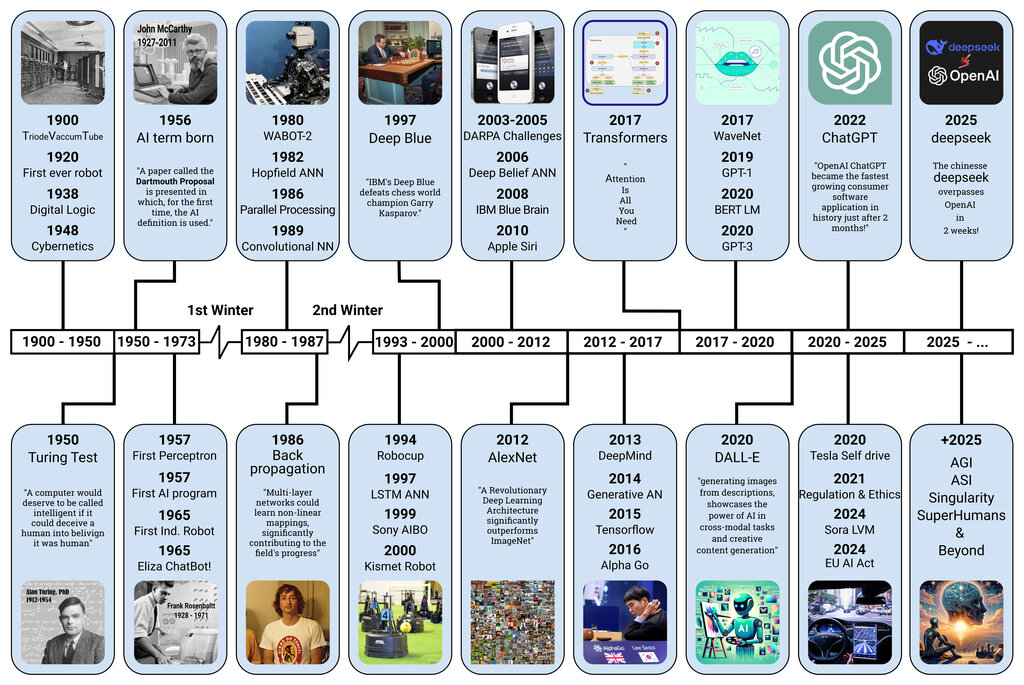
The idea of autonomous agents isn't new. It has roots in the earliest days of artificial intelligence and a field called cybernetics, which studied how systems regulate themselves. Early thinkers imagined machines that could reason and act in the world much like humans do.
For decades, these agents were mostly simple, rule-based systems. A chess program, for example, followed rules about how pieces move and used predefined strategies to decide its next turn. While impressive, its behavior was limited by the rules programmed into it.
The real shift came with the rise of machine learning. Instead of being explicitly programmed, modern agents can learn from vast amounts of data. This allows them to develop complex strategies and adapt to situations their creators never anticipated. Today, large language models (LLMs) have supercharged this capability, giving agents sophisticated reasoning and communication skills.
Why Agents Matter
AI agents represent a major step forward in making AI more useful. They move us from systems that can only answer questions or classify images to systems that can complete complex, multi-step tasks in the real world.
Their significance lies in their ability to bridge the gap between digital intelligence and meaningful action. An agent can do more than just process data; it can use that data to book a flight, manage an investment portfolio, or control a robotic arm.
This capability is unlocking new applications across countless industries.
In healthcare, agents can analyze patient data to suggest personalized treatment plans. In finance, they execute trades based on market trends. In manufacturing, they control robots on an assembly line, adapting to changes in real-time.
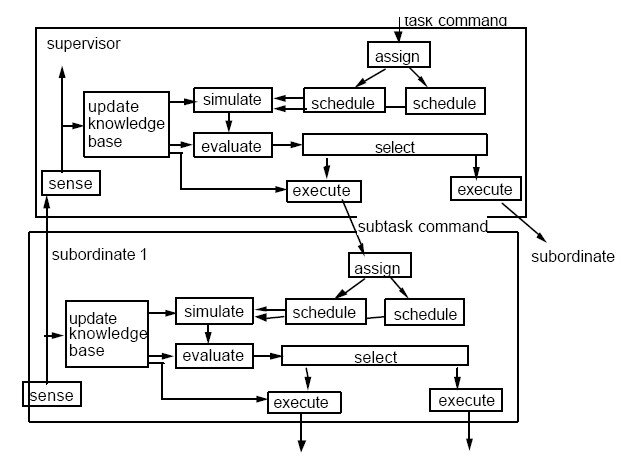
By automating complex decision-making, agents can handle tedious or difficult tasks, freeing up humans to focus on more creative and strategic work. They are a key building block for the next generation of AI applications that will interact with our world in more profound and helpful ways.
Let's check your understanding of these core concepts.
What is the primary characteristic that distinguishes an AI agent from a traditional software program?
What are the three fundamental steps in the operational cycle of an AI agent?
This introduction lays the groundwork for understanding what makes an agent, an agent. They are the active, goal-seeking entities that put artificial intelligence into action.