AI Agents Explained
Introduction to AI Agents
What Is an AI Agent?
Think of an AI agent as a digital assistant with a specific job. It could be a thermostat that learns your habits, a chatbot that answers customer questions, or a self-driving car navigating traffic. At its core, an AI agent is a system that can perceive its environment and act within it to achieve a goal.
An AI agent is a software program designed to understand its environment, process information, and take actions to achieve specific goals.
This simple loop—perceive, think, act—is the foundation of all AI agents. Unlike a basic computer program that just follows a rigid set of instructions, an agent has a degree of autonomy. It makes decisions on its own to move closer to its objective. This ability to operate independently is what makes agents so powerful.
Why Agents Matter
The importance of AI agents comes from their ability to automate complex tasks that would otherwise require human intelligence and intervention. They can handle routine jobs, freeing up people to focus on more creative or strategic work. They can also perform tasks in environments that are dangerous or inaccessible to humans.
From managing your calendar to piloting a spacecraft on Mars, AI agents are designed to make systems smarter and more efficient.
This versatility is key. AI agents are not just one type of technology; they are a flexible concept applied across many fields. In e-commerce, they recommend products. In finance, they detect fraudulent transactions. In healthcare, they can help doctors diagnose diseases. Their ability to learn from data and adapt their actions makes them invaluable for solving dynamic, real-world problems.
Foundations of Design
Designing an AI agent starts with a clear goal. What is the agent supposed to accomplish? The answer to this question defines its entire purpose. Is it trying to win a game of chess, book a flight for the lowest price, or maintain a comfortable temperature in a room?
Once the goal is set, the agent needs two things:
-
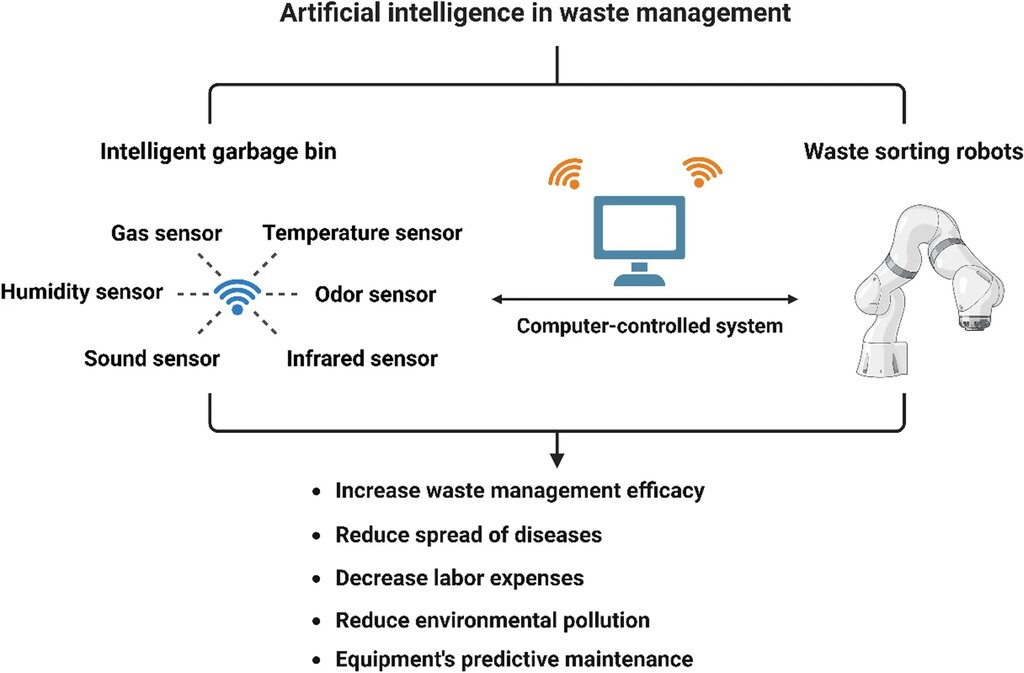
Sensors: A way to perceive its environment. For a self-driving car, sensors include cameras, GPS, and radar. For a stock-trading bot, the "environment" is market data, and its sensors are data feeds.
-
Actuators: A way to act on its environment. The car's actuators are its steering wheel, accelerator, and brakes. The trading bot’s actuators are the commands to buy or sell stocks.
The core of the agent is the logic that connects its perceptions to its actions. This is often called the agent's policy or program. A simple policy might be a set of if-then rules: "If the light is red, then apply the brakes." More advanced agents use complex models to predict the outcomes of different actions and choose the one that best helps them achieve their goal.
| Principle | Description |
|---|---|
| Goal Definition | Every agent needs a clear, specific objective to work towards. |
| Perception | The agent must be able to gather information from its environment. |
| Action | The agent must be able to affect its environment. |
| Autonomy | The agent should operate without direct human control. |
These basic principles guide the creation of all AI agents, from the simplest to the most complex. By defining a goal and giving the agent the ability to perceive and act, developers create autonomous systems that can tackle an incredible range of tasks.
Ready to check your understanding? Let's see what you've learned about AI agents.
What is the fundamental three-step loop that defines an AI agent's operation?
An AI agent is distinct from a basic computer program because it can operate with a degree of autonomy to make its own decisions.
Understanding what AI agents are and the principles behind them is the first step. Next, we'll explore the different types of agents and how they are built.