AI Agents Explained
Introduction to AI Agents
What is an AI Agent?
You encounter agents every day. A thermostat senses the room's temperature and turns on the heat to reach a target setting. A spam filter scans your emails and moves junk to a separate folder. These are simple examples, but they capture the essence of an agent: something that perceives its environment and acts to achieve a goal.
Agent
noun
An entity that perceives its environment through sensors and acts upon that environment through actuators.
When we add artificial intelligence to the mix, an agent becomes much more powerful. It's not just following rigid, pre-programmed rules. An AI agent uses its intelligence to make decisions and pursue its objectives on its own.
An AI agent is an autonomous system designed to perceive its environment, analyze data, make decisions, and execute actions to accomplish specific objectives without continuous human oversight.
This all boils down to a simple, continuous cycle: perceive, think, and act. The agent takes in information, processes it to decide what to do next, and then performs an action. This loop is the fundamental building block of all intelligent behavior.
Core Characteristics
What truly separates an AI agent from a simple computer program? Three key traits stand out: autonomy, adaptability, and goal-oriented behavior.
Autonomy means the agent can operate without direct human control. A script that just executes a list of commands isn't autonomous. An AI agent, however, can make its own choices to handle situations its creators never specifically planned for.
Adaptability is the ability to learn and change based on experience. The environment is rarely static. An adaptable agent can adjust its strategy when it encounters new information or when its actions don't produce the expected results. It gets better over time.
Finally, agents are goal-oriented. They are designed with a purpose, whether it's winning a game of chess, navigating a car from point A to point B, or managing an investment portfolio. Every action is a step toward achieving that objective.
Think of it this way: a basic script is a cook following a recipe exactly. An AI agent is a chef who can improvise, substitute ingredients, and create a new dish when the situation calls for it, all to satisfy the goal of making a great meal.
A Brief History
The idea of autonomous agents is not new. It has roots in the earliest days of cybernetics and AI research in the 1940s and 50s. Early thinkers imagined machines that could reason and act in the world much like humans do.
However, for decades, these ideas were mostly theoretical. The limited computing power of the time meant that most AI focused on narrow, specific problems. Creating a truly autonomous and adaptable agent was out of reach.
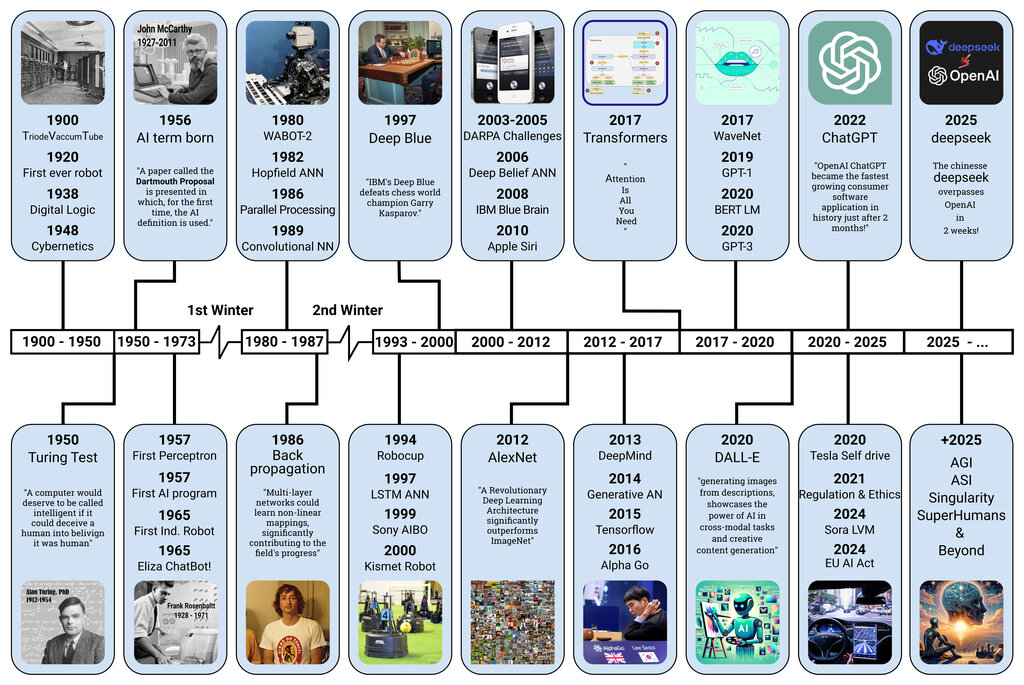
The game changed with advances in machine learning and the explosion of data and processing power. Modern AI agents, often powered by large language models (LLMs), are far more capable. They can understand complex instructions, access tools like web browsers or code interpreters, and carry out multi-step tasks that require planning and reasoning.
Today, the study of AI agents is one of the most exciting frontiers in technology. They represent a major step toward creating AI systems that can act as useful collaborators in our daily lives and work.
Let's check your understanding of these foundational concepts.
What is the fundamental continuous cycle that describes how an AI agent operates?
Which of the following is NOT considered a key trait of an AI agent?
Agents are a fundamental concept that builds upon the core ideas of AI. By understanding what they are and what makes them unique, you're ready to explore how they actually work.