AI Agents Explained
Introduction to AI Agents
What Is an AI Agent?
Think of an AI agent as a smart, autonomous program. It's designed to perceive its digital environment, make decisions, and take actions to achieve a specific goal. Unlike a simple script that just follows a list of commands, an agent can operate independently to get a job done.
The core idea is autonomy. An agent isn't just a tool; it's a worker. You give it a goal, and it figures out the steps to reach it.
For example, a simple thermostat is a basic agent. It perceives the room's temperature (its environment), decides whether it's too hot or cold based on its setting (its goal), and acts by turning the heat or AC on or off. Modern AI agents are far more sophisticated, tackling complex tasks that require reasoning, planning, and learning.
An AI agent is an autonomous software entity capable of understanding goals, reasoning through multiple steps, interacting with tools or environments, and adjusting its actions based on outcomes.
From Checkers to Chatbots
The concept of AI agents isn't new. Early versions emerged in the mid-20th century as simple, rule-based systems. Imagine an early computer program that played checkers. It operated on a strict set of "if-then" rules programmed by a human: if the opponent moves here, then I move there. These agents were effective for specific, narrow tasks but couldn't adapt or handle situations outside their programming.
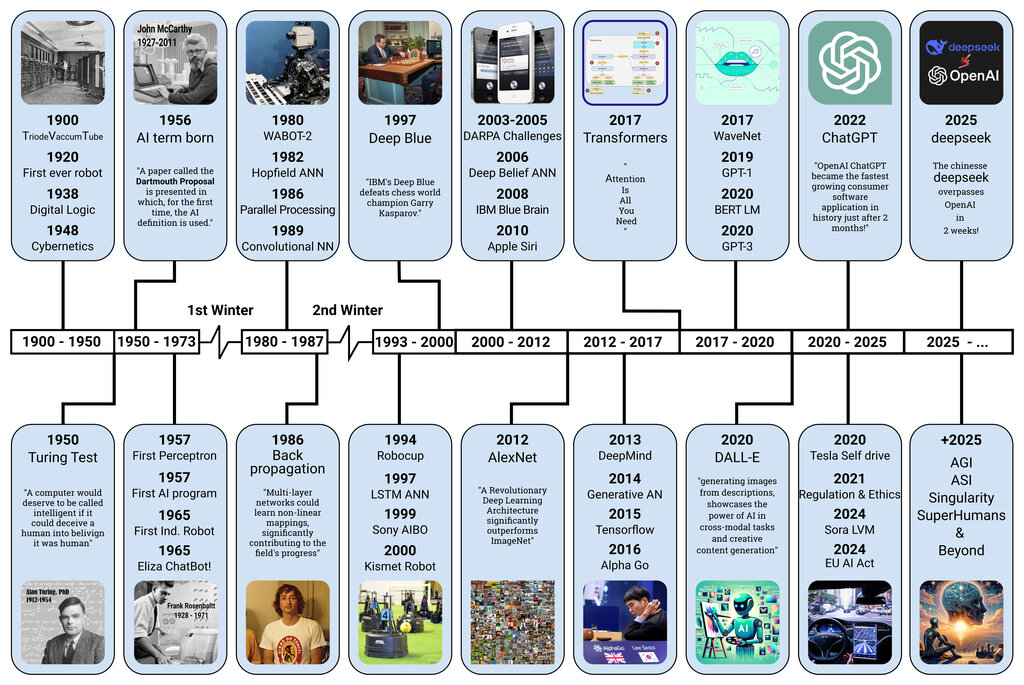
The real shift came with the rise of machine learning. Instead of relying solely on hand-coded rules, agents began to learn from data. They could analyze vast amounts of information, identify patterns, and improve their performance over time. This evolution led to more flexible and powerful agents capable of handling ambiguity and making more nuanced decisions.
The latest leap forward is fueled by large language models (LLMs). These models give agents an unprecedented ability to understand and use human language. This allows them to tackle complex, multi-step tasks based on a simple conversation, from planning a trip to managing your calendar.
Agents at Work
Today, AI agents are transforming industries by automating complex processes and improving decision-making. Their applications are widespread and growing.
| Industry | Application |
|---|---|
| Healthcare | Agents analyze medical records to suggest diagnoses or treatment plans. |
| Finance | They detect fraudulent transactions in real-time by spotting unusual patterns. |
| Customer Service | Chatbots handle customer queries, book appointments, and process returns. |
| E-commerce | Personal shopping agents recommend products based on your browsing history. |
| Logistics | Agents optimize delivery routes, manage warehouse inventory, and predict demand. |
In each case, the agent isn't just automating a repetitive task. It's taking in information, making a judgment, and acting on it to achieve a goal, whether that's flagging a suspicious purchase or finding the fastest way to deliver a package. This ability to act autonomously is what makes AI agents such a powerful technology.
What is the primary function of an AI agent?
What distinguishes an AI agent from a simple script?