AI Agents Explained
Introduction to AI Agents
What Is an AI Agent?
Think of an AI agent as a digital helper that can work on its own. It's a system that observes its surroundings, makes decisions, and then takes action to accomplish a specific goal. You don't have to guide it every step of the way. You give it an objective, and it figures out how to get there.
Agents in AI are autonomous entities that perceive their environment, process information, and take actions to achieve specific goals.
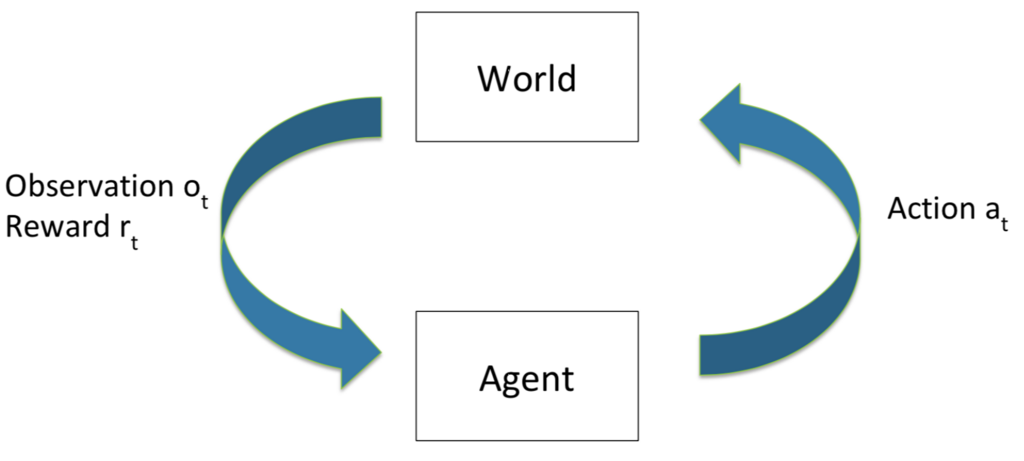
This process works in a continuous loop. The agent perceives information from its environment, decides on the best course of action based on its goals, and then performs that action. This action changes the environment, which the agent then perceives, starting the cycle all over again.
The Guiding Principles
Not just any program is an agent. AI agents are defined by a few key principles that guide their behavior and make them feel intelligent and independent.
| Principle | What It Means |
|---|---|
| Autonomy | The agent operates on its own to perform tasks without direct human control. |
| Reactivity | The agent perceives its environment and responds to changes in it in a timely way. |
| Proactiveness | The agent takes initiative and works towards its goals, rather than simply waiting for things to happen. |
| Social Ability | The agent can communicate with other agents or humans using some kind of language. |
| Rationality | The agent always tries to do the right thing to achieve the best possible outcome based on what it knows. |
Imagine a smart vacuum cleaner. It's autonomous because it cleans the house on its own schedule. It’s reactive because it avoids bumping into a chair that you just moved. It’s proactive when it senses the dustbin is full and returns to its dock to empty itself. Its ability to send a notification to your phone saying, "Job complete!" is a form of social ability. And it’s rational because it calculates the most efficient path to clean the entire floor without wasting battery.
Anatomy of an Agent
To accomplish all this, an AI agent is built from several core components that work together. Each part has a specific job, much like organs in a living body.
Here’s a breakdown of the essential parts:
-
Brain / Agent Core: This is the central processor, often powered by a Large Language Model (LLM). It handles reasoning, planning, and decision-making. It receives information, thinks about it, and decides what to do next.
-
Perception Module: This is how the agent “sees” and “hears.” It takes in raw data from the environment, like text from a webpage, numbers from a spreadsheet, or pixels from an image, and turns it into a format the brain can understand.
-
Action Module: Once the brain makes a decision, the action module carries it out. This could mean typing text, clicking a button, running a piece of code, or sending an email.
-
Memory Module: An agent needs to remember things to be effective. The memory module stores past experiences, learned knowledge, and the context of the current task. This allows it to learn and improve over time.
-
Tools: Agents can often use external tools to perform tasks they can't do on their own. These might include a calculator for math, a search engine for finding information, or an API for booking a flight.
These components form the foundation of how AI agents perceive, reason, and act in the world. By understanding them, you can start to see how these systems can tackle complex, multi-step problems on their own.