AI Agents Explained
Introduction to AI Agents
What is an AI Agent?
At its core, an AI agent is a system that can act on its own. Think of it as an autonomous entity that perceives its environment, makes decisions, and takes actions to achieve a specific goal. It's the part of an AI system that actually does things.
An AI agent is designed to perceive its environment, process information, and take actions to achieve specific goals.
This could be a physical robot navigating a warehouse, a software bot bidding in an online auction, or even a smart thermostat adjusting the temperature in your home. The key ingredients are perception (gathering information), decision-making (figuring out what to do), and action (doing it). These systems are designed to operate without constant human supervision, making them a cornerstone of modern artificial intelligence.
The Agent's Role
AI agents are the bridge between raw data and real-world outcomes. While an AI model, like a large language model, can process information and generate insights, an agent takes those insights and puts them into motion. They are the active, goal-oriented players in the world of AI.
For example, a language model can understand a user's request to "book a flight to Paris for next Tuesday." But it's an AI agent that takes that instruction and interacts with an airline's booking system, selects a seat, and completes the purchase. The agent is the system that performs the task.
This ability to act makes agents incredibly versatile. They power the non-player characters (NPCs) in video games that react to your strategy. They run automated stock trading systems that respond to market fluctuations in milliseconds. They even manage complex supply chains, re-ordering inventory when stock levels get low. In each case, the agent is the autonomous decision-maker tasked with achieving a specific objective.
A Brief History
The idea of autonomous agents isn't new. It has roots in the early days of AI research, dating back to the 1950s. The initial concept, known as the "General Problem Solver," was an attempt to create a universal program that could solve any formal problem.
Early agents were simple, rule-based systems. They operated on a strict set of "if-then" instructions. For example, in a game of chess, an early agent's logic might be: "If the opponent's queen is in a position to be captured, then capture the queen." These systems were effective for well-defined, predictable environments but lacked flexibility.
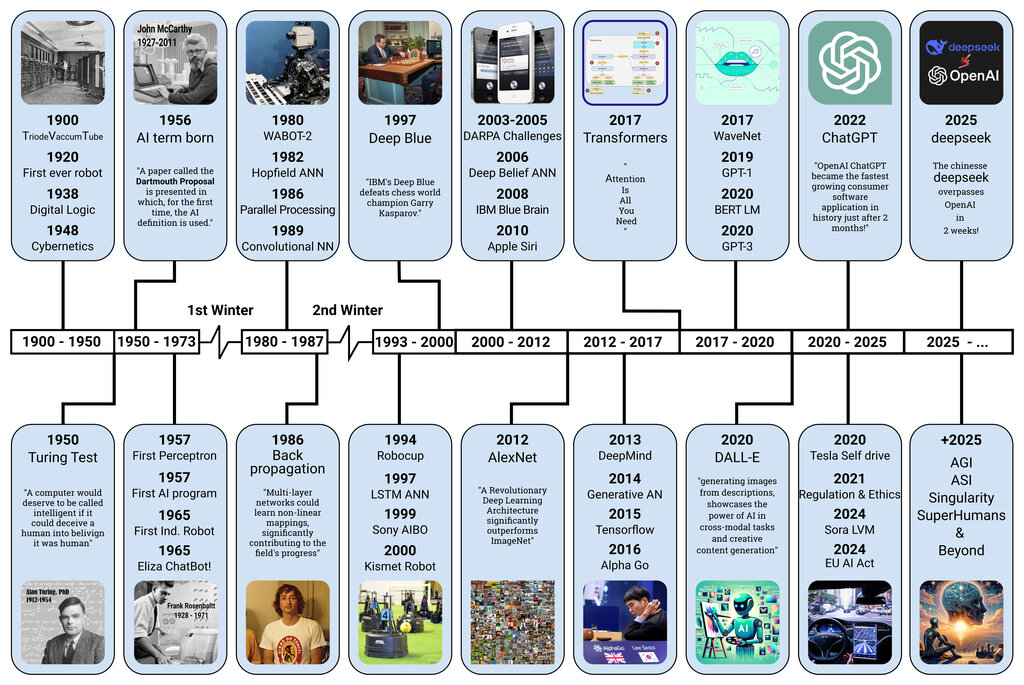
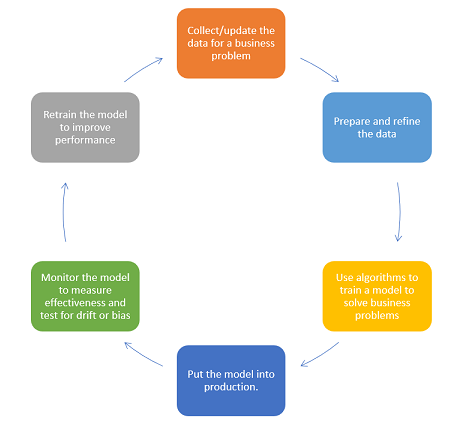
As AI evolved, so did agents. The rise of machine learning in the late 20th century allowed agents to learn from data and improve their performance over time. Instead of relying solely on pre-programmed rules, they could adapt their strategies based on past experiences. This led to breakthroughs like Deep Blue, the IBM computer that defeated world chess champion Garry Kasparov in 1997.
Today, with the power of large language models (LLMs), agents have become far more sophisticated. They can understand complex, nuanced instructions in natural language, break down large goals into smaller steps, and interact with a wide range of digital tools. This evolution from rigid rule-followers to flexible, learning-based systems marks a major leap forward in creating truly intelligent and autonomous AI.
What is the primary function of an AI agent?
What key capability distinguishes an AI agent from an AI model like an LLM?