AI Agents Explained
Introduction to AI Agents
What Is an AI Agent?
An AI agent is a system that can operate on its own to achieve a goal. Think of it like a self-sufficient digital assistant. It perceives its environment, makes decisions, and takes actions. The environment could be a website, a game, or even the physical world via sensors. The agent’s job is to figure out the best course of action to succeed at its task.
Agents in AI are autonomous entities that perceive their environment, process information, and take actions to achieve specific goals.
This process forms a continuous loop. The agent observes the state of its world, thinks about what to do next, and then acts. The action changes the world, which creates a new observation, and the cycle begins again. This simple loop is the foundation of all agent behavior, from a Roomba navigating a living room to a complex algorithm trading stocks.
Core Characteristics
Not all software is an agent. AI agents have a few key traits that set them apart.
Autonomy
noun
The ability to perform tasks in complex environments without constant guidance or intervention.
Autonomy is about independence. A word processor is not autonomous because it waits for you to type. In contrast, an AI agent can operate on its own. It has control over its own actions and internal state, pursuing its goals without being micromanaged.
An agent is proactive and reactive. It reacts to changes in its environment but also takes initiative to achieve its goals.
Adaptability
noun
The capacity to learn from experience and modify behavior to improve performance over time.
The world is constantly changing, and a good agent can keep up. Through learning, an agent can get better at its job. A simple rule-based system might always follow the same logic, but an adaptive agent can update its strategy based on what works and what doesn't. This is what allows an agent to master a game or personalize recommendations just for you.
Finally, agents are defined by their purpose. They are designed to be goal-oriented, meaning all their actions are directed toward achieving a specific outcome. Whether the goal is to find the fastest route, win a chess match, or manage an energy grid, the agent’s behavior is driven by that objective. Without a goal, an agent is just a passive piece of code.
A Brief History
The idea of autonomous agents isn't new. It has roots in the earliest days of artificial intelligence, long before the powerful tools we have today. The journey from simple automatons to today's sophisticated agents has been a long one.
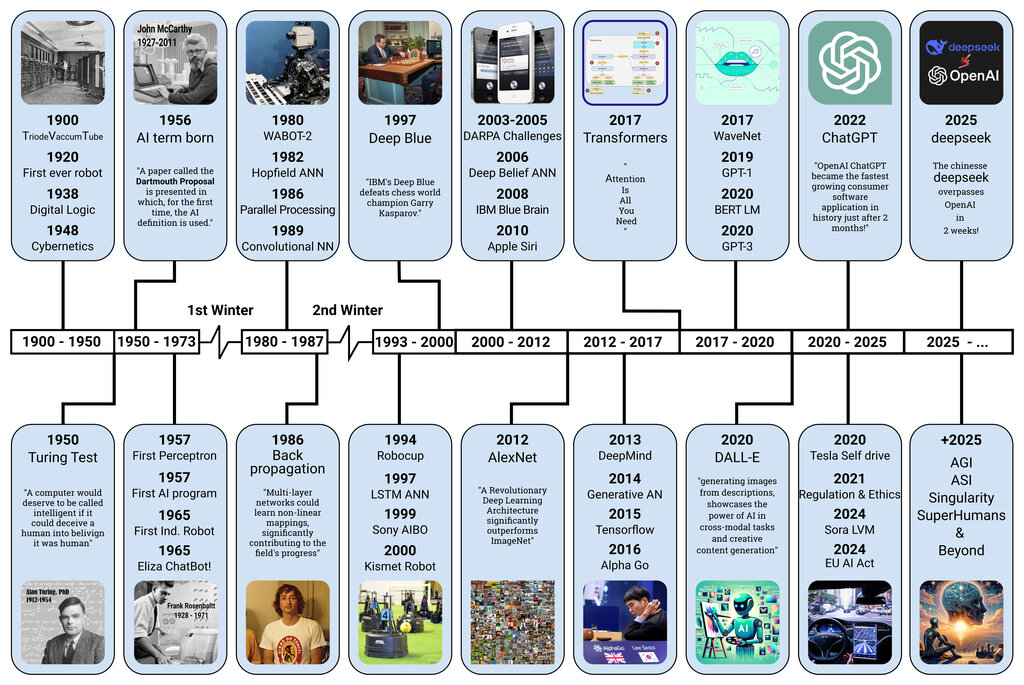
Early AI research in the 1950s and 60s focused on logic and reasoning. The first "agents" were often called expert systems. These were rule-based programs designed to mimic the decision-making of a human expert in a narrow field, like diagnosing diseases. They followed a strict set of "if-then" rules and had no ability to learn or adapt.
Over the decades, research shifted. The focus moved from pre-programmed rules to systems that could learn from data. The rise of machine learning in the 1990s and 2000s was a turning point. Agents could now improve through experience, making them far more powerful and flexible. This evolution led directly to the complex, learning-enabled entities we see today.
Which of the following best describes the core operational loop of an AI agent?
What key characteristic distinguishes an AI agent from a standard software program like a word processor?
Now that we've covered the basics of what AI agents are, we can explore the different types of agents and how they work.