AI Agents Explained
Introduction to AI Agents
Meet the AI Agent
You’ve likely heard of AI that can write poems or create images. But a different kind of AI is quietly becoming more common: the AI agent. Think of it less like a tool and more like an assistant. It's a system designed to perceive its environment, make decisions, and take actions to achieve a specific goal, all on its own.
At their core, agents have three key traits. They have autonomy, meaning they can operate without direct human control. They use sensors to perceive their surroundings, whether that's text on a screen, data from the internet, or input from a camera. And they have actuators to take action, like sending an email, booking a flight, or adjusting a thermostat.
An AI agent is a program or system that can perceive its environment, process information, and take actions to achieve a specific goal.
This makes them different from a simple chatbot. A chatbot responds when you talk to it, but an agent can proactively work on a task. For example, you could ask an AI agent to monitor flight prices for a trip to Paris and book the cheapest ticket that meets your criteria. The agent would then independently check websites, compare options, and complete the purchase when the conditions are right.
From Simple Rules to Smart Decisions
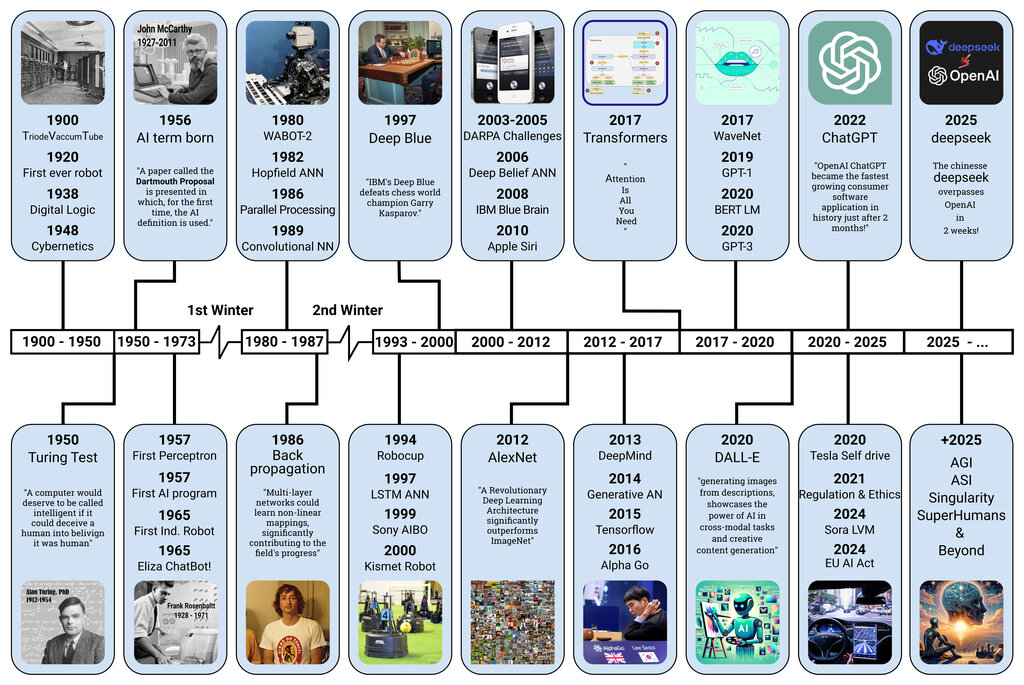
The idea of automated agents isn't new. It has roots in cybernetics, a field from the 1940s that studied control and communication in animals and machines. Early systems were simple, following strict, pre-programmed rules. A classic example is a thermostat: it senses the room temperature and acts by turning the heat on or off to meet a set goal.
Over the decades, as computers became more powerful, agents grew more sophisticated. The rise of artificial intelligence, and especially large language models (LLMs), has supercharged their capabilities. Today's agents can understand complex requests, access vast amounts of information, and perform multi-step tasks that once required human intelligence.
A Spectrum of Agents
Not all agents are created equal. They fall along a spectrum of complexity, generally grouped into three main categories.
Reactive
adjective
Acting based solely on the current state of the environment, without memory of the past or plans for the future.
The simplest are reactive agents. They operate on a simple if-this-then-that logic. They perceive the world and react immediately based on a set of rules. A smoke detector is a reactive agent: if it senses smoke, it sounds the alarm. It doesn't remember past events or think about what might happen next.
Next are deliberative agents. These are the planners. They maintain an internal model of the world and can think ahead. Before acting, a deliberative agent considers its options and chooses the one that best helps it achieve its long-term goals. A GPS navigation app is a good example. It doesn't just react to the next turn; it plans the entire route from start to finish based on its goal of finding the most efficient path.
Finally, we have hybrid agents. As the name suggests, they combine the speed of reactive agents with the foresight of deliberative agents. They have different layers of control. A reactive layer handles immediate needs, while a deliberative layer manages long-term goals. A self-driving car is a hybrid agent. It has a long-term plan to get you to your destination, but it can react instantly to a sudden obstacle in the road, like a pedestrian stepping into the street.
| Agent Type | Key Characteristic | Simple Example |
|---|---|---|
| Reactive | Responds to current stimuli | Thermostat |
| Deliberative | Plans to achieve goals | GPS Navigation |
| Hybrid | Combines reaction and planning | Self-driving car |
Now let's check your understanding of these core concepts.
What are the three essential components that define an AI agent?
What is the primary difference between an AI agent and a simple chatbot?
Understanding these different types of agents helps clarify what they can do. From simple rule-followers to complex planners, AI agents are becoming powerful partners in accomplishing our goals.