AI Agents Explained
Introduction to AI Agents
What Are AI Agents?
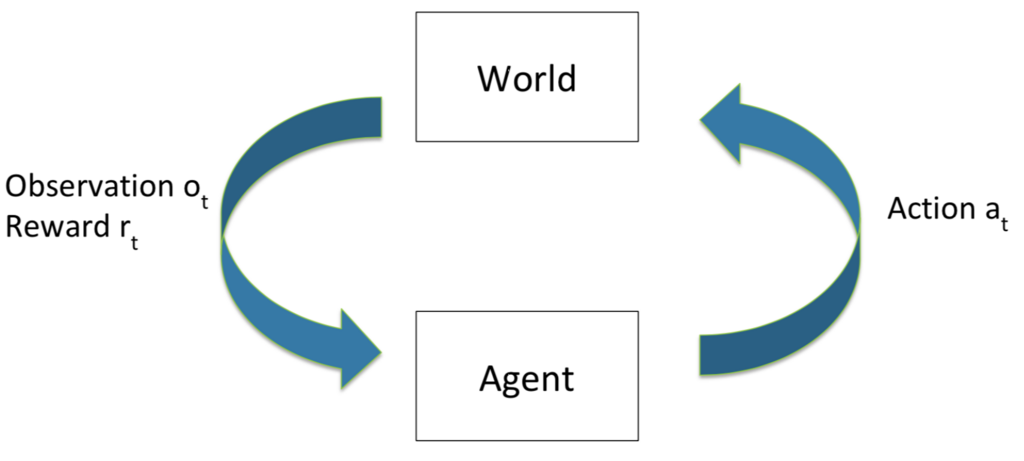
At its core, an artificial intelligence agent is a system that can observe its environment and act on it to achieve a goal. Think of a self-driving car. It uses cameras and other sensors to "see" the road, other cars, and pedestrians. Then, it uses actuators like the steering wheel, accelerator, and brakes to navigate safely to its destination.
An AI agent is a software system that perceives its environment through sensors, processes information, makes decisions, and acts upon the environment through actuators to achieve specific goals.
This concept isn't limited to physical robots. A spam filter in your email is also an agent. It "senses" incoming emails (the environment), processes their content, and "acts" by moving them to the junk folder (the goal). The key components are always the same: sensors to perceive and actuators to act.
What truly sets agents apart from simple programs is their autonomy. They operate independently, making their own choices to meet objectives without constant human intervention. They are designed to be proactive and responsive to changes, making them powerful tools for complex tasks.
Types of AI Agents
Agents decide how to act in different ways, ranging from simple reflexes to complex reasoning. We can categorize them based on their intelligence and capabilities.
reflex
noun
An action that is performed as a response to a stimulus and without conscious thought.
Simple Reflex Agents These are the most basic agents. They operate on a simple condition-action rule, or an "if-this-then-that" logic. They react directly to what their sensors perceive at the current moment, without considering any past history.
Example: An automated vacuum that changes direction whenever its bumper sensor hits an object. It doesn't remember hitting the object; it just reacts.
Simple Reflex Agent: If the car in front brakes, then I brake.
Model-Based Reflex Agents These agents are a step up. They maintain an internal "model" or state of how the world works. This model is a representation of the environment based on past perceptions. It allows the agent to handle situations where the current sensor data isn't enough to make a decision.
Example: A self-driving car needs to change lanes. It can't see a car in its blind spot right now, but its internal model remembers a car was there a second ago. Based on this model, it decides it's unsafe to change lanes.
Model-Based Agent: The car in front is braking. Based on my speed and past observations, braking hard is the best action.
Goal-Based Agents Instead of just reacting, these agents act to achieve specific goals. They consider different sequences of actions and choose the one that will lead them to their desired outcome. This involves some level of planning or searching.
Example: A GPS navigation app. Its goal is to get you to your destination. It considers various routes, traffic conditions, and road closures to find the optimal path.
Goal-Based Agent: My goal is to reach the airport. The best action now is to take the highway to avoid city traffic.
Utility-Based Agents Sometimes, reaching a goal isn't enough. There might be multiple ways to get there, some better than others. Utility-based agents aim for the best outcome. They use a "utility function" that assigns a score to different states, quantifying how happy or successful the agent is.
Example: A ride-sharing app's algorithm for assigning drivers. It could just assign the closest driver (a goal-based approach). Or, it could assign a driver who is slightly farther but has a higher rating and is driving a more fuel-efficient car, maximizing overall utility for the passenger, driver, and company.
Utility-Based Agent: My goal is to get to the airport. Taking the toll road is faster and less stressful, making it the highest-utility option, even though it costs more.
Learning Agents Learning agents can improve their performance over time. They have a learning element that allows them to gain knowledge from experience. They can start with a basic understanding and gradually become more effective at their tasks.
Example: A spam filter that learns from your actions. When you mark an email as "not spam," its learning element analyzes the email's features and adjusts its rules to become better at identifying legitimate emails in the future.
Each type of agent builds on the capabilities of the previous one, allowing for increasingly sophisticated and intelligent behavior.
An artificial intelligence agent perceives its environment through _____ and acts upon that environment through _____.
A smart thermostat automatically turns off the heat when the room temperature reaches 21°C and turns it back on when it drops to 19°C. It does not consider the time of day, whether anyone is home, or past temperature patterns. What type of agent is this?
Understanding these fundamental agent types is the first step in exploring the complex and fascinating world of artificial intelligence.