AI Agents Explained
Introduction to AI Agents
What Is an AI Agent?
Think about a self-driving car navigating a busy street, a smart thermostat adjusting your home's temperature, or even a character in a video game reacting to your moves. These are all examples of AI agents at work. At its core, an AI agent is a system that can observe its surroundings, make its own decisions, and take actions to achieve a specific goal.
Agents in AI are autonomous entities that perceive their environment, process information, and take actions to achieve specific goals.
This isn't just a simple computer program following a rigid set of instructions. An agent operates in a continuous cycle: it perceives, it thinks, and it acts. It senses the world around it (like a car's cameras seeing a pedestrian), processes that information to make a decision (like concluding it needs to brake), and then performs an action (applying the brakes). This ability to operate independently is what makes agents a cornerstone of modern artificial intelligence.
Key Characteristics
What truly sets an AI agent apart from a basic script? Three main characteristics stand out: autonomy, adaptability, and goal-oriented behavior.
Autonomy: An agent can operate without direct human control. You don't need to tell a spam filter which specific emails are junk; it learns the patterns and makes that call on its own. It's given a task and the freedom to figure out how to complete it.
Adaptability: The world is constantly changing, and a good agent can change with it. Instead of breaking down when faced with a new situation, it can adjust its actions. A navigation app, for example, doesn't just follow one pre-programmed route. It perceives traffic jams and accidents in real-time and adapts by finding a better way.
Goal-Oriented Behavior: Every agent has a purpose. For a Roomba, the goal is a clean floor. For a stock-trading bot, it's maximizing profit. All of its perceptions and actions are driven by this underlying objective. It's not just acting randomly; it's making rational choices to get closer to its goal.
A Brief History
The idea of autonomous agents isn't new. It has roots in the earliest days of AI research, dating back to the 1950s. Early concepts were often limited by the computing power of the time, resulting in simple, rule-based systems. These early agents could perform tasks in very controlled environments but lacked the ability to learn or adapt.
As computer science advanced, so did agents. The 1980s and 90s saw the rise of more complex agent architectures that could plan and reason. Researchers began exploring how multiple agents could work together, forming the basis of multi-agent systems.
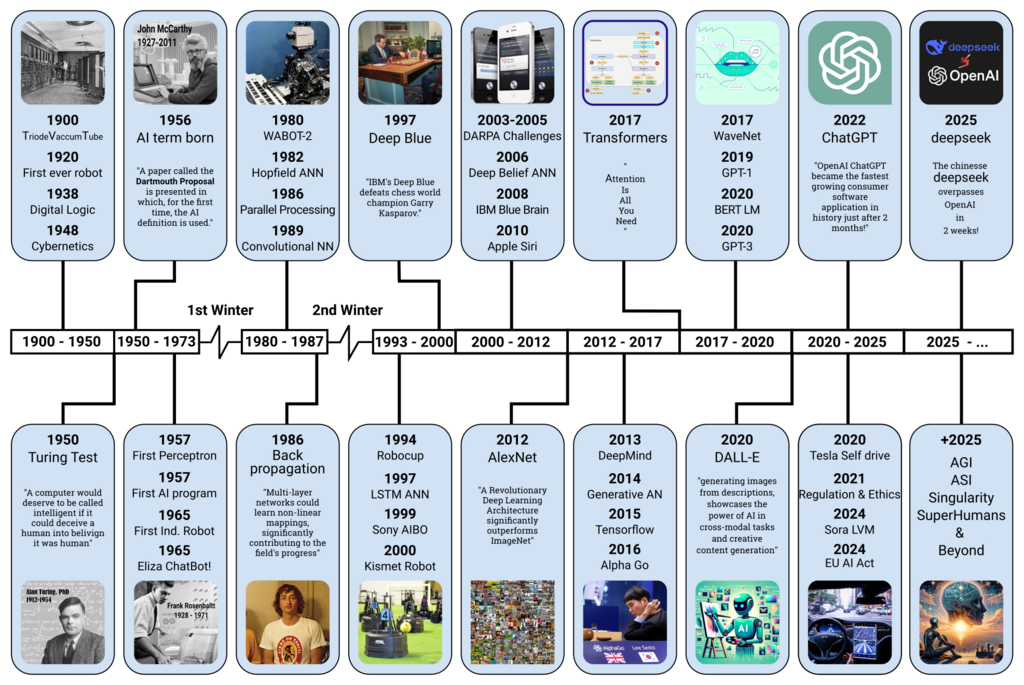
The real turning point came with the explosion of machine learning and big data in the 21st century. Suddenly, agents could be trained on massive datasets, allowing them to learn from experience and make sophisticated, data-driven decisions. This leap forward is what powers the advanced AI agents we see today, from virtual assistants like Siri and Alexa to complex systems that help scientists discover new drugs.
Why Agents Matter
AI agents are more than just a fascinating theoretical concept; they are a fundamental building block for creating useful AI. By encapsulating intelligence into autonomous, goal-driven entities, we can build systems that tackle complex problems in the real world.
Instead of programming every possible action for every possible scenario, we can design agents that are smart and flexible enough to figure things out on their own. This approach allows us to create AI that can manage complex logistics, personalize user experiences, and automate tasks that were once thought to be exclusively human. They represent a major step toward building truly intelligent systems that can work alongside us.
Ready to check your understanding? This quiz will test you on the core concepts of AI agents.
What is the fundamental cycle of operation for an AI agent?
A navigation app detects a sudden traffic jam and calculates a new, faster route for you. Which core characteristic of an AI agent does this action best demonstrate?
Understanding what AI agents are and what makes them unique is the first step in exploring the more advanced aspects of artificial intelligence.