AI Agents Explained
Introduction to AI Agents
What Are AI Agents?
At its core, an AI agent is a system that can perceive its environment and act upon it to achieve a specific goal. Think of it as an autonomous entity, like a digital employee, that can operate on its own without constant human supervision.
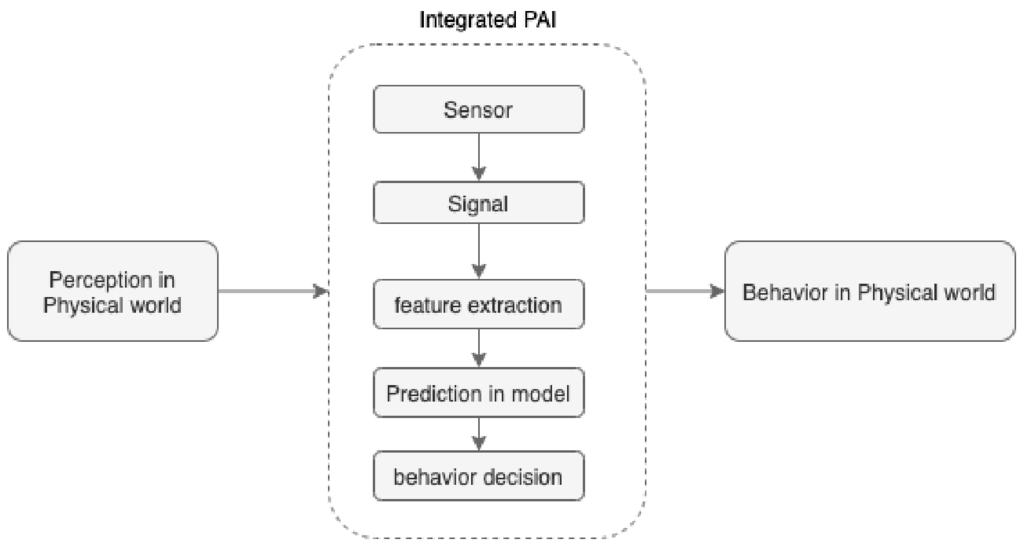
The key idea is a continuous loop: sense, think, act. The agent uses sensors to gather information about its surroundings, processes that information to make a decision, and then uses actuators to perform an action. This cycle repeats, allowing the agent to adapt to changing conditions and work towards its objective.
agent
noun
An entity that perceives its environment through sensors and acts upon that environment through actuators.
A self-driving car is a classic example. Its sensors (cameras, lidar) perceive the environment—other cars, pedestrians, traffic lights. It processes this data to decide its next move, like slowing down or changing lanes. Finally, its actuators (the steering wheel, accelerator, brakes) carry out the action. This simple but powerful concept is the foundation for countless AI applications.
Why Agents Matter
AI agents are significant because they represent a shift from AI as a passive tool to AI as an active participant. Instead of just analyzing data or answering questions, agents can take initiative and perform tasks in the real or digital world. This ability to act autonomously makes them incredibly powerful.
They are the engines of automation, capable of handling complex, multi-step processes that once required human intelligence. From managing a smart home to executing financial trades, agents can handle tasks efficiently and tirelessly. They enable systems to not just know something but to do something about it.
Agents turn AI's potential into action. They are the bridge between data-driven insights and real-world outcomes.
This capability is crucial for tackling complex problems. An agent can navigate unforeseen challenges, learn from its experiences, and optimize its behavior over time. For example, an agent managing a city's power grid can react instantly to demand spikes or equipment failures, making decisions to prevent blackouts far faster than a human operator could.
A Brief History
The idea of autonomous agents isn't new. It dates back to the early days of AI in the 1950s, when pioneers like Alan Turing envisioned machines that could think and learn. Early agents were simple, rule-based systems. They followed a strict set of 'if-then' instructions, like a chess program that followed predefined rules for every possible move.
The concept of the 'agent' has profoundly shaped Artificial Intelligence (AI) research, guiding development from foundational theories to contemporary applications like Large Language Model (LLM)-based systems.
Through the decades, as computing power grew and machine learning techniques developed, agents became more sophisticated. They moved beyond fixed rules and started learning from data. This allowed them to handle uncertainty and operate in more complex, unpredictable environments.
The last decade has seen another major leap forward with the rise of Large Language Models (LLMs). Today's agents can understand natural language, reason through complex problems, and use a wide range of digital tools. They've evolved from simple automatons into versatile problem-solvers that are becoming increasingly integrated into our daily lives.
Ready to check your understanding of AI agents?
What is the core operational loop of an AI agent?
In a self-driving car, what component acts as an 'actuator'?
That's a wrap on the basics of AI agents. You now know what they are, why they're important, and how they came to be.