AI Agents Explained
Introduction to AI Agents
What Is an AI Agent?
You've likely interacted with AI, perhaps through a chatbot or a recommendation algorithm. But an AI agent is something more. Think of it not just as a program that answers questions, but as an entity that acts in an environment to achieve a goal.
An agent perceives its surroundings, whether that's a digital space like the internet or a physical one like a factory floor. It then makes decisions and takes actions to move closer to its objective. A smart thermostat is a simple agent. Its environment is your home's temperature, and its goal is to keep it at 70°F. It senses when it gets too cold and acts by turning on the heat.
An AI agent is a system that can perceive its environment, process information, and take autonomous actions to achieve specific goals.
This ability to act autonomously is what sets agents apart. They aren't just following a rigid script. They are designed to operate independently in complex and often unpredictable settings, figuring out the steps needed to succeed on their own.
A Brief History
The idea of AI agents isn't new. Early concepts were rooted in simple, rule-based systems. Imagine an enemy in a classic video game that only moves left or right along a set path. It's technically an agent, but its behavior is completely predictable and hard-coded. If an obstacle appears, it can't adapt.
Over the decades, researchers pushed for more intelligent and flexible agents. They developed systems that could handle uncertainty and make plans. Instead of just following rules, these agents could weigh different options and choose the best course of action. This was a major leap, allowing agents to solve more complex problems that didn't have a single, straightforward solution.
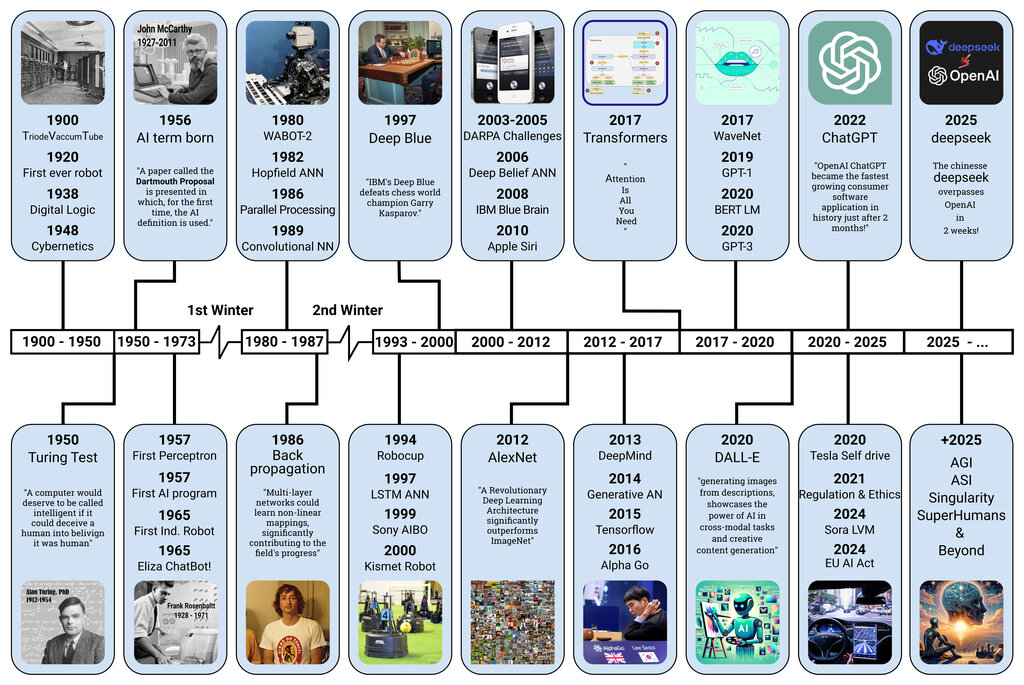
Today, we're in a new era. The rise of powerful large language models (LLMs) has supercharged AI agents. Modern agents can understand natural language, learn from experience, and devise creative, multi-step plans to tackle ambitious goals. They have evolved from simple rule-followers into adaptable, reasoning entities.
Why Agents Matter
AI agents are important because they represent a fundamental shift in how we use artificial intelligence. They move AI from being a passive tool that analyzes data to an active partner that gets things done in the world.
This is a crucial step for the field. Building agents forces us to solve core AI challenges like reasoning, planning, and learning in dynamic environments. An agent can’t just be smart; it has to be effective. It needs to connect its intelligence to real-world actions and outcomes.
By focusing on agents, we push AI beyond pattern recognition and into the realm of autonomous problem-solving. They are the foundation for creating systems that can manage complex logistics, conduct scientific research, or assist people with intricate daily tasks, fundamentally changing what's possible with technology.