AI Agents Explained
Introduction to AI Agents
The World Through AI's Eyes
At its core, artificial intelligence is about creating systems that can operate intelligently and independently. The fundamental building block of these systems is the AI agent.
An AI agent can be broadly defined as a system that perceives its environment, processes data, and takes actions to achieve specific goals.
Think of an agent as anything that can view its surroundings and act upon them to achieve a particular outcome. This could be a robot navigating a warehouse, a smart thermostat adjusting your home's temperature, or even a software program bidding on online ads. The key is this continuous cycle of perceiving and acting.
To interact with the world, an agent needs two key components: sensors and actuators.
Sensors and Actuators
Sensors are the agent's tools for perception. They gather information from the environment, acting like the agent's eyes, ears, or sense of touch. For a self-driving car, sensors include cameras that see traffic lights, radar that detects other vehicles, and GPS that determines its location.
Actuators are what the agent uses to perform actions. They are the mechanisms that affect the environment. Following our self-driving car example, its actuators are the steering wheel, accelerator, and brakes. The car uses them to navigate roads based on what its sensors perceive.
In short: Sensors let an agent observe, and actuators let an agent act.
This relationship is fundamental to all AI agents, from the simplest to the most complex. Let's look at a few more examples to make it concrete.
| Agent | Environment | Sensors | Actuators |
|---|---|---|---|
| Smart Thermostat | A room | Thermometer, motion detector | Heater, air conditioner |
| Vacuum Cleaner Robot | A floor | Infrared sensors, bump sensors | Wheels, brushes, vacuum motor |
| Spam Filter | An email inbox | Email content parser | 'Mark as spam' function |
| Chess Program | A chessboard | State of the board | Function to make a move |
Working Toward a Goal
An agent doesn't just perceive and act randomly. Its actions are driven by a specific goal. The vacuum robot's goal is a clean floor. The thermostat's goal is to maintain the temperature you've set. The chess program's goal is to win the game.
Every action an agent takes is a step it believes will bring it closer to achieving its objective. This cycle of perceiving the environment, deciding on an action, and then executing that action is the essence of how AI agents operate.
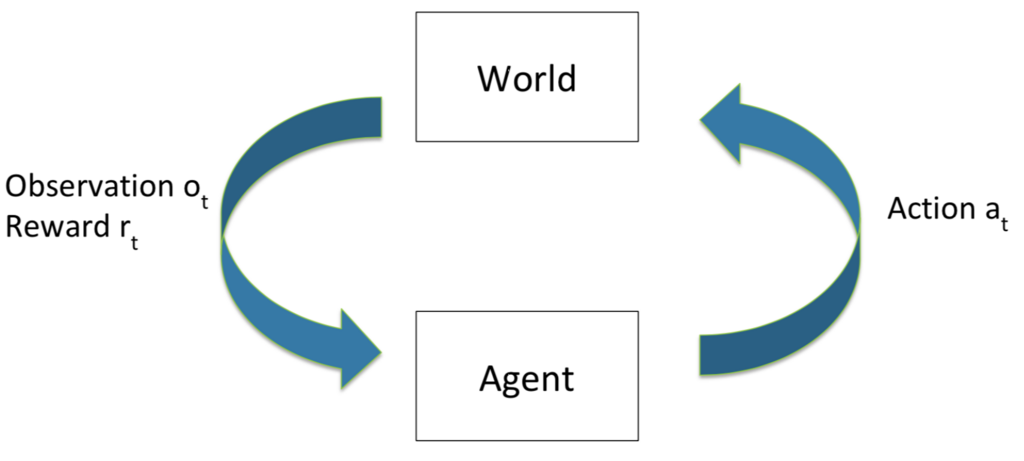
This simple loop is the foundation for everything from a Roomba cleaning your apartment to sophisticated AI systems managing power grids or discovering new medicines. Understanding this core concept is the first step to understanding how AI works.
What is the fundamental role of an AI agent?
For a robotic vacuum cleaner, which of the following is an example of a sensor?