AI Agents Explained
Introduction to AI Agents
What Are AI Agents?
Think of an AI agent as an independent worker. It's a program designed to perceive its surroundings and take actions to achieve a specific goal. Just like a thermostat senses the room's temperature and turns on the heat to reach a target temperature, an AI agent observes its environment and acts on it.
An AI agent can be broadly defined as a system that perceives its environment, processes data, and takes actions to achieve specific goals.
This process relies on two key components: sensors and actuators.
-
Sensors are the agent's way of gathering information. For a robot, this could be a camera or a microphone. For a software agent, it might be reading data from a website or receiving a mouse click.
-
Actuators are the tools an agent uses to perform actions. A robot might use wheels to move or a gripper to pick something up. A software agent could display a message on your screen or send an email.
Essentially, an agent uses sensors to 'see' and actuators to 'do'. This simple loop of perceiving and acting is the foundation of how AI interacts with the world.
Agents in Action
AI agents aren't just theoretical concepts; they're all around us. They are the active part of an AI system, turning digital intelligence into tangible outcomes. A smart assistant on your phone is a perfect example.
When you say, "Hey Siri, what's the weather?", you're interacting with an AI agent. Its sensor is the microphone, which perceives your voice. It processes your request and uses its actuator—the speaker—to deliver the weather forecast.
This same principle applies to more complex systems. Self-driving cars use a suite of sensors like cameras, radar, and lidar to perceive the road, other vehicles, and pedestrians. Their actuators are the car's physical controls: the steering wheel, accelerator, and brakes. The agent is the system that takes in all that sensor data and decides how to act.
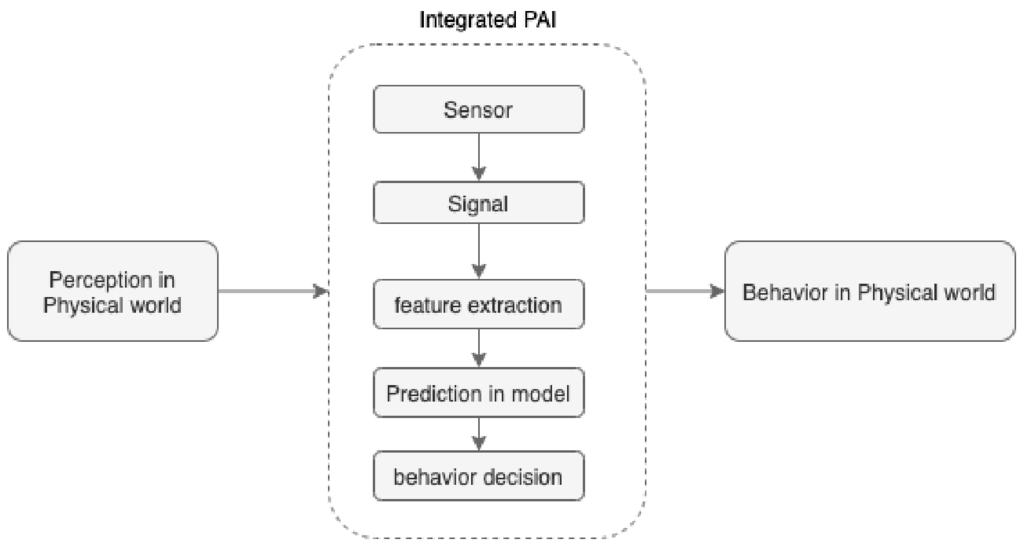
Other common examples include:
- Robotic vacuum cleaners: They use sensors to detect obstacles and dirt, and their actuators are the wheels and suction motor.
- Spam filters: They 'sense' the content of an email and 'act' by moving it to the spam folder if it meets certain criteria.
- Video game opponents: They perceive the player's location and actions within the game world and act by moving their character and using abilities.
In all these cases, an agent is the entity that connects perception with action to get a job done.
Now, let's test your knowledge on these fundamental concepts.
What is the primary function of an AI agent?
An AI agent uses ______ to gather information and ______ to perform actions.