AI Agents Explained
Introduction to AI Agents
What Is an AI Agent?
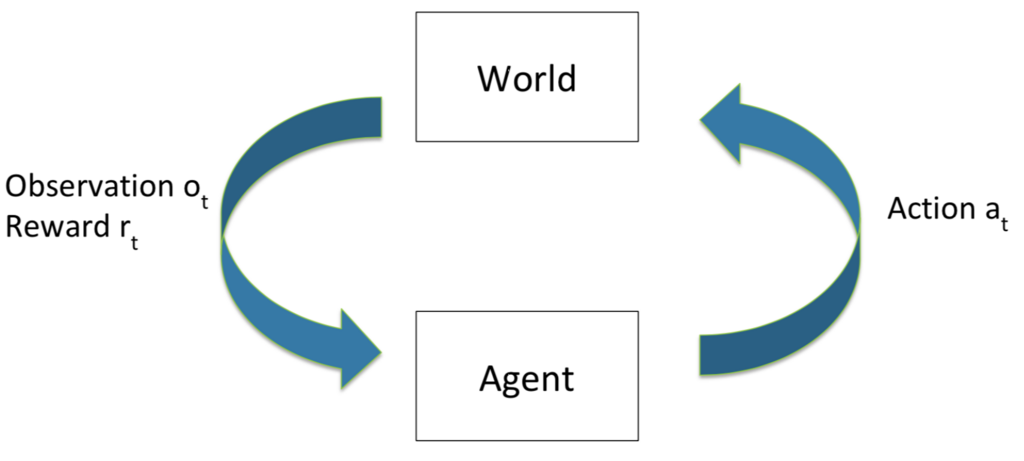
At its core, an AI agent is a system that can observe its surroundings and take action to achieve a specific goal. Think of it as an autonomous entity that can make its own decisions. It's not just a passive program that waits for commands. Instead, it actively perceives, thinks, and acts.
An AI agent is anything that can be viewed as perceiving its environment through sensors and acting upon that environment through actuators.
This sounds a bit abstract, but the concept is grounded in two key components that connect the agent to its world: sensors and actuators.
Sensor
noun
A device or software component that detects events or changes in its environment and sends the information to the agent.
Sensors are the agent's eyes and ears. For a software agent like a web-crawling bot, sensors might be the code that reads the HTML of a webpage. For a physical robot, sensors are more tangible, like cameras, microphones, or thermometers. They gather the raw data the agent needs to understand what's happening around it.
Actuator
noun
A component of a machine that is responsible for moving and controlling a mechanism or system.
If sensors are for perceiving, actuators are for acting. They are the parts that allow an agent to make a change in its environment. A self-driving car's actuators include the steering wheel, accelerator, and brakes. For a spam filter agent, the actuator is the action of moving an email to the spam folder.
Why Agents Matter
The agent is a central concept in AI because it frames the problem of building intelligent systems. Instead of just writing code to solve a narrow task, the goal is to create an agent that can operate intelligently and autonomously in a complex environment. This is a much more powerful and flexible way to think about AI.
Let's look at some examples to make this concrete.
| Agent | Environment | Sensors | Actuators |
|---|---|---|---|
| Self-Driving Car | Roads, traffic, pedestrians | Cameras, GPS, LiDAR, sonar | Steering, accelerator, brakes |
| Spam Filter | Email server, incoming emails | Email content and header parser | Mark as spam, delete, move to folder |
| Thermostat | Room, house | Thermometer | Heater, air conditioner |
| Medical Diagnosis System | Patient data, symptoms | Keyboard entry, medical scans | Displaying diagnoses and treatments |
Agents Are Everywhere
Once you understand the agent framework, you start to see it in many different technologies. A Roomba vacuum cleaner is a simple agent. Its environment is the floor of a room, its sensors detect dirt and obstacles, and its actuators are its wheels and suction motor. Its goal is to have a clean floor.
A more complex example is a stock-trading agent. Its environment is the financial market. Its sensors pull in real-time price data, news feeds, and market indicators. Its actuators execute buy or sell orders. Its goal is to maximize profit.
Even a character in a video game can be considered an agent. It perceives the game world, including the player's position and actions, through the game's code. It acts by moving, attacking, or interacting with objects. Its goal might be to challenge the player or help them on a quest. By thinking in terms of agents, designers can create more believable and dynamic game worlds.
Now that you have a foundational understanding of AI agents, let's test your knowledge.
What are the two key components that connect an AI agent to its environment?
For a spam filter AI agent, moving a suspicious email to the junk folder is an example of an action performed by an ______.
Understanding agents is the first step toward understanding how modern AI systems are designed to think and act on their own.