AI Agents Explained
Introduction to AI Agents
Meet the AI Agent
In the world of artificial intelligence, an "agent" is anything that can observe its surroundings and take action. Think of it as a digital worker. It has sensors to perceive its environment and actuators to act upon that environment. This could be a robot with cameras and motors, or a software program with code that reads data and writes new data.
An AI agent is a program or system that can perceive its environment, process information, and take actions to achieve a specific goal.
The basic idea is a continuous loop. The agent perceives something, thinks about what to do, and then acts. A simple thermostat is a basic agent. It senses the room temperature (perception) and turns the furnace on or off (action) to reach its goal temperature. More complex agents, like a self-driving car, perform this loop thousands of times a second, processing vast amounts of information from cameras, GPS, and radar to navigate safely.
Understanding this simple loop is the first step. Next, we need to look at the characteristics that make an agent truly intelligent.
The Four Key Traits
Not all agents are created equal. To be considered an "intelligent agent," a system usually exhibits four key properties. These traits describe how an agent operates and interacts with its world.
| Characteristic | Description |
|---|---|
| Autonomy | Acts on its own to perform tasks without direct human control. |
| Reactivity | Senses its environment and responds to changes in a timely fashion. |
| Proactivity | Takes initiative and works towards goals, rather than just waiting for things to happen. |
| Social Ability | Communicates with other agents (and sometimes humans) to achieve its goals. |
Let's use the example of a robotic vacuum cleaner.
It demonstrates autonomy by cleaning the house on a schedule without you needing to press a button each time. It's reactive when its sensors detect a table leg and it changes direction to avoid a collision. It's proactive because its goal is to clean the whole floor, so it methodically covers the entire area, not just the spots it happens to see. If you had two of these robots, their ability to coordinate and divide up the cleaning duties would be their social ability.
Why Agents Matter
The concept of an agent is fundamental to AI because it gives us a framework for building systems that can solve complex problems in the real world. By breaking down a problem into goals, perceptions, and actions, developers can create sophisticated software and hardware.
AI agents are everywhere. They are the personal assistants on our phones that schedule meetings, the recommendation algorithms that suggest what to watch next, and the non-player characters (NPCs) that populate video game worlds. They also handle complex tasks like managing stock trades, optimizing routes for delivery trucks, and even helping scientists discover new medicines.
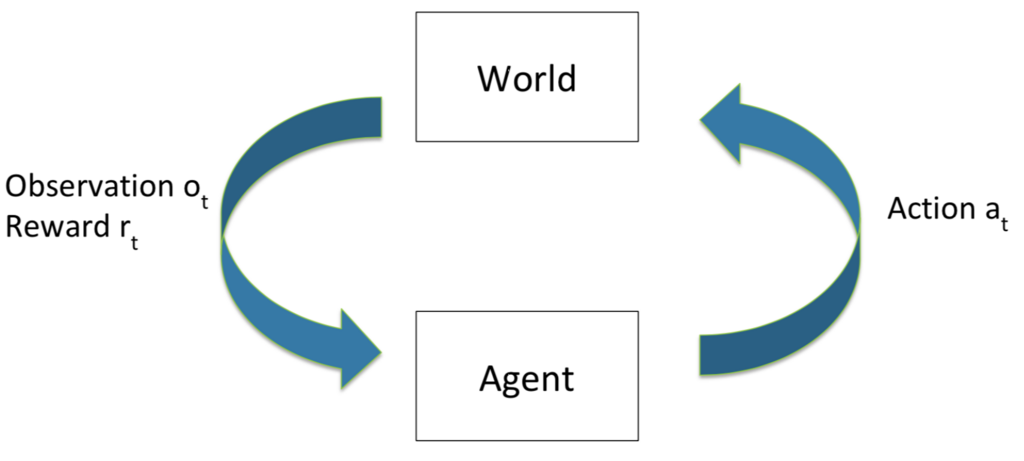
Thinking in terms of agents helps us design systems that are not just powerful, but also independent and adaptable to changing environments. This is a crucial step toward creating more advanced and useful AI.