AI Agents Explained
Introduction to AI Agents
What Is an AI Agent?
At its core, an artificial intelligence (AI) agent is anything that can observe its environment and then take actions to achieve a specific goal. Think of it as an autonomous entity, whether it's a piece of software or a physical robot, that makes its own choices.
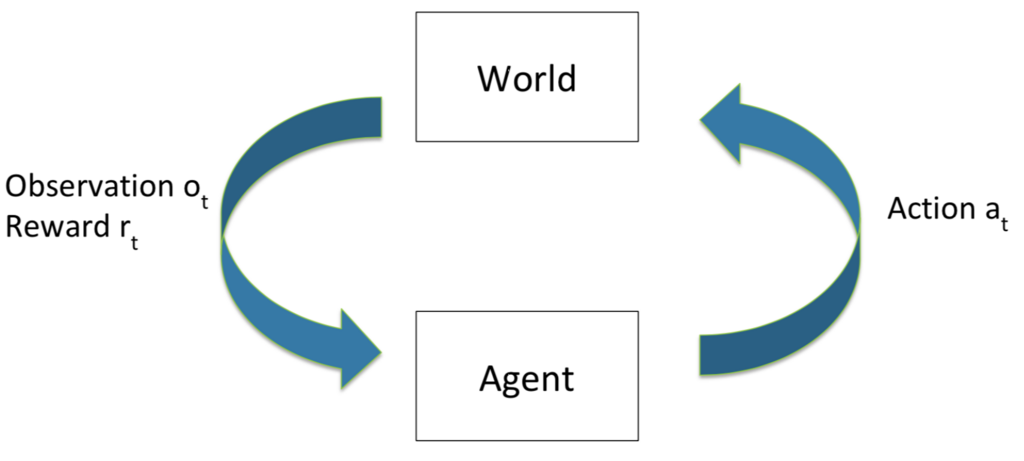
An AI agent is a software system that perceives its environment through sensors, processes information, makes decisions, and acts upon the environment through actuators to achieve specific goals.
Agents perceive their surroundings using sensors. For a robot, a sensor could be a camera or a microphone. For a software agent, it might be reading a file or receiving data over a network. After perceiving, they act on the environment using actuators. A robot’s actuators are its motors and limbs, while a software agent might act by sending an email or displaying a message on a screen.
This continuous loop of perceiving, thinking, and acting is the fundamental role of every AI agent. Their main job is to operate independently to reach a pre-defined objective, whether that's winning a game of chess, navigating a warehouse, or booking a flight for you.
Types of AI Agents
Not all agents are created equal. They range from incredibly simple to highly complex, depending on the kind of intelligence they have. Let's look at the main types, starting with the most basic.
Simple Reflex Agent
noun
An agent that selects actions based only on the current percept, ignoring the rest of the percept history.
These agents operate on a simple "if-then" logic. If a certain condition is met, they execute a corresponding action. They have no memory of past events. A self-driving car's braking system is a good example: if the car in front stops, then brake. It doesn't need to remember what that car was doing a minute ago.
Model-Based Reflex Agent
noun
An agent that maintains an internal state to track aspects of the world that are not evident from the current percept alone.
This is a step up. Model-based agents build an internal "model" or understanding of how the world works. This allows them to handle situations where the current perception isn't enough. For instance, if our self-driving car wants to change lanes, it needs to know not just what it sees now, but also where other cars were moments before. Its internal model tracks unseen parts of the environment, giving it a more complete picture to act on.
Goal-Based Agent
noun
An agent that selects actions that will help it achieve a specific goal.
Instead of just reacting, goal-based agents think ahead. They consider the potential outcomes of their actions to find a sequence that will lead to a desired goal. When you ask a GPS for a route, it doesn't just look at the next turn. It simulates different paths to find one that gets you to your destination. The goal—reaching the destination—drives all its decisions.
Utility-Based Agent
noun
An agent that chooses the action that maximizes its expected utility, providing a measure of success or happiness.
Sometimes, reaching a goal isn't enough. There might be multiple ways to get there, some better than others. A utility-based agent aims for the best outcome. "Utility" is just a way of measuring how preferable a certain state is. For a ride-sharing service, getting a passenger to their destination is the goal. But a utility-based system would also consider the fastest route, the cheapest one, or the one with the highest-rated driver to maximize the user's satisfaction.
Learning Agent
noun
An agent that can improve its performance over time by learning from its experiences.
The most advanced agents are those that can learn. A learning agent starts with some initial knowledge and adapts its behavior based on feedback from its environment. It has a "learning element" that analyzes its successes and failures, and a "performance element" that chooses actions. Over time, it gets better at its job. A chess program that analyzes its past games to improve its strategy is a perfect example of a learning agent.
| Agent Type | Basis for Action | Example |
|---|---|---|
| Simple Reflex | Current perception | Thermostat |
| Model-Based Reflex | Internal state of the world | Lane-changing car |
| Goal-Based | Future states that achieve a goal | GPS navigation |
| Utility-Based | The most desirable outcome | Ride-sharing dispatch |
| Learning | Past experiences and feedback | Spam filter |
Understanding these different types of agents helps us see how AI systems can range from simple reactors to complex, goal-oriented learners that improve on their own.
Now, let's test your understanding of these concepts.
An AI agent perceives its environment using ________ and acts upon it using ________.
A smart thermostat automatically lowers the temperature when it detects no one is in the room. What is the most basic type of agent that describes this behavior?
From simple reflexes to complex learning, AI agents are the entities that turn artificial intelligence into action.