AI Agents Explained
Introduction to AI Agents
What Is an AI Agent?
Think about a smart thermostat. It senses the room's temperature, decides if it's too hot or cold based on your settings, and then acts by turning the heat or air conditioning on or off. That's a simple agent at work.
An Artificial Intelligence (AI) agent is any system that can perceive its environment, make decisions, and take actions to achieve a specific goal. It's like a digital employee you give a job to, which it then carries out on its own.
An agent is anything that can be viewed as perceiving its environment through sensors and acting upon that environment through actuators.
The “sensors” aren’t always physical. For a spam filter, a sensor is the arrival of a new email. For a trading bot, sensors are real-time stock market data. Likewise, “actuators” can be digital, like moving an email to the spam folder or executing a trade.
The Core Traits of an Agent
Not all software is an agent. AI agents have four key characteristics that set them apart.
Autonomy
noun
The ability to perform tasks without direct human control.
An autonomous agent can make its own decisions to pursue its goals. A smart thermostat doesn't need you to tell it when to turn on the heat; it just does it based on the rules and goals you've given it.
An agent is autonomous; it operates without the direct intervention of humans or others, and has some kind of control over its actions and internal state.
Next is reactivity. An agent must respond to changes in its environment in a timely way. If the sun comes out and warms up the room, a reactive thermostat will notice the temperature change and turn off the heat.
A proactive agent doesn't just react to the present; it takes initiative to achieve its goals. A proactive smart home assistant might notice you leave the house every weekday at 8 AM and suggest an automation to lower the heat automatically, saving you energy.
Finally, agents often have social ability. This means they can communicate with other agents or with humans. When you talk to a customer service chatbot, you're interacting with an agent that has social ability. In a more complex example, multiple delivery drones might communicate with each other to avoid collisions and optimize routes.
| Characteristic | Description | Example |
|---|---|---|
| Autonomy | Works on its own | A Roomba cleaning the floor without being manually controlled. |
| Reactivity | Responds to changes | A security camera starting to record when it detects motion. |
| Proactivity | Takes initiative | A calendar app reminding you to leave for a meeting based on traffic. |
| Social Ability | Communicates | Two self-driving cars coordinating to pass through an intersection safely. |
Agents in the Wild
Once you know these traits, you start seeing agents everywhere.
-
Spam Filters: They autonomously check incoming emails (reactivity), decide if they're junk based on their goal of keeping your inbox clean, and act by filtering them. They don't need your input for every single email.
-
Video Game Characters: Non-player characters (NPCs) in a video game are agents. They react to your presence, act on their own goals (like patrolling an area), and sometimes interact with other NPCs (social ability).
-
Siri or Alexa: These voice assistants perceive your spoken commands, process them to understand your goal, and act by playing a song, searching the web, or controlling another device in your home.
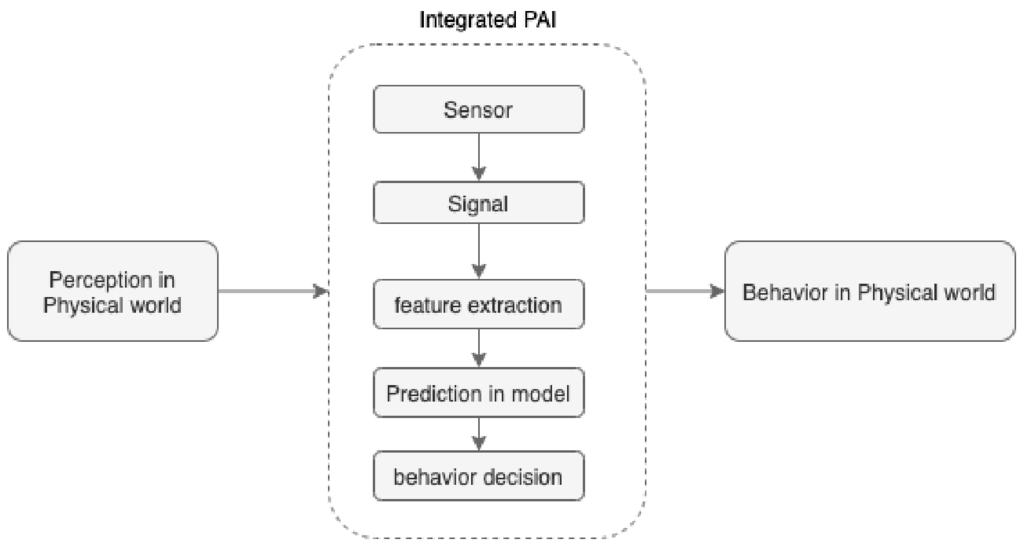
These examples show how agents, from the simple to the complex, are designed to handle tasks in a way that is autonomous, responsive, and goal-driven. Understanding this foundation is the first step to seeing how more advanced AI systems operate.
Which of the following best describes the core function of an AI agent?
A smart home assistant notices you turn down the lights every night at 10 PM and suggests creating an automatic schedule to do it for you. Which characteristic of an AI agent is this an example of?