AI Agents Explained
Introduction to AI Agents
What Is an AI Agent?
Think of an AI agent as an autonomous entity designed to perform tasks. It's a piece of software that can perceive its environment, make decisions, and take actions to achieve a specific goal. Unlike a simple program that just follows a rigid set of instructions, an agent has a degree of independence.
agent
noun
An autonomous entity that perceives its environment through sensors and acts upon that environment through actuators to achieve goals.
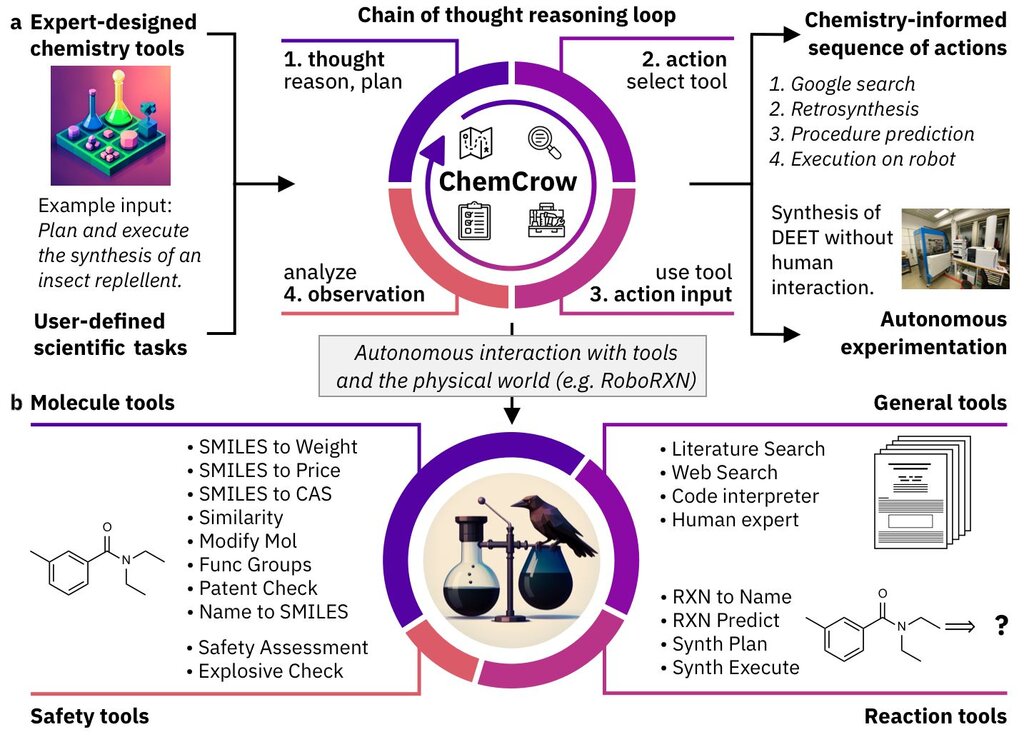
This core loop of perceiving, thinking, and acting is fundamental to any AI agent. Let's break it down:
-
Perception: An agent uses sensors to gather information about its current state or environment. For a self-driving car, sensors could be cameras, lidar, and GPS. For a spam filter, the "sensor" is the part that reads an incoming email.
-
Decision-Making: This is the agent's "brain." It processes the sensor data and decides what to do next based on its goals and programming. It could be a simple rule or a complex Large Language Model (LLM).
-
Action: The agent uses actuators to perform its chosen action, changing its environment. The car's actuators are its steering wheel, accelerator, and brakes. The spam filter's actuator moves the email to the junk folder.
Types of Agents
Not all agents are created equal. They range from incredibly simple to highly complex, and we can categorize them based on how they make decisions.
Reactive Agents
These are the simplest type. Reactive agents operate purely on a condition-action basis. If they perceive a certain condition, they execute a corresponding action. They have no memory of the past and don't think about future consequences. A smart thermostat is a perfect example: if the temperature drops below 70°F, turn on the heat. It doesn't remember that it was 65°F five minutes ago; it only cares about the now.
Reactive agents are fast and efficient but also limited. They can't learn from experience or plan ahead.
Deliberative Agents
Deliberative agents are thinkers. They maintain an internal model of the world and use it to think about the consequences of their actions. They can plan a sequence of steps to achieve a goal. A GPS navigation app is a deliberative agent. It doesn't just react to the next turn; it has a map of the area (its world model) and calculates the best route from start to finish. It considers different paths, traffic, and your goal of reaching the destination.
These agents are more intelligent and flexible than reactive ones, but they require more computational power and can be slower to respond, as they need time to think and plan.
Hybrid Agents
As you might guess, hybrid agents combine the best of both worlds. They have both reactive and deliberative components, allowing them to make quick decisions when needed while also being capable of long-term planning. For example, a self-driving car might use its deliberative layer to plan a route from home to the office. But if a pedestrian suddenly steps into the road, its reactive layer takes over to immediately slam on the brakes, bypassing the slower planning process.
This layered approach makes hybrid agents robust and well-suited for complex, dynamic environments.
A Quick History
The idea of agents isn't new. It dates back to the earliest days of AI in the 1950s. Early concepts like the "General Problem Solver" were essentially primitive agents designed to solve puzzles and prove theorems in a very structured way. These were purely deliberative systems.
In the 1980s, researchers like Rodney Brooks pioneered reactive agents, arguing that complex behavior could emerge from simple, fast reactions to the environment without needing a complex internal world model. This was a major shift in thinking.
Over time, the field recognized the value of both approaches, leading to the development of hybrid architectures. The rise of machine learning and, more recently, Large Language Models (LLMs) has supercharged agent capabilities. Today's agents can learn, reason, and interact with a vast array of digital tools, making them far more powerful and versatile than their predecessors.
Why Agents Matter
Agents represent a shift from AI as a passive tool to AI as an active partner. Instead of just responding to a prompt, an AI agent can take a high-level goal, break it down into steps, use tools, and work autonomously to get it done.
Imagine you ask an AI agent to "plan a weekend trip to San Francisco for me." A simple chatbot might give you a list of attractions. An AI agent, however, could:
- Check your calendar for availability.
- Search for flights and hotels that fit your budget.
- Look up top-rated restaurants and make reservations.
- Buy tickets for a museum you'd enjoy based on your interests.
- Present you with a complete itinerary for approval.
This ability to automate complex, multi-step tasks is what makes AI agents so significant. They are the key to moving beyond simple Q&A and into a world where AI can act as a capable personal assistant, a tireless research aide, or a sophisticated automation engine for businesses.
Now, let's check your understanding of these core concepts.
What are the three fundamental steps in an AI agent's core operational loop?
An agent uses ______ to gather information about its environment and ______ to perform its chosen action.
By understanding agents, you're grasping a foundational concept that drives much of modern artificial intelligence, from robotics to software automation.