AI Agents Explained
Introduction to AI Agents
What Is an AI Agent?
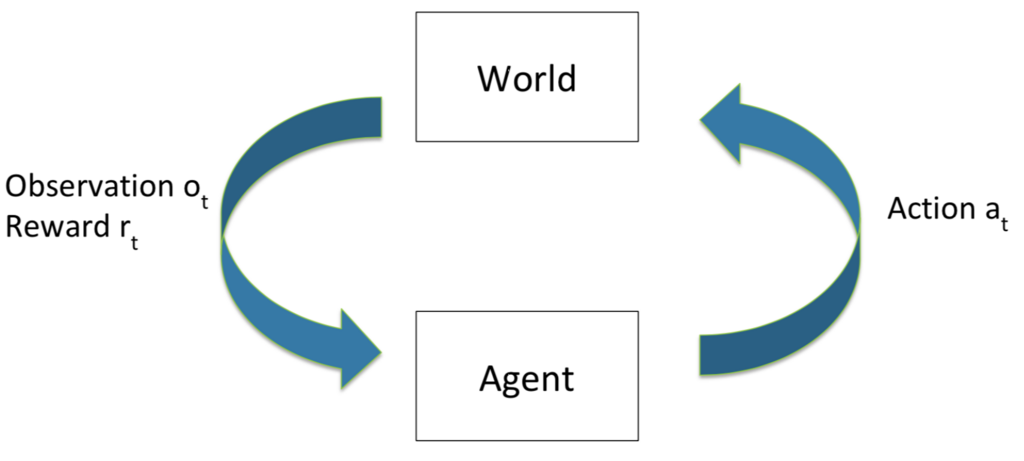
Think about how you navigate your day. You sense the world around you, like hearing an alarm or seeing that it's raining. You process this information, decide what to do (get up, grab an umbrella), and then you act on it. An AI agent operates on a similar principle.
At its core, an AI agent is a system that can perceive its environment, make decisions, and take actions to achieve a specific goal. It’s not just a piece of software that follows a rigid set of instructions. It's designed to be a doer, an actor within a digital or physical world.
agent
noun
Something that perceives its environment through sensors and acts upon that environment through actuators.
The “environment” can be anything from a chessboard to the internet, or even the physical world for a robot. The agent uses “sensors” to perceive this environment, which could be a camera, a microphone, or data feeds from a website. It then uses “actuators” to perform actions, like moving a robot arm, making a move in a game, or posting information online.
This continuous loop of observation and action is what defines an agent.
More Than Just a Program
So what separates an AI agent from a standard computer program, like a word processor? A few key characteristics make agents special.
Autonomy: Agents can operate on their own without direct, step-by-step human guidance. A self-driving car is autonomous; a remote-controlled car is not. The agent is given a goal, like “drive to the grocery store,” and it figures out the details itself.
Adaptability: An agent can react to changes in its environment. A smart thermostat, for example, is an agent that adapts to a sudden cold snap by turning up the heat. It doesn’t just follow a pre-set schedule; it responds to real-time conditions.
Goal-Orientation: Agents are proactive. They don't just wait for something to happen; they take initiative to achieve their objectives. A spam filter doesn’t wait for you to label every junk email. It proactively identifies and files away new spam messages to keep your inbox clean.
Learning Capability: The most advanced agents can learn from experience. They improve their performance over time. An AI opponent in a video game might learn your strategy and adjust its own tactics to become a more challenging adversary.
Not every agent has all these traits in their most advanced forms, but these are the qualities that define agent-like behavior.
A Brief History
The idea of autonomous agents isn't new. It has evolved over decades, mirroring the progress of artificial intelligence itself.
In the early days of AI, around the 1950s and 60s, systems were mostly rule-based. These were the first, simplest forms of agents. They operated on a strict set of “if-then” rules programmed by a human. For example, an early chess program might have a rule: if the opponent’s queen is threatened, then move the queen to a safe square. These systems were impressive for their time but were rigid. They couldn't handle situations that weren't covered by their rules.
By the 1980s, the focus shifted towards agents that could reason and plan. Instead of just reacting, these agents could create a sequence of actions to achieve a goal. Think of a simple robot in a maze. It wouldn't just turn randomly; it could map out a path from its current location to the exit.
Then came the rise of machine learning. This was a game-changer. Agents could now learn from data instead of relying solely on hand-coded rules. This led to learning agents that could improve on their own. The spam filter that gets better at spotting junk mail is a classic example. It learns from the thousands of emails it sees.
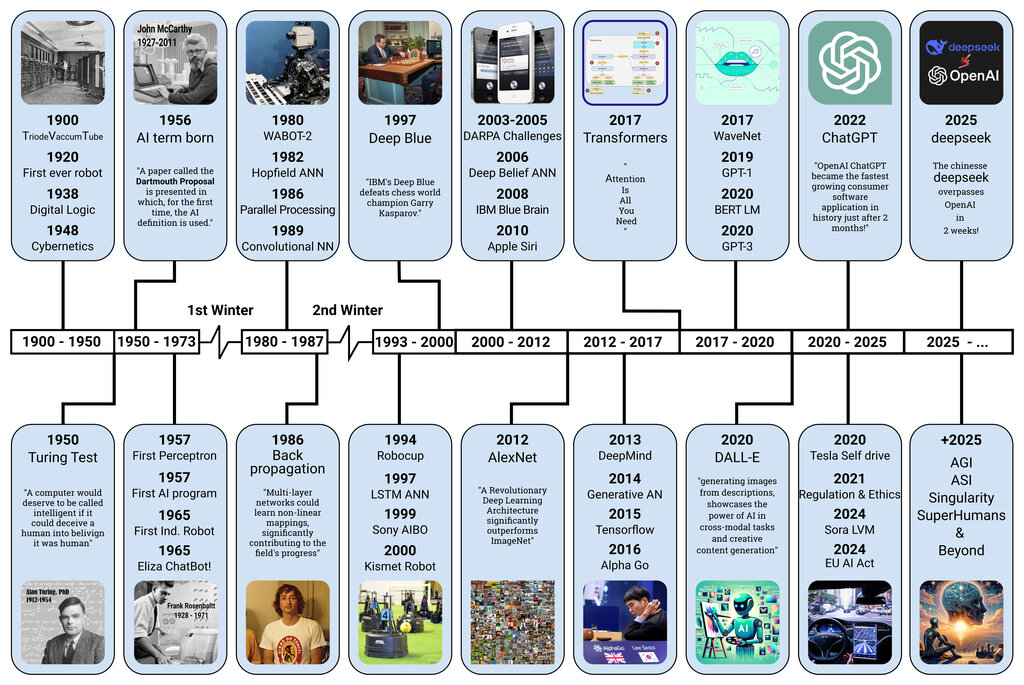
Today, we are in an era of highly complex, autonomous agents powered by large language models (LLMs). These modern agents can understand natural language, break down complex goals into smaller steps, and even use various software tools to get things done. They've moved from simple rule-followers to sophisticated problem-solvers.
From playing games to navigating our world, the journey of the AI agent has been one of increasing independence and intelligence.
Ready to check your understanding?
What is the fundamental operational loop of an AI agent?
A smart thermostat adjusting the temperature in response to a sudden cold snap is demonstrating which key characteristic of an AI agent?
That's the basic idea of an AI agent: a system that perceives, decides, and acts to achieve a goal. By understanding these fundamentals, you're ready to explore the different types of agents and how they work.