AI Agents Explained
Introduction to AI Agents
What Are AI Agents?
An AI agent is a program that can sense its environment, make decisions, and take actions to achieve a specific goal. Think of a smart thermostat. It senses the room's temperature (environment), decides whether it's too hot or cold (decision), and turns the heating or cooling on or off (action) to reach your desired temperature (goal).
Unlike a simple script that just follows a list of commands, an agent operates on its own. It's designed to be a self-contained problem-solver, whether its task is navigating a video game level, managing a stock portfolio, or controlling a robotic arm in a factory.
An AI agent is fundamentally a system designed to perceive its environment, reason about its goals, and take actions to achieve those goals autonomously or semi-autonomously.
This ability to perceive, decide, and act is what separates agents from other types of software. They are the active participants in the world of AI, not just passive data crunchers.
The Core Traits of an Agent
Not every smart program is an agent. True AI agents are defined by a few key characteristics that allow them to function independently and effectively.
First and foremost is autonomy. Agents can operate without constant human supervision. Once given a goal, they have the freedom to figure out the best way to achieve it. This doesn't mean they're completely uncontrolled, but they don't need someone telling them what to do every step of the way.
autonomy
noun
The quality or state of being self-governing; the ability to make one's own decisions without being controlled by anyone else.
Next is adaptability. The world is constantly changing, and a good agent can change with it. An agent should be able to learn from its experiences and adjust its strategy. If a certain action doesn't work, it tries something else. This ability to react to new information is crucial for dealing with unpredictable environments.
Finally, agents are goal-oriented. Every agent is designed with a purpose, a clear objective it's trying to accomplish. This goal guides all of its decisions and actions. Whether it's maximizing a score, finding the shortest route, or booking a flight, the agent's behavior is always directed toward its target.
A Brief History
The idea of AI agents isn't new. It dates back to the earliest days of artificial intelligence in the 1950s. Early pioneers dreamed of creating machines that could think and act like humans. However, the first agents were very simple, rule-based systems. They could only operate in highly controlled, predictable environments, like a game of checkers.
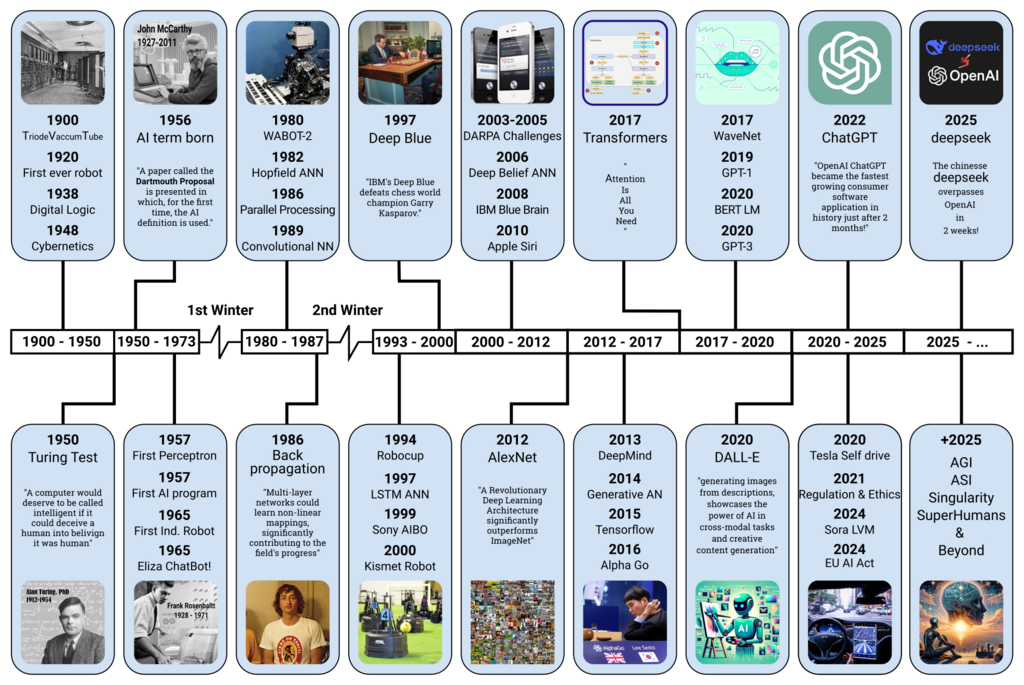
As computing power grew and machine learning techniques became more sophisticated, so did agents. They moved from following rigid rules to learning from vast amounts of data. This allowed them to handle more complexity and uncertainty, paving the way for the advanced agents we see emerging today. The history of AI agents is really the history of AI itself, a steady march toward creating more capable and autonomous systems.
Why Agents Matter
AI agents are a fundamental concept in artificial intelligence because they represent the shift from calculation to action. While many AI models are brilliant at processing information, generating text, or recognizing images, agents are what put that intelligence to work in the real world.
They are the bridge between AI's potential and its practical application. By creating systems that can pursue goals on their own, we can automate complex tasks that were previously impossible for machines to handle.
Agents are the 'doers' of the AI world. They don't just process information; they use it to accomplish things.
Understanding agents is key to understanding the future of AI. They represent a major step toward building truly intelligent systems that can assist us in all aspects of life, from simple daily chores to complex scientific research.