AI Agents Explained
Introduction to AI Agents
What Is an AI Agent?
At its core, an Artificial Intelligence (AI) agent is something that can observe its surroundings and then take actions. Think of it as an autonomous entity. It could be a physical robot, a piece of software, or even a character in a video game. The key is that it operates independently to achieve a goal.
An AI agent can be broadly defined as a system that perceives its environment, processes data, and takes actions to achieve specific goals.
This process forms a continuous loop. The agent perceives the world, decides what to do based on that information, and then acts. The action changes the world, which the agent then perceives again, starting the cycle over.
This cycle of perceiving, thinking, and acting is fundamental to every AI agent, from a simple smart thermostat to a complex self-driving car.
The Building Blocks
Every AI agent is built from the same fundamental components that allow it to interact with its world. Let's break them down.
Sensor
noun
A device that detects or measures a physical property and records, indicates, or otherwise responds to it.
Sensors are the agent's eyes and ears. They gather information from the environment. For a physical robot, sensors might include cameras, microphones, or touch sensors. For a software agent like a web crawler, its sensors are the code that reads the HTML of a webpage.
Actuator
noun
A component of a machine that is responsible for moving or controlling a mechanism or system.
Actuators are the agent's hands and feet. They allow the agent to perform actions and affect its environment. A robot's actuators could be motors that move its limbs. A spam filter's actuator is the command that moves an email to the spam folder. A virtual assistant's actuator is its speaker, which produces a spoken response.
The Processing Unit is the brain. It takes the data from the sensors, makes a decision, and sends a command to the actuators.
Agents in the Wild
You interact with AI agents every day, often without realizing it. They come in all shapes and sizes, from the simple to the incredibly complex. Here are a few examples that tie these components together.
| Agent | Environment | Sensors | Actuators |
|---|---|---|---|
| Self-Driving Car | Roadways, Traffic | Cameras, GPS, radar | Steering wheel, accelerator, brakes |
| Smart Thermostat | A room in a house | Temperature sensor | Heating/cooling system switch |
| Email Spam Filter | Your inbox | Email content/metadata | "Move to spam" command |
| Chess Program | Digital chessboard | State of the board | Command to move a piece |
Consider a smart thermostat. Its environment is the room it's in. It uses a temperature sensor to perceive the current temperature. Its processing unit compares this to your desired temperature. If it's too cold, the agent uses its actuator to turn on the heat. Once the desired temperature is reached, it senses this change and acts again by turning the heat off.
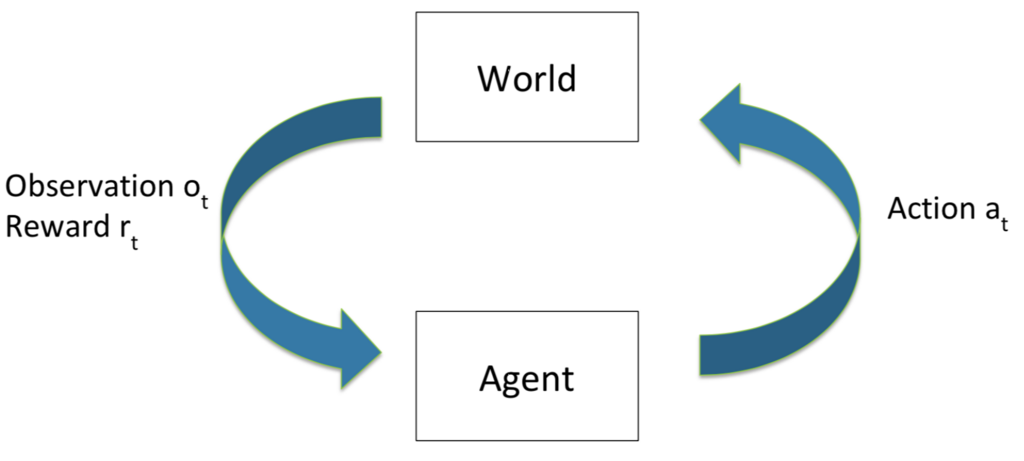
This simple loop is the same one used by vastly more complex agents. A self-driving car perceives traffic with cameras and LiDAR, processes that data to decide its next move, and acts by turning the wheel or applying the brakes. The core architecture remains the same.
What is the continuous, fundamental cycle that every AI agent follows?
For a smart thermostat, which component is the actuator?
Understanding this basic structure of sensors, processors, and actuators is the first step to grasping how all forms of artificial intelligence work.