AI Agents Explained
Introduction to AI Agents
What Are AI Agents?
An AI agent is an autonomous entity that observes its environment, makes decisions, and takes actions to achieve specific goals. Think of it as a digital employee hired for a particular job. You don't tell it how to do every single step; you give it a goal, the right tools, and the authority to act. The agent then figures out the best course of action on its own.
At their core, all agents share a simple loop: perceive, think, act. They sense the state of their world, process that information, and then perform an action to change that state in a way that moves them closer to their objective.
This ability to act independently is what separates an agent from a simple program. A standard script follows a predefined path. An agent, however, can adapt to new information and changing circumstances, modifying its plan as it goes. This makes them powerful tools for tackling complex, dynamic problems that don't have a single, straightforward solution.
Building on AI Foundations
AI agents aren't magic; they are built upon established principles of artificial intelligence. Their ability to reason and learn comes from machine learning (ML), particularly deep learning, which uses neural networks to find patterns in vast amounts of data. This is how an agent learns to recognise images, understand text, or predict outcomes.
Natural Language Processing (NLP) gives agents the ability to understand and generate human language. This is crucial for agents that interact with people, like customer service bots or voice assistants. Concepts like reinforcement learning allow an agent to learn through trial and error, getting better at a task by receiving feedback on its performance.
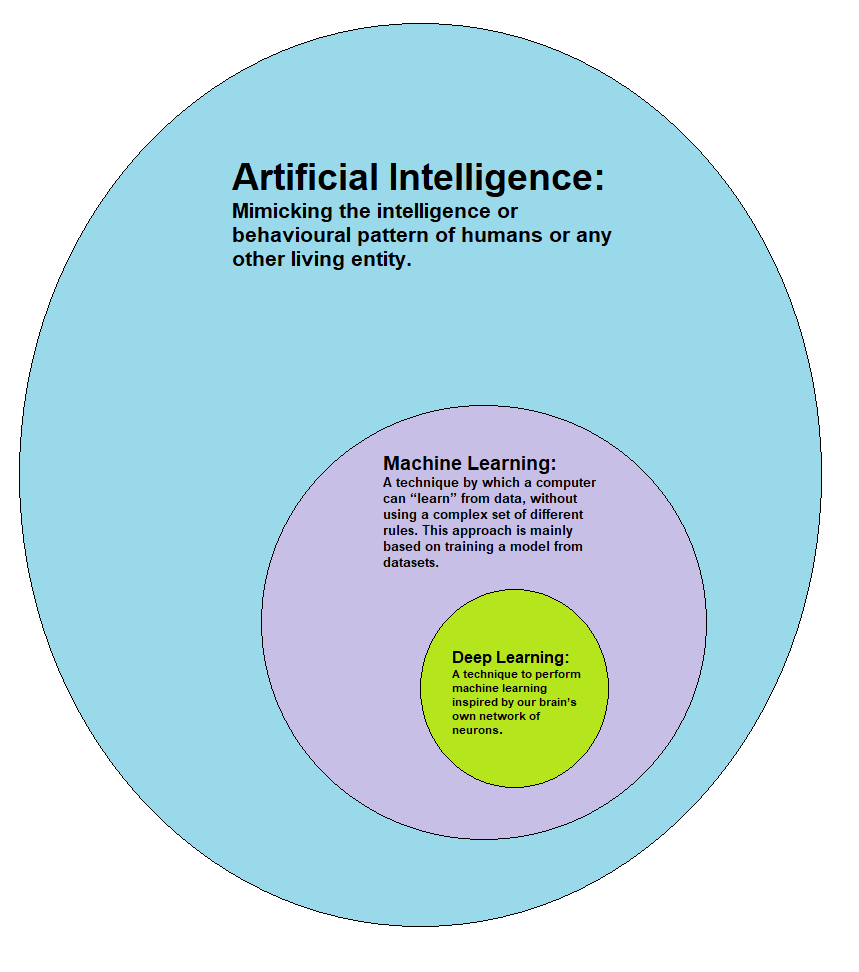
These foundational technologies provide the building blocks for an agent's core capabilities: perception (gathering data), reasoning (making sense of it), and action (interacting with its environment).
A Brief History
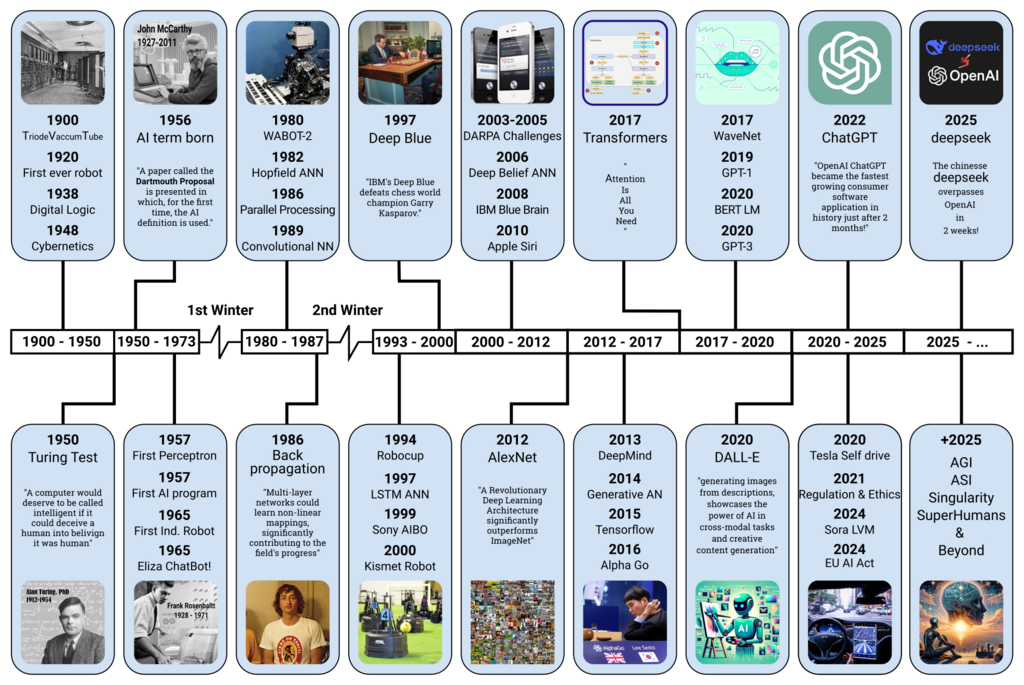
The idea of autonomous agents has been part of AI since the beginning. Early agents, developed in the mid-20th century, were simple, rule-based systems. These "reflex agents" operated on straightforward if-then logic. For example, if the temperature sensor reads above 75 degrees, turn on the air conditioning. They were effective for simple tasks but lacked the ability to plan or learn.
As computer processing power grew and AI research advanced, agents became more sophisticated. Planners were developed that could create a sequence of actions to achieve a long-term goal. The rise of machine learning in the late 20th and early 21st centuries was a major turning point. Agents could now learn from experience instead of relying solely on pre-programmed rules. This led to breakthroughs in areas like game playing, with systems like Deep Blue defeating the world chess champion.
More recently, the development of large language models (LLMs) has supercharged agent capabilities. Modern agents can understand complex instructions, access information from the internet, use software tools, and carry out multi-step tasks that were previously impossible for a machine to handle autonomously.
Agents in the Wild
AI agents are already active in many industries, often working behind the scenes. Their versatility allows them to be applied to a wide range of problems, from automating simple business processes to tackling complex scientific challenges.
They act as the brains for personal assistants like Siri and Alexa, parsing your spoken commands and coordinating with various apps to get you an answer or perform a task. In logistics, they optimise shipping routes in real-time, reacting to traffic and weather conditions to ensure packages arrive on time. Here are a few examples of their diverse applications:
| Domain | Agent's Purpose |
|---|---|
| Customer Service | Answer customer questions, resolve issues, and escalate to human support when needed. |
| Finance | Execute trades based on market signals, detect fraudulent transactions, and provide personalised financial advice. |
| Healthcare | Analyse medical images to detect diseases, assist in robotic surgery, and manage patient records. |
| E-commerce | Provide personalised product recommendations and manage inventory levels automatically. |
| Scientific Research | Formulate and test hypotheses by analysing large datasets, and even design and run experiments. |
In each case, the agent isn't just following a script. It's using its perception, reasoning, and ability to act to achieve a goal in a complex and ever-changing environment.
Ready to check your understanding?
What is the primary characteristic that distinguishes an AI agent from a simple, scripted program?
Which technology specifically enables an AI agent to understand and interact using human language?
With this foundation in place, we can now look more closely at the different types of agents and the architectures that power their intelligence.