AI Agents Explained
Introduction to AI Agents
What Is an AI Agent?
At its core, an Artificial Intelligence (AI) agent is a system that can observe its environment, make decisions, and take actions to achieve a specific goal. Think of a robot vacuum cleaner. It uses sensors to perceive its environment (the room), identifies obstacles and dirty spots, decides on a cleaning path, and then acts by moving and vacuuming. It operates on its own to reach its goal: a clean floor.
An agent is anything that can be viewed as perceiving its environment through sensors and acting upon that environment through actuators.
This concept of an autonomous entity is a cornerstone of AI. The “environment” can be a physical space, like for a self-driving car, or a digital one, like the internet for a stock-trading bot. The agent’s job is to bridge the gap between understanding information and getting things done.
Artificial Intelligence (AI) agents are the foundation of many intelligent systems which helps them to understand their environment, make decisions and take actions to achieve specific goals.
A Brief History
The idea of AI agents isn't new. Early versions were simple and rule-based. Imagine an enemy in an old video game that only moves left until it hits a wall, then moves right. Its actions are dictated by a rigid set of "if-then" instructions. These systems were effective for specific, predictable tasks but lacked flexibility.
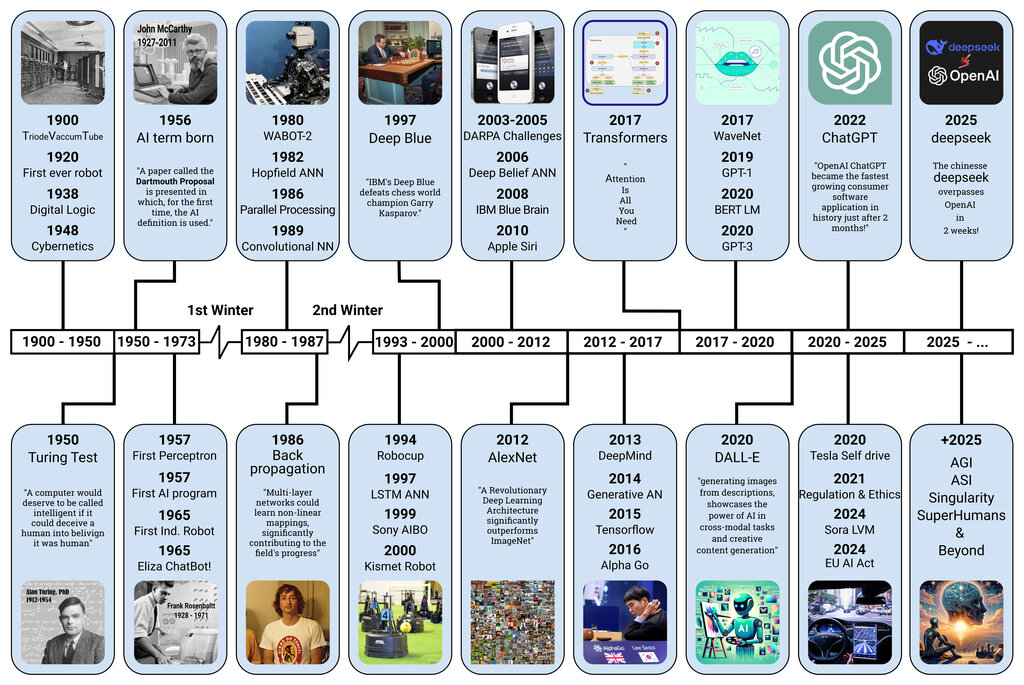
Over time, agents evolved. They began to incorporate learning, allowing them to adapt based on experience. Instead of just following rules, they could analyze outcomes and adjust their strategies. This made them much more powerful and versatile.
The most recent leap forward came with the rise of large language models (LLMs). Modern agents can now understand and process complex human language, access tools like web browsers or code interpreters, and reason through multi-step problems. This has transformed them from simple task-doers into sophisticated problem-solvers.
The Agent's Role in AI
Why are agents so important? Because they are the active part of AI. While an AI model might be brilliant at processing data and making predictions, an agent is what puts those insights into action. It's the component that actually does things.
An agent operates in a continuous loop: it perceives the current state of its environment, decides on the best action based on its goals, and then performs that action. This action changes the environment, which starts the loop all over again.
This simple loop is the foundation for all agent behavior, from a thermostat maintaining room temperature to a complex AI assistant planning your vacation. By perceiving, deciding, and acting, agents provide a framework for creating intelligent systems that can operate autonomously and effectively in the world.
What is the fundamental role of an Artificial Intelligence (AI) agent?
An AI agent's environment must be a physical, real-world space.
Understanding what an agent is and its basic function is the first step. Now we can explore the different kinds of agents and what makes them tick.