AI Agents Explained
Introduction to AI Agents
What Are AI Agents?
At its core, an AI agent is a program that can act on its own. Think of it like a smart assistant that doesn't just wait for step-by-step instructions. Instead, you give it a goal, and it figures out how to get there. It does this by sensing its environment, making decisions, and then taking actions to achieve its objective.
Agents in AI are autonomous entities that perceive their environment, process information, and take actions to achieve specific goals.
This basic loop—perceive, decide, act—is what separates an agent from a simple script or a traditional program. A simple script follows a fixed path. An agent, on the other hand, can navigate a changing world. It's the difference between a toy car that only moves forward when you push it and one that can drive itself around obstacles to reach a destination.
Key Characteristics
What truly makes an AI agent special are a few core traits. These characteristics are what give agents their power and flexibility.
Autonomy
noun
The ability to perform tasks in complex environments without constant guidance or intervention.
First and foremost, agents are autonomous. They operate independently to get things done. You don't need to micromanage them.
They are also goal-oriented. An agent is always working towards something, whether it's winning a game of chess, booking a flight, or managing a power grid. Every action it takes is a step towards achieving that goal.
Finally, agents are adaptive. The world isn't static, and agents are built to handle that. They can learn from their experiences and adjust their strategies when conditions change. If their first attempt to solve a problem fails, they can try a different approach.
A Brief History
The idea of agents isn't new. It has roots in the earliest days of artificial intelligence and a field called cybernetics, which studied how systems control themselves. In the 1950s, pioneers like John McCarthy, who coined the term "artificial intelligence," imagined programs that could reason and act in the world.
However, it wasn't until computing power grew and AI techniques became more sophisticated that the concept really took off. Early agents were often simple, rule-based systems. Over time, they evolved to incorporate learning and more complex decision-making, becoming the foundation for much of modern AI.
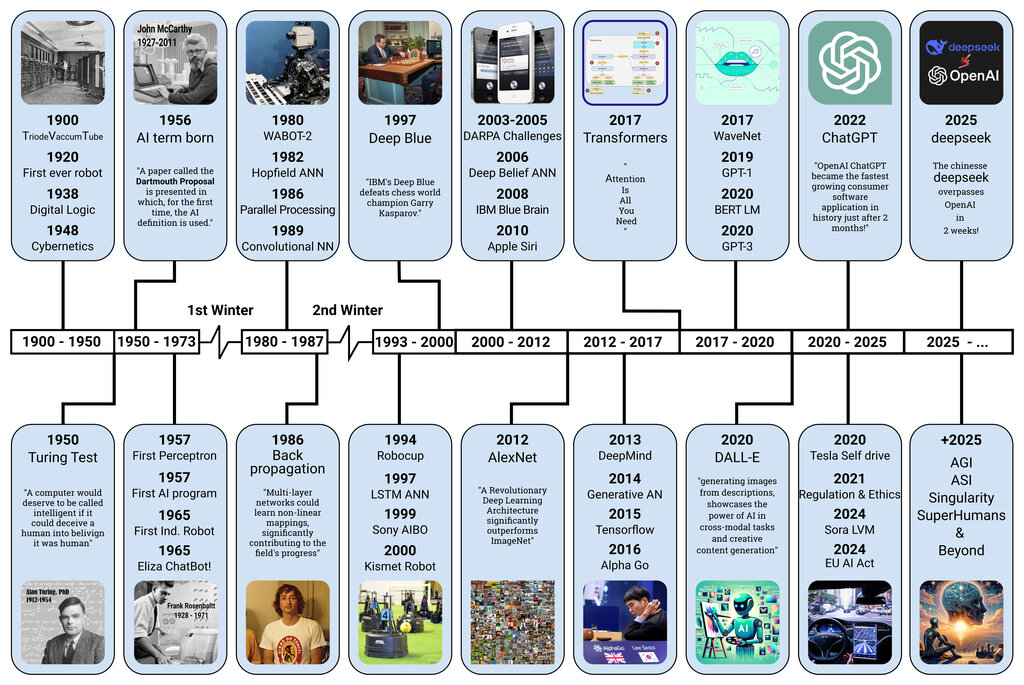
Today, agents are a central concept in AI. They provide a powerful framework for thinking about and building intelligent systems. By designing entities that can perceive, reason, and act, we can create AI that does more than just analyze data. We can create AI that participates in the world.
Understanding agents is the first step toward seeing how AI can move from simply processing information to actively achieving goals.