AI Agents Explained
Introduction to AI Agents
What Is an AI Agent?
Think of a self-driving car, a smart thermostat, or even a character in a video game. What do they have in common? They all operate with a degree of independence. They aren't just following a rigid, pre-written script. Instead, they sense what's happening around them and decide what to do next.
This is the core idea behind an AI agent. It's a system designed to perceive its environment, make decisions, and take actions to achieve a specific goal. It's less like a simple calculator that just waits for your command and more like a helpful assistant that can figure things out on its own.
An AI agent is a system that perceives its environment, makes decisions, and takes actions to achieve specific goals.
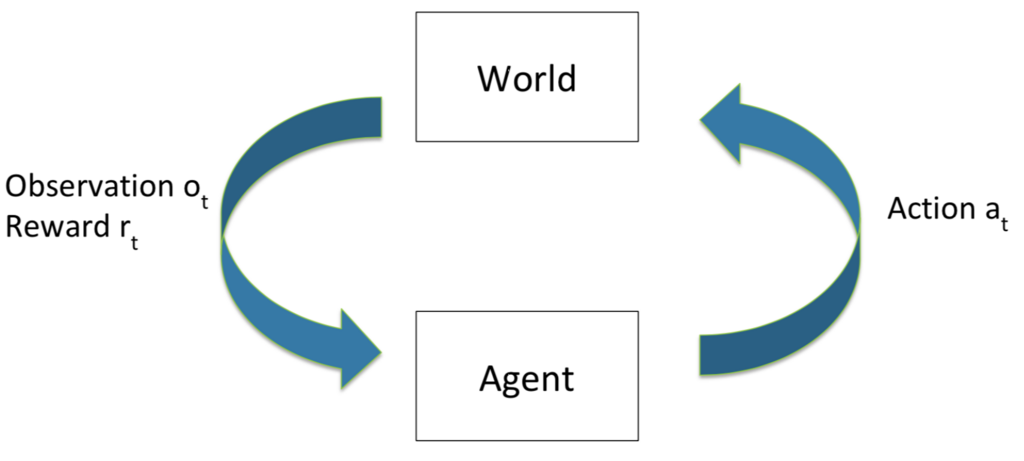
This simple loop of perceiving and acting is what makes agents so powerful. They aren't just executing instructions; they're interacting with a dynamic world. But what exactly gives them this capability? It comes down to a few key characteristics.
The Four Core Traits
Not every piece of software is an agent. To qualify, a system needs to exhibit a few specific traits that give it the ability to operate independently and intelligently.
Autonomy
noun
The ability to operate without direct, constant human intervention. An autonomous agent can make its own decisions to control its actions.
Reactivity is about responding to the environment in a timely way. If the world changes, the agent notices and reacts. A self-driving car braking when another car cuts it off is showing reactivity. It isn't just following a map; it's responding to real-time events.
Proactivity means taking initiative. Instead of just reacting to the environment, a proactive agent takes steps to achieve its goals. Your phone's digital assistant suggesting you leave early for a meeting because of heavy traffic is being proactive. It's anticipating a future problem and acting to solve it.
Finally, Social Ability is the capacity to communicate and interact with other agents or with humans. Your smart speaker playing music through your smart TV is a simple example of social ability. The agents (speaker and TV) are coordinating to complete a task.
Different From Traditional Software
So, how is an AI agent different from a program like a word processor or a simple calculator? A traditional program follows a strict set of instructions given by a user. It doesn't act unless you tell it to.
An agent, on the other hand, is goal-oriented and aware of its surroundings. It has the freedom to decide how to best achieve its objectives based on what it perceives. The distinction lies in this flexible, goal-driven behavior.
| Feature | Traditional Program | AI Agent |
|---|---|---|
| Control | User-controlled, follows explicit commands. | Autonomous, controls its own actions. |
| Environment | Largely unaware of its environment. | Perceives and reacts to its environment. |
| Behavior | Follows a fixed, predictable path. | Goal-driven and flexible. |
| Initiative | Passive, waits for input. | Proactive, can take initiative. |
Understanding this difference is key. AI agents represent a shift from writing step-by-step instructions to designing systems that can figure out the steps for themselves.